
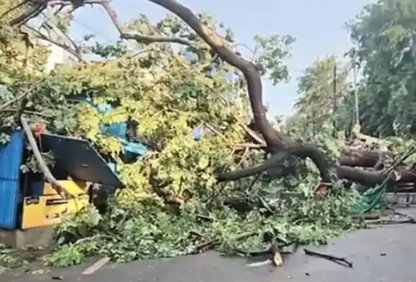
A sudden spell of intense storms, heavy rainfall, hail and lightning has left a trail of destruction across Uttar Pradesh, claiming dozens of lives and damaging homes, infrastructure and livestock in what officials describe as one of the most severe bouts of unseasonal weather in recent months.
According to data released by the state’s Relief Commissioner’s office, at least 89 people lost their lives on 13 May due to storm-related incidents, while over 50 others sustained injuries. The fatalities were largely caused by collapsing structures, uprooted trees and lightning strikes, underscoring the vulnerability of rural and semi-urban regions to extreme weather events. In addition to the human toll, at least 87 houses were reported damaged and more than 100 animals killed, reflecting the broader economic impact on affected families.
District-wise figures indicate that Prayagraj recorded the highest number of casualties, followed by Bhadohi and Mirzapur, with several other districts reporting multiple fatalities. Localised reports from administrative authorities suggest that many of the deaths occurred when walls, sheds or temporary structures collapsed under the force of strong winds. In some areas, residents sought shelter under trees during heavy rain, only to be struck by lightning — a recurring risk during such weather conditions.
Eyewitness accounts from districts such as Fatehpur and Kanpur Dehat describe scenes of chaos as powerful winds uprooted trees and electricity poles, disrupting power supply and blocking roads. In rural pockets, the damage was compounded by poorly constructed dwellings, which were unable to withstand the sudden storm. Officials also confirmed that several livestock deaths occurred after animals were caught in the open during lightning strikes.
The state government has responded by initiating emergency relief measures. Chief Minister Yogi Adityanath expressed grief over the loss of lives and directed all divisional commissioners and district magistrates to ensure that compensation is disbursed to affected families within 24 hours. He also instructed officials to conduct prompt and sensitive verification of losses and to establish direct communication with victims to assess further assistance needs.
Authorities have been placed on high alert, with instructions issued to departments including revenue, agriculture and disaster management to carry out detailed damage assessments. The Chief Minister has also called for coordination with insurance agencies to expedite claims related to crop and property losses, signalling a broader effort to mitigate the financial burden on those affected.
The incidents have once again highlighted the growing unpredictability of weather patterns in northern India, particularly during transitional seasons. Experts have increasingly pointed to climate variability as a factor contributing to the frequency and intensity of such events, raising concerns about preparedness and resilience at the local level.
While immediate relief efforts are underway, the scale of the devastation has prompted calls for longer-term measures, including improved early warning systems, stronger rural infrastructure and greater public awareness about safety during extreme weather. For now, however, the focus remains on supporting affected families and restoring normalcy in regions grappling with the aftermath of a sudden and deadly storm.