
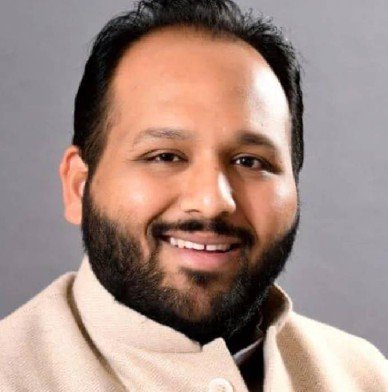
The arrest of senior Aam Aadmi Party leader Deepak Singla by the Enforcement Directorate (ED) on Monday has triggered a sharp political confrontation between the ruling Bharatiya Janata Party and the opposition Aam Aadmi Party, with the latter accusing central agencies of being used as instruments of political pressure ahead of emerging electoral battles.
Singla, who serves as the AAP’s Goa incharge and has been actively involved in strengthening the party’s organisational network in the coastal state, was arrested following searches conducted at his residence in connection with an alleged bank fraud investigation. Officials associated with the probe said the searches were part of an ongoing financial inquiry being handled by the ED, although detailed allegations in the case have not yet been made public in full.
The development immediately escalated into a political flashpoint, with top AAP leaders alleging that the raids were politically motivated and timed to weaken the party’s growing footprint outside Delhi and Punjab.
Reacting strongly to the ED action, Delhi Assembly Leader of Opposition Atishi accused the BJP of using investigative agencies to intimidate opposition workers and gain access to the party’s internal organisational structure. In a sharply worded statement posted on social media platform X, she claimed that searches were carried out not only at Singla’s residence but also at the homes of several AAP volunteers in Goa.
Atishi alleged that the raids reflected what she described as the BJP’s nervousness over AAP’s expanding political presence in the state. She further accused the ruling party of attempting to obtain internal organisational data through enforcement agencies, describing the ED as a “loyal foot-soldier” of the BJP.
Her remarks underline a broader narrative repeatedly advanced by opposition parties across India, who have accused central investigative agencies such as the ED and CBI of disproportionately targeting political rivals. The BJP, however, has consistently rejected these allegations, maintaining that investigative agencies function independently and act strictly on the basis of evidence and legal procedure.
AAP national convenor and former Delhi Chief Minister Arvind Kejriwal also publicly defended Deepak Singla following the arrest. In a post written in Hindi on X, Kejriwal claimed that Singla was being targeted not for wrongdoing, but for refusing to align himself politically with the BJP.
“Deepak Singla was not arrested because he did anything wrong. Rather, he was arrested because he was working against the BJP and refused to join the BJP,” Kejriwal wrote, portraying the arrest as part of a larger political campaign against opposition leaders.
The ED has so far not issued any detailed public rebuttal to the political allegations made by AAP leaders. The agency’s investigation is believed to be linked to suspected financial irregularities involving bank transactions and alleged fraud-related activities, though the precise contours of the case remain under examination.
The arrest comes at a politically sensitive moment for the Aam Aadmi Party, which has been attempting to expand beyond its traditional strongholds and establish itself as a national opposition force. Goa, despite being a relatively small state electorally, has emerged as an important testing ground for the party’s broader ambitions in western India.
Over the past few years, the ED has become a central figure in India’s increasingly polarised political landscape. Several opposition leaders from different parties have faced searches, summons, arrests or questioning in corruption and financial crime investigations. While the government argues that anti-corruption agencies must be allowed to operate without political interference, critics contend that the timing and intensity of such actions often coincide with electoral cycles or periods of political mobilisation.
For AAP, the arrest of Deepak Singla is likely to become another rallying point in its campaign against the BJP-led central government. For the BJP, however, the case may reinforce its public stance that financial wrongdoing, regardless of political affiliation, must face legal scrutiny.
As the investigation progresses, the legal battle surrounding Singla’s arrest is expected to unfold alongside an increasingly aggressive political war of words — one that reflects the deepening tensions between India’s ruling establishment and opposition parties ahead of future electoral contests.