Bengaluru/New Delhi
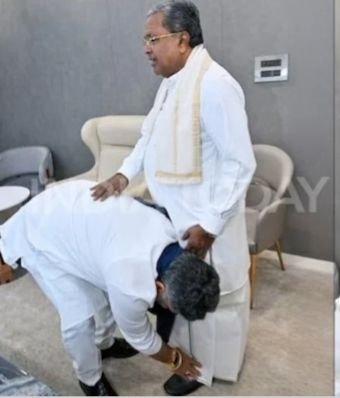
After months of intense speculation and an undercurrent of political tension within the Karnataka Congress, the party high command has reportedly moved decisively to enforce a leadership transition in the southern state. According to party insiders, Congress leader Rahul Gandhi held a series of marathon meetings in New Delhi with Chief Minister Siddaramaiah and Deputy Chief Minister DK Shivakumar, eventually persuading the veteran leader to step aside in keeping with the party’s earlier power-sharing understanding.
Sources familiar with the discussions revealed that Siddaramaiah initially sought a brief extension of nearly two weeks, reportedly to place the long-awaited caste census report before the state cabinet. However, the Congress leadership was said to be in favour of an immediate transition, stressing that delaying the process further could send conflicting political signals both within Karnataka and at the national level.
The ongoing tussle over the chief minister’s post has remained one of the most closely watched political developments since the Congress swept the Karnataka Assembly elections in 2023. At the time, senior leaders within the party had allegedly worked out an informal rotational arrangement under which Siddaramaiah and DK Shivakumar would each hold the top post for an equal period of time. While the formula was never officially announced in public, it continued to shape internal political calculations within the state unit.
During the closed-door meetings in Delhi, Rahul Gandhi is believed to have reminded Siddaramaiah that maintaining the credibility of the party required honouring internal commitments. Senior Congress figures, including party president Mallikarjun Kharge, Sonia Gandhi and Priyanka Gandhi Vadra, are also understood to have supported a smooth and timely transition of leadership in Karnataka.
Political observers believe the Congress leadership views Karnataka as a crucial state not only electorally but also organisationally. The state remains the Congress party’s most significant southern stronghold, and the leadership appears determined to prevent prolonged factionalism from weakening the government ahead of future electoral battles.
Sources indicated that Rahul Gandhi held both joint and separate meetings with Siddaramaiah and DK Shivakumar in an attempt to preserve party unity and avoid any public confrontation between the two camps. The leadership reportedly stressed that stability within the government and cohesion within the organisation were equally important as the party prepares for upcoming national political challenges.
During the discussions, Siddaramaiah is believed to have argued that there had never been a formal written agreement fixing a deadline for him to vacate the post in 2025 or 2026. Despite this, the central leadership reportedly remained firm on the need for a transition, pointing out that Siddaramaiah had already served for more than eight years cumulatively as Chief Minister and had also held key positions such as Leader of the Opposition for a long period.
Senior organisational leaders KC Venugopal and Randeep Surjewala are said to have later met Siddaramaiah separately and advised him to respect the high command’s decision in the larger interest of the party. Following these consultations, Siddaramaiah reportedly met a group of his close associates and ministers at the residence of senior leader KJ George in Bengaluru.
According to insiders, several ministers urged Siddaramaiah not to take a hasty decision and suggested that he negotiate further with the leadership. However, the veteran leader is understood to have made his position clear, reportedly stating that he had always maintained he would resign whenever Rahul Gandhi asked him to do so, and that he would now honour that commitment without delay.
The leadership transition is being seen as a major test of the Congress high command’s authority in the post-2014 political era. In several states, including Rajasthan, Madhya Pradesh and Chhattisgarh, the party had previously struggled to implement internal power-sharing arrangements despite earlier assurances. In Karnataka, however, the leadership appears determined to send a strong signal that organisational discipline and central authority will remain paramount.
Political analysts believe that if the transition takes place smoothly, it could strengthen DK Shivakumar’s position as the next-generation mass leader of the Karnataka Congress while simultaneously allowing Siddaramaiah to retain influence as a senior statesman within the party structure.
At the same time, the coming days are expected to be politically sensitive for the Congress in Karnataka. The leadership will have to carefully manage caste equations, regional loyalties and factional aspirations to ensure that the transfer of power does not trigger internal instability or embolden the opposition BJP and JD(S).
With Congress trying to project itself as a disciplined and united national alternative ahead of future elections, the Karnataka transition may ultimately become a defining example of how the party balances regional ambitions with central command politics.