
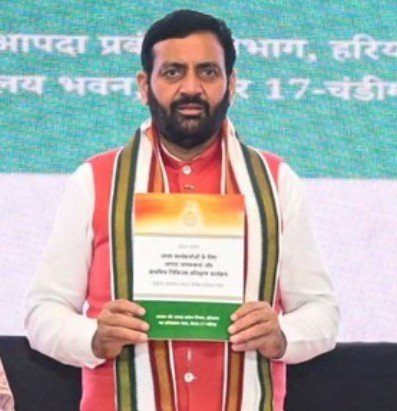
In what the Haryana Government describes as a significant step towards building a healthier and more resilient state, Chief Minister Nayab Singh Saini on Thursday launched and laid the foundation stones of nine major healthcare initiatives worth more than ₹100 crore, signalling an ambitious expansion of medical infrastructure, diagnostic services and patient care facilities across Haryana.
The state-level event, held in Panchkula, brought together senior ministers, healthcare administrators and public representatives as the government outlined a roadmap aimed at strengthening healthcare delivery from district hospitals to primary health centres. The projects span a broad spectrum of services, including diagnostic imaging, dialysis treatment, telemedicine, women’s healthcare, emergency preparedness and critical care infrastructure.
Addressing the gathering, the Chief Minister said that improving healthcare accessibility and quality remains central to the government’s vision of a “Healthy Haryana, Prosperous Haryana.” He argued that the true measure of development lies not only in economic growth but also in the ability of citizens to access timely, affordable and quality healthcare close to their homes.
Among the key announcements was the inauguration of 30 healthcare institutions developed at a cost of ₹22.29 crore and the foundation laying of 16 additional health facilities worth ₹21.50 crore. The Chief Minister also laid the foundation stone for a new rest house at the District Civil Hospital in Sonipat, a project valued at ₹6.45 crore.
A major component of the healthcare expansion involves strengthening diagnostic capabilities across the state. Through the Public-Private Partnership model, MRI services have been introduced in district hospitals at Panipat and Kurukshetra at an estimated cost of ₹12 crore, while CT scan facilities have been launched at Sub-Divisional Hospital Bahadurgarh and District Hospital Charkhi Dadri with an investment of approximately ₹10 crore.
The government believes that expanding access to advanced diagnostic services at the district level will reduce the need for patients to travel to larger cities for routine investigations, thereby lowering treatment costs and improving early detection of diseases.
In another significant initiative, tele-ECG services have been introduced across 600 health institutions in Haryana. The programme, involving an annual expenditure of around ₹3 crore, is intended to facilitate early diagnosis and treatment of cardiac ailments, particularly in rural and semi-urban areas where specialist cardiology services may not always be readily available.
The event also highlighted the growing role of corporate participation in public healthcare. Medical equipment valued at more than ₹24 crore has been provided under Corporate Social Responsibility initiatives, including anaesthesia workstations, defibrillators, X-ray machines, Truenat diagnostic machines and ICU beds. Officials said these resources would substantially strengthen emergency and critical care services in government hospitals.
For patients suffering from chronic kidney disease, the government announced free dialysis services at Maharshi Chyawan Medical College, Koriyawas in Narnaul, and Shri Atal Bihari Vajpayee Government Medical College, Chhainsa in Faridabad. The initiative carries an annual expenditure of approximately ₹3.60 crore and is expected to provide relief to thousands of families facing the financial burden of long-term treatment.
Women’s healthcare also featured prominently in the programme. The state launched “Swasth Nari, Sashakt Parivar” clinics in all 23 district hospitals. These specialised clinics will focus on issues such as cervical cancer screening, breast cancer detection, anaemia management, menopause-related care and broader women’s health concerns. Officials said the initiative reflects a shift towards preventive healthcare and early intervention.
Affordable access to medicines remains another priority area. The government announced the establishment of AMRIT Pharmacies in all 23 district hospitals at a cost of ₹1.73 crore. These outlets are expected to make branded medicines available to patients at significantly reduced prices, helping lower out-of-pocket healthcare expenses.
The state has also initiated a specialised disaster management training programme for approximately 4,600 ASHA workers. The programme, costing around ₹91 lakh, aims to equip frontline health workers with essential emergency response and first-aid skills, enhancing community preparedness during natural disasters and public health emergencies.
During his address, Chief Minister Saini linked Haryana’s healthcare transformation to broader reforms undertaken under Prime Minister Narendra Modi’s leadership over the past twelve years. He noted that national initiatives such as Ayushman Bharat, Jan Aushadhi centres, the Digital Health Mission and the expansion of medical education have fundamentally altered healthcare accessibility for millions of Indians.
The Chief Minister reiterated his directive that every district hospital in Haryana should become the finest healthcare institution within its respective city. He pointed to the rapid expansion of advanced diagnostic services, noting that CT scan facilities are now available in 18 districts, MRI services are operational in seven districts and ultrasound and blood analyser facilities are available across all districts.
He further revealed that tenders for MRI services in thirteen additional district hospitals have already been completed, a move expected to bring sophisticated diagnostic facilities closer to residents throughout the state.
Cancer care has also received special attention. Haryana has established day-care cancer centres in 22 district hospitals, enabling patients to receive treatment within their own districts rather than travelling long distances to tertiary care facilities. The government believes this initiative will significantly reduce both treatment costs and emotional stress for patients and their families.
The Chief Minister highlighted the increasing utilisation of healthcare services across Haryana. Over the past year, district hospitals operating under the PPP model conducted nearly two lakh dialysis sessions, approximately 1.65 lakh CT scans, around 70,000 MRI scans, more than 36,000 echocardiography procedures and thousands of coronary angiograms and stent implantations. These figures, he said, demonstrate growing public confidence in government healthcare institutions.
Recognising that infrastructure alone cannot guarantee quality healthcare, Saini emphasised the importance of strengthening human resources. He announced that recruitment of 777 Medical Officers has been completed, while the appointment process for another 450 Medical Officers is in its final stages. The government expects these appointments to improve specialist availability and reduce staff shortages across public hospitals.
The state’s healthcare ambitions are also reflected in its financial commitments. Haryana has increased its healthcare budget by 32.89 per cent, allocating approximately ₹14,000 crore for the sector during the current financial year. The Chief Minister contrasted this with the health budget of ₹2,646 crore in 2014, describing the increase as evidence of sustained investment in public welfare.
Medical education has expanded alongside healthcare delivery. Haryana now has 17 medical colleges compared to six in 2014, while MBBS seats have risen from 700 to 2,710. The state has also broadened educational opportunities in nursing, physiotherapy and paramedical sciences, creating a larger pipeline of healthcare professionals for the future.
Emergency medical services have similarly undergone expansion. Haryana currently operates a network of 550 ambulances integrated with the Dial-112 emergency response system. According to government data, ambulances typically reach patients within nine to ten minutes of receiving emergency calls. To strengthen this capability further, provisions have been made in the current budget for the procurement of 70 Advanced Life Support ambulances and 167 Basic Life Support ambulances.
The event concluded with a call for citizens to complement modern healthcare with healthier lifestyles, including regular exercise, balanced nutrition, yoga and freedom from substance abuse. The Chief Minister also released a training manual for ASHA workers focused on disaster awareness and primary medical response.
As Haryana expands healthcare infrastructure and services at an unprecedented pace, the projects unveiled in Panchkula reflect a broader effort to decentralise medical care, reduce healthcare inequalities and ensure that advanced treatment facilities are no longer confined to major urban centres. Whether through diagnostic expansion, women’s health programmes, free dialysis services or strengthened emergency response systems, the state is seeking to reshape healthcare delivery with a focus on accessibility, affordability and quality for every citizen.