
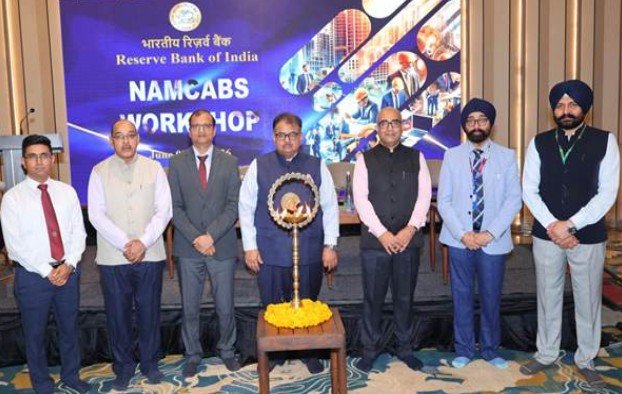
Pathankot, Punjab — In a significant push towards strengthening India’s micro, small and medium enterprise (MSME) ecosystem, the Reserve Bank of India (RBI) conducted a two-day National Mission on Capacity Building of Bankers for Financing MSMEs (NAMCABS) workshop in Pathankot, bringing together banking professionals, regulators and industry experts to sharpen institutional support for one of the country’s most vital economic sectors.
Held on June 3 and 4, the programme reflected the growing emphasis being placed on improving credit access, strengthening financial inclusion and enhancing the ability of bankers to understand the evolving needs of small businesses operating in an increasingly competitive and uncertain economic environment.
The workshop was inaugurated by Vivek Srivastava, Regional Director of RBI Chandigarh, in the presence of senior officials from the central bank and leading financial institutions. Among those present were Pankaj Setiya, General Manager, RBI; Manmeet Chhabra, General Manager, State Bank of India; and R.K. Meena, representing the State Level Bankers’ Committee (SLBC), Punjab.
Around 90 banking professionals from 20 different banks participated in the programme. The attendees represented six major districts of Punjab—Amritsar, Pathankot, Gurdaspur, Tarn Taran, Kapurthala and Hoshiarpur—underscoring the regional importance of MSME-led economic activity and the need for a well-equipped banking network to support it.
The workshop comes at a time when MSMEs continue to play a pivotal role in India’s economic development. The sector contributes significantly to employment generation, manufacturing output, exports and entrepreneurial growth. However, access to timely and affordable finance remains one of the key challenges faced by small businesses across the country.

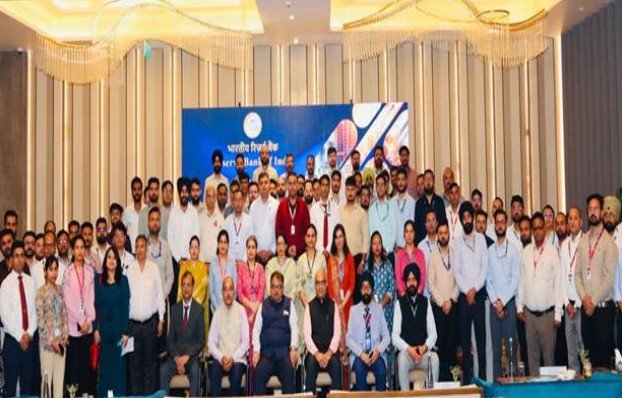
Addressing the participants, Vivek Srivastava highlighted the strategic importance of the MSME sector in driving economic resilience and inclusive growth. He stressed that financial institutions must go beyond conventional lending practices and adopt a more responsive and entrepreneur-centric approach.
Describing MSMEs as the backbone of the Indian economy, he noted that the sector has consistently demonstrated resilience despite global economic uncertainties and changing market conditions. He emphasized that bankers have a critical role in enabling business growth, job creation and local manufacturing expansion.
He further observed that at a time when global economic headwinds continue to affect trade and investment patterns, strengthening domestic enterprises and promoting locally manufactured products under the Make in India initiative would help maintain economic stability and support India’s journey towards self-reliance.
The inaugural session also focused on the broader national vision of transforming India into a developed economy by 2047. Speakers stressed that expanding credit support to productive enterprises, particularly small and emerging businesses, would be essential for achieving that goal.
Welcoming the participants, RBI General Manager Pankaj Setiya described the workshop as an important platform for knowledge sharing and professional development. He encouraged bankers to continuously update themselves on evolving regulatory frameworks, innovative financing models and emerging best practices in MSME lending.
Setiya emphasized that the banking sector must become more agile and responsive to the requirements of entrepreneurs. In an era marked by rapid technological change and global economic uncertainty, he said, strengthening local manufacturing and supporting small enterprises would be critical to sustaining long-term economic growth.
A key highlight of the workshop was the series of technical sessions conducted by experts from RBI, the Small Industries Development Bank of India (SIDBI), the MSME Development and Facilitation Office (MSME DFO), credit information company TransUnion CIBIL and experienced faculty members from commercial banks.
The sessions provided participants with practical insights into various aspects of MSME financing, including credit appraisal techniques, risk assessment frameworks, regulatory compliance requirements, digital lending innovations and fintech-driven solutions aimed at improving access to finance.
Particular attention was given to balancing credit expansion with prudent risk management. Experts discussed ways to evaluate business viability more effectively, improve loan monitoring systems and leverage technology to streamline lending processes while maintaining financial discipline.
The discussions also reflected the changing nature of banking in the MSME segment, where data analytics, digital platforms and alternative credit assessment models are increasingly becoming part of the lending ecosystem.
Participants actively engaged in the interactive sessions and shared experiences from the field, creating a collaborative learning environment. Many bankers noted that the workshop offered valuable practical perspectives that could help improve decision-making and customer engagement at branch and regional levels.
The positive response from participants highlighted the growing demand for specialised training programmes that bridge the gap between policy objectives and on-ground implementation. As MSMEs continue to seek greater access to formal credit channels, the role of trained banking professionals becomes increasingly important in ensuring that viable enterprises receive timely financial support.
The Pathankot workshop is being viewed as more than a routine training exercise. It represents a broader effort by the Reserve Bank of India to strengthen the institutional framework supporting entrepreneurship and economic development. By equipping bankers with updated knowledge, practical tools and a deeper understanding of MSME challenges, the initiative aims to foster a more inclusive and growth-oriented credit environment.
As India seeks to accelerate industrial growth, expand employment opportunities and build a stronger domestic manufacturing base, programmes such as NAMCABS are expected to play an important role in aligning the banking sector with the country’s long-term development ambitions. Through stronger banker capacity, better credit assessment and a more supportive financing ecosystem, the workshop reinforced the message that empowering MSMEs remains central to India’s economic future.
#RBI #MSME #Punjab #Pathankot #BankingSector #FinancialInclusion #MakeInIndia #ViksitBharat2047 #Entrepreneurship #EconomicGrowth #SIDBI #MSMELending #IndiaEconomy #BankingReforms #BusinessDevelopment
This is an auto web-generated news web story.