Saptrishi Soni
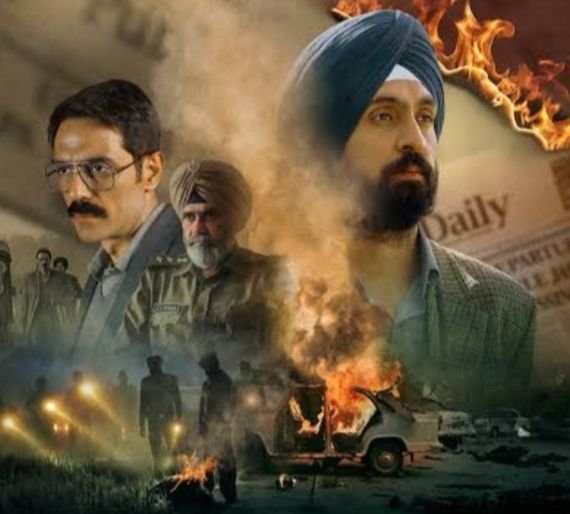
The sudden removal of the Diljit Dosanjh-starrer Satluj from an OTT platform just days after its release has ignited a fierce political and cultural debate in Punjab, reopening old wounds from one of the state’s most turbulent chapters and triggering fresh questions about freedom of expression, historical memory and the right to revisit painful episodes of the past.
The controversy has rapidly expanded beyond the realm of cinema, drawing in major political parties, Sikh religious institutions and civil society voices. At the centre of the debate is a film inspired by the life and struggle of human rights activist Jaswant Singh Khalra, whose efforts to expose alleged extrajudicial killings and enforced disappearances during Punjab’s militancy era earned him international recognition and ultimately cost him his life.
The film’s removal has been met with strong criticism from the Shiromani Gurdwara Parbandhak Committee (SGPC), the Shiromani Akali Dal (SAD), and senior Sikh religious leaders, who argue that the movie represents an important attempt to document a difficult period in Punjab’s history.
SAD president Sukhbir Singh Badal described the removal as deeply troubling, arguing that a film depicting the sacrifices of Jaswant Singh Khalra and the human rights concerns of that era should not be suppressed. He maintained that societies become stronger when they confront uncomfortable truths rather than attempt to erase them from public discourse.
The SGPC, which manages major Sikh gurdwaras and remains one of the most influential Sikh institutions, also came out in support of the film. Its leadership urged people, particularly younger generations, to engage with the subject matter and understand the historical context surrounding Punjab’s years of militancy and counter-insurgency operations.
Kulwant Singh Mannan, the SGPC’s chief secretary, said the film seeks to highlight a period that continues to shape Punjab’s collective consciousness. He noted that Jaswant Singh Khalra’s work focused on investigating allegations of fake encounters and disappearances, issues that remain deeply sensitive for many families across the state.
The controversy has gained further significance because of the enduring legacy of Khalra, who became internationally known after documenting allegations that thousands of unidentified bodies had been secretly cremated during Punjab’s insurgency years. His disappearance and subsequent killing became one of the most prominent human rights cases linked to the conflict.
The Akal Takht, Sikhism’s highest temporal authority, has also voiced support for discussions surrounding the issues raised by the film. Jathedar Giani Kuldip Singh Gargaj reportedly emphasized that unlawful killings and violations of human rights can never be justified and that accountability remains an essential component of justice.
The ruling Aam Aadmi Party (AAP) has adopted a more cautious position. Punjab minister Aman Arora acknowledged that the subject matter touches upon important historical questions but stressed that any presentation of past events should be handled responsibly to ensure social harmony and communal unity are not adversely affected.
Meanwhile, Congress leaders have sought to distance themselves from the growing political confrontation. Senior Congress parliamentarian Tariq Anwar stated that historical events should be examined on the basis of facts and evidence rather than being transformed into a partisan political battle.
The dispute surrounding Satluj has once again brought attention to the broader debate over how Punjab’s militancy era should be remembered. For many families, the period remains associated with immense suffering, loss and unresolved questions. Others argue that revisiting these events through cinema, literature and public discussion is essential for preserving historical truth and ensuring that future generations understand the complexities of that time.
Political observers note that the film’s removal has unintentionally amplified public interest in its subject matter. What began as a cinematic release has evolved into a wider discussion about censorship, historical accountability and the role of art in documenting contested chapters of history.
The controversy is also likely to resonate beyond Punjab. Across India and internationally, debates over films dealing with politically sensitive subjects have increasingly become flashpoints between governments, institutions, artists and audiences. The Satluj episode appears to be the latest example of how historical narratives continue to shape contemporary political discourse.
As demands grow for clarity regarding the reasons behind the film’s removal, the issue is expected to remain a significant talking point in Punjab’s political and cultural landscape. For supporters of the film, the central question is no longer merely about a movie, but about whether difficult chapters of history can be openly discussed and remembered in a democratic society.
For critics, the debate revolves around ensuring that historical narratives are presented responsibly and without inflaming social tensions.
What remains undeniable is that Satluj has succeeded in reviving a conversation that Punjab has grappled with for decades—a conversation about memory, justice, accountability and the enduring legacy of one of the most turbulent periods in the state’s modern history.