Kerala’s rain-battered hill district of Wayanad has once again found itself at the centre of a monsoon tragedy after a massive landslide struck the construction site of the Kalladi tunnel project, killing at least two people, injuring several others and leaving a number of workers trapped beneath tonnes of mud and debris.
The incident unfolded following relentless rainfall that lashed the region through the day, triggering a sudden slope failure near the tunnel work site. Rescue teams comprising the National Disaster Response Force (NDRF), Fire and Rescue Services, police personnel and local volunteers rushed to the location and immediately launched a large-scale search and rescue operation.
Officials said the landslide buried heavy machinery, construction equipment and portions of the worksite within minutes, making rescue operations extremely challenging. Several workers managed to escape, while others were caught in the collapsing earth and rocks. Two bodies have so far been recovered, while rescue personnel continue to search for those believed to be trapped under the debris.

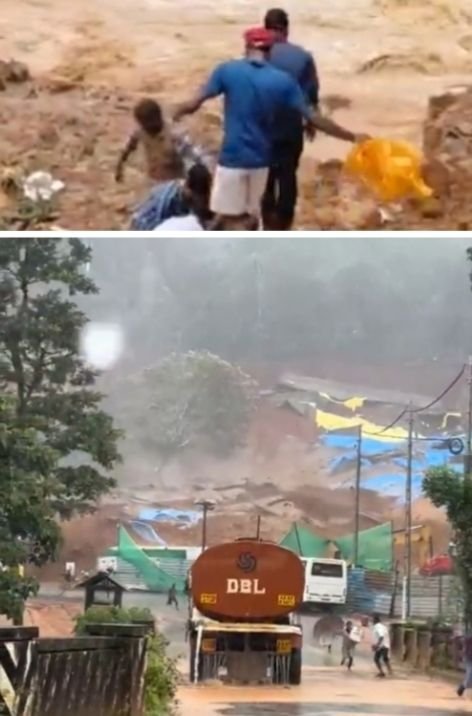
Several injured workers were shifted to nearby hospitals, where some are reported to be undergoing treatment for serious injuries. Authorities have not ruled out the possibility that the casualty figure could rise as rescue operations progress.
The Kerala State Disaster Management Authority said the region received nearly 265 millimetres of rainfall within 24 hours, resulting in dangerously saturated soil and unstable hill slopes. Weather experts noted that continuous rainfall significantly increased the risk of landslides across the Western Ghats, prompting repeated advisories for residents and travellers.
Construction activity at the tunnel project had reportedly been restricted because of the adverse weather conditions. However, the intensity of the rainfall caused a sudden collapse of the hillside overlooking the project, sending a massive volume of earth and rocks crashing onto the worksite.
The Kalladi tunnel forms part of a strategically significant infrastructure project intended to improve connectivity between Wayanad and neighbouring districts. However, the latest disaster has once again reignited concerns over executing large-scale construction projects in ecologically fragile mountain regions during the peak monsoon season.
The tragedy also brings back painful memories of Wayanad’s devastating landslides in recent years, which claimed hundreds of lives and left entire communities displaced. Experts have repeatedly warned that changing rainfall patterns, fragile terrain and expanding infrastructure development have together increased the vulnerability of the district to extreme weather events.
Authorities have ordered a detailed investigation into the incident to determine whether all prescribed safety protocols were followed before work commenced at the site. Geological experts are also expected to assess the stability of the surrounding slopes before construction activity resumes.
Meanwhile, the India Meteorological Department has forecast continued heavy rainfall across several parts of Kerala over the coming days, with warnings of further landslides, flash floods, overflowing rivers and travel disruptions in vulnerable districts.
Disaster management officials have appealed to residents living in landslide-prone areas to remain alert, avoid unnecessary travel and strictly follow evacuation advisories whenever issued, as the southwest monsoon continues to intensify across the state.