
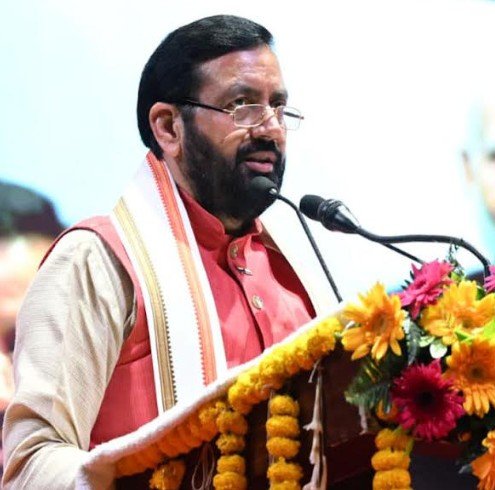
Calling drug abuse a challenge that extends far beyond policing, Haryana Chief Minister Nayab Singh Saini on Saturday urged citizens, civil society organisations and professional bodies to join hands in building a drug-free state through collective public participation.
Addressing an interaction with non-governmental organisations (NGOs) and Chemists’ Associations under the Haryana Uday campaign in Panchkula, the Chief Minister said the fight against narcotics is fundamentally linked to the future of families, society and nation-building. While law enforcement agencies can act against traffickers and criminal networks, he stressed that lasting success can only be achieved when communities themselves become active partners in preventing substance abuse.
The programme, organised as part of the state’s wider anti-drug initiative, brought together representatives of voluntary organisations, members of the pharmaceutical community, police officials and citizens to discuss collaborative strategies for tackling the growing menace of narcotics. The Chief Minister also administered an anti-drug pledge, reaffirming the government’s commitment to making Haryana free from drug abuse.
Describing the campaign as an essential step towards achieving the vision of a developed Haryana and a developed India, the Chief Minister said the country’s progress depends upon a healthy and empowered youth population. He noted that India’s demographic strength can become its greatest advantage only if young people remain free from addiction and are able to channel their energy towards education, innovation, sports and nation-building.
He said the Haryana Uday campaign would strengthen community policing while encouraging active public participation to transform the anti-drug drive into a sustained social movement. Extensive awareness programmes, he added, will be organised across the state to educate communities about the dangers of substance abuse and encourage greater civic involvement.
According to the Chief Minister, the campaign is not merely aimed at addressing a present-day challenge but at securing the future of coming generations. He said every individual, institution, social organisation, chemist, police officer and responsible citizen contributing to the initiative is helping build a healthier, safer and stronger Haryana.
Speaking about the wider social consequences of drug addiction, the Chief Minister said narcotics destroy not only an individual’s physical and mental well-being but also weaken families, erode social values and diminish the productive strength of society. Haryana’s youth, he observed, have consistently excelled in sports, education, science, industry and several other fields, bringing recognition to the state at both national and international levels. Allowing this potential to be lost to addiction would represent a setback not only for individuals but for society as a whole.
He said the impact of drug abuse extends beyond the person consuming narcotics, affecting parents, spouses, siblings and children while disrupting family stability and community harmony. For that reason, he argued, the issue should be viewed not solely as a law-and-order concern but as a matter involving humanity, culture, family values and national development.
Drawing parallels with historic public movements, the Chief Minister said meaningful social transformation has always been driven by collective resolve. He referred to Mahatma Gandhi’s leadership during India’s freedom struggle and the nationwide public participation witnessed during the Swachh Bharat Mission, stating that a similar mass movement is now required to eliminate drug abuse.
While governments can enact laws, police can dismantle criminal networks and courts can deliver justice, he said lasting behavioural change ultimately depends upon society itself. Public awareness, community engagement and social responsibility must therefore remain central to the state’s anti-drug strategy.
The Chief Minister also praised voluntary organisations for their contribution to public welfare, describing them as vital partners in reaching vulnerable sections of society where government mechanisms alone may not always be sufficient. He said social organisations often play a crucial role in guiding young people who find themselves trapped in addiction or facing emotional distress.
Appealing for wider participation, he urged NGOs, community groups and educational institutions to take the campaign into villages, urban neighbourhoods, schools, colleges and sports grounds. Rather than isolating or condemning young people struggling with addiction, society should offer counselling, support and positive opportunities that help them rebuild their lives, he said.
The Chief Minister also highlighted the government’s continuing crackdown on the illegal drug trade, stating that properties belonging to individuals involved in narcotics trafficking have already been seized as part of intensified enforcement efforts. He reaffirmed that while strict legal action against drug networks will continue, public cooperation remains the most powerful instrument in achieving the long-term goal of a drug-free Haryana.