
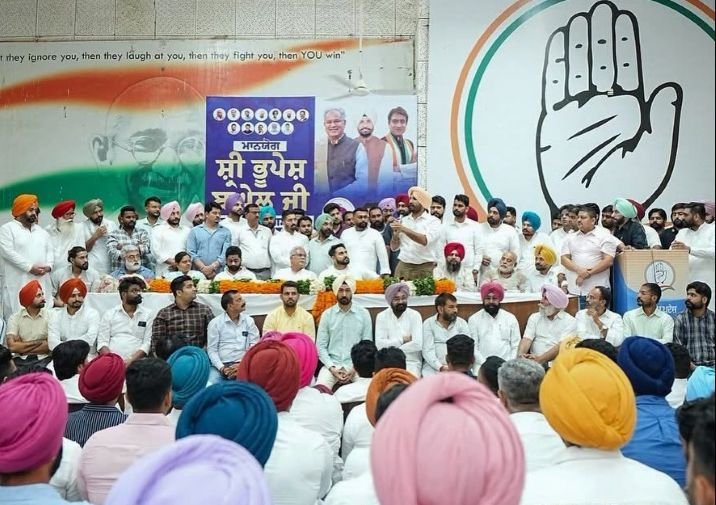
Saptrishi Soni: The Punjab unit of the Congress party is once again witnessing signs of internal discord, with differences over the state leadership resurfacing despite repeated efforts by the party high command to project unity. The latest round of developments has intensified political debate in the state at a time when all major parties have begun positioning themselves for the 2027 Punjab Assembly elections.
The latest controversy emerged after senior Congress leader Mohammad Mustafa urged the party’s central leadership to reconsider its decision to continue Amrinder Singh Raja Warring as the Punjab Pradesh Congress Committee (PPCC) president. Mustafa’s remarks have brought into focus the continuing divisions within the state unit, where several leaders have been expressing dissatisfaction over the party’s organisational functioning and electoral strategy.
Political observers note that the Congress has struggled with factionalism in Punjab over the past several years. While earlier divisions were largely centred around support for individual leaders, the current phase appears to be driven by opposition to the existing organisational leadership rather than allegiance to any single faction. Analysts believe this shift reflects the party’s continuing challenge of balancing competing ambitions while rebuilding its electoral base.
The renewed differences come at a crucial juncture. Punjab remains one of the few states where the Congress continues to retain a significant political presence despite suffering electoral setbacks in recent years. Party leaders have repeatedly maintained that strengthening the organisation at the grassroots level is essential to effectively challenge the ruling Aam Aadmi Party in the next Assembly elections.
Several senior leaders have publicly called for greater consultation within the party and a more inclusive decision-making process. They argue that organisational appointments and political strategies should reflect consensus among experienced leaders as well as emerging workers. At the same time, supporters of the current leadership have defended the existing structure, asserting that continuity is necessary to strengthen the organisation and avoid further instability.
The internal debate has also provided political ammunition to rival parties. Leaders of the Bharatiya Janata Party have criticised the Congress, alleging that persistent infighting has weakened its ability to function as a credible opposition in Punjab. BJP leaders have claimed that the Congress remains preoccupied with resolving internal disputes instead of raising public issues concerning governance, employment, agriculture and development.
Political experts believe prolonged organisational uncertainty could affect the Congress’ preparations for future electoral contests, including local body elections and the 2027 Assembly polls. However, they also point out that internal debates are not uncommon in large political parties and that timely intervention by the central leadership could help restore cohesion.
Meanwhile, Congress leaders continue to assert that ideological commitment and public outreach remain the party’s primary focus. Senior functionaries have reiterated that organisational matters will be addressed through internal mechanisms while ensuring that the party remains united in taking up issues affecting farmers, youth, traders and other sections of society.
With political activity expected to intensify over the coming months, all eyes will remain on the Congress high command and its efforts to maintain organisational unity in Punjab. The outcome of these internal discussions is likely to influence the party’s electoral strategy and its prospects in one of India’s politically significant states.