Saptrishi Soni
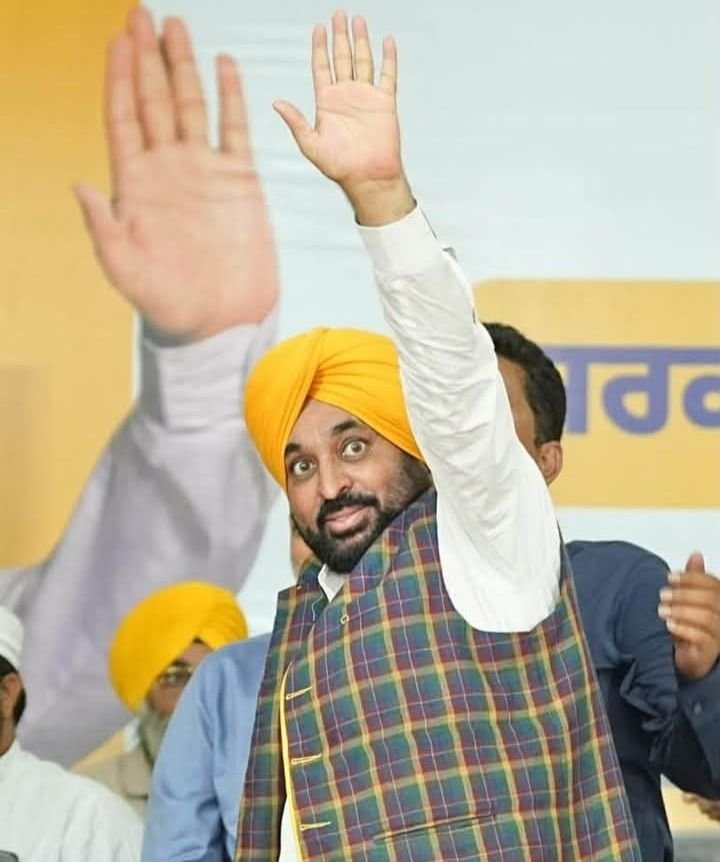
Punjab Chief Minister Bhagwant Singh Mann has stepped up his political attack on the BJP, Congress and Shiromani Akali Dal, warning voters against what he described as attempts to divide Punjab along communal lines ahead of the next Assembly election.
Addressing a gathering in Malerkotla, Mr Mann presented Punjab’s tradition of communal harmony as one of the state’s defining characteristics and argued that political parties should not be allowed to exploit religious or social divisions for electoral gain.
His comments come as Punjab’s political landscape begins to take shape ahead of the 2027 Assembly election.
The BJP is attempting to expand its independent political base in the state, while the Shiromani Akali Dal is seeking to rebuild after years of electoral decline. Congress is also attempting to strengthen its organisation and challenge the AAP government.
Against this background, Mr Mann’s emphasis on communal harmony represents an important part of AAP’s political messaging.
Malerkotla was an especially significant location for such a message.
The city has a distinctive place in Punjab’s history and is widely associated with communal harmony. Mr Mann referred to the historical episode involving the Nawab of Malerkotla and the Sikh tradition surrounding the younger Sahibzadas of Guru Gobind Singh.
He argued that the city’s history represented the values of fraternity and mutual respect that Punjab should preserve.
Mr Mann accused the BJP of attempting to create divisions in Punjab for electoral purposes, although the BJP is likely to strongly contest that characterisation.
The chief minister also criticised Congress and the SAD, accusing their leaders of being more concerned with internal power struggles and family interests than with Punjab’s development.
His attack on the opposition was particularly sharp in relation to SAD president Sukhbir Singh Badal.
Mr Mann argued that the era in which traditional political parties alternated in power was over and said voters had chosen AAP to bring about a change in Punjab’s political system.
He also accused the Badal family of wrongdoing and suggested that investigations into their alleged actions would continue. Such allegations remain politically contested, and any criminal liability must ultimately be established through due legal process.
The chief minister’s remarks are part of a broader attempt by AAP to position itself as an alternative to Punjab’s traditional political establishment.
The party came to power in 2022 after campaigning heavily on the promise of breaking away from the established political order.
Now, with the next election approaching, AAP has to defend its own record while reminding voters why they rejected the previous political establishment.
This is where Mr Mann’s development message and his criticism of traditional parties intersect.
He argues that the government is building schools, improving healthcare, expanding roads, creating jobs and supporting farmers, while the opposition is focused on political infighting.
The BJP and Congress are likely to challenge that narrative by focusing on issues such as law and order, drugs, unemployment, finances and the implementation of AAP’s election promises.
For Punjab voters, the coming election is therefore likely to involve competing narratives rather than a single dominant issue.
AAP will seek to make the election a referendum on governance and public-service delivery.
Congress will attempt to capitalise on anti-incumbency and its traditional organisational base.
The BJP will seek to expand its influence, particularly among urban and other sections of the electorate, while the SAD will attempt to recover its traditional rural and Panthic support.
Mr Mann’s Malerkotla speech indicates that AAP is already preparing for this contest.
By emphasising Punjab’s social harmony and warning against divisive politics, the chief minister is seeking to define the political contest on terms favourable to his party.
The effectiveness of that strategy will depend on whether voters believe the government’s record on development is strong enough to outweigh concerns over other issues.
But one thing is becoming clear: the political campaign for Punjab 2027 is already taking shape.