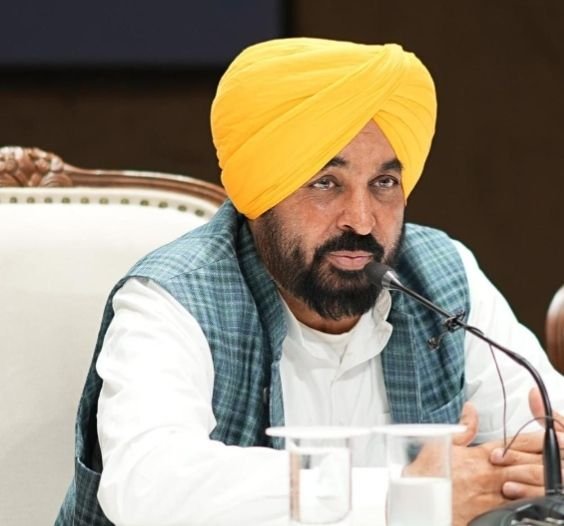
The Punjab government has moved to strengthen regulation of private schools, introducing tighter controls on fee increases and greater scrutiny of the financial practices of educational institutions. The move is being positioned as an effort to protect parents from arbitrary fee hikes while making private education more transparent and accountable.
The Punjab Assembly has approved legislation under which private unaided schools will face a 5% annual ceiling on fee increases. The measure is part of a broader education policy being pursued by the Bhagwant Mann government, which has simultaneously invested in government schools and expanded the network of Schools of Eminence.
The fee issue has become increasingly important for families across Punjab. For many parents, the cost of education extends well beyond tuition fees, with transportation, development charges, examination fees, books, uniforms and other compulsory expenses adding significantly to the annual financial burden.
The government has argued that the new framework is intended to prevent schools from using different categories of charges to effectively bypass restrictions on fee increases.
Under the proposed regulatory system, schools will have to maintain greater transparency regarding their fee structures and financial records. Authorities will have powers to examine records and take action where institutions are found to have violated the prescribed rules.
The government has also indicated that schools which have imposed excessive increases could be required to return money collected beyond the permissible limit.
For parents, this could become one of the most significant education-related interventions by the Mann government. The issue has a direct impact on household budgets and therefore carries considerable political significance.
The government’s decision also needs to be viewed against the backdrop of its larger education strategy.
Since coming to power in 2022, the Aam Aadmi Party government has repeatedly presented education as one of its central governance priorities. It has focused on upgrading government-school infrastructure, introducing modern classrooms and laboratories, strengthening teacher training and establishing Schools of Eminence.
Chief Minister Bhagwant Mann has frequently argued that government schools should not merely provide basic education but should be capable of competing with the best private institutions.
The administration has also highlighted the performance of students from government schools in competitive examinations, particularly NEET and JEE. The government believes that improved infrastructure and teaching standards can gradually restore confidence among parents who have traditionally preferred private schools.
This is where the private-school fee regulation becomes politically important.
If government schools continue to improve while private institutions face greater regulation, the Mann government can present the two measures as parts of a single education policy: better public education on one side and greater accountability in private education on the other.
However, implementation will determine whether the policy succeeds.
Private-school managements could argue that a uniform ceiling on fee increases does not necessarily reflect differences in operating costs, teacher salaries, infrastructure requirements and other expenses. If schools believe the regulatory framework restricts their ability to maintain standards, the government could face resistance.
There is also the possibility that schools could attempt to recover additional costs through charges that are not immediately visible as tuition fees. Effective monitoring will therefore be crucial.
The government will have to ensure that the new regulations do not remain merely a political announcement. Parents will expect authorities to act when complaints are received and to ensure that schools provide clear information about their complete fee structures.
The issue also has a wider political dimension.
Punjab is approaching another important electoral cycle, and education is likely to remain a key area of political debate. The AAP government will seek to project its record in schools as evidence of its broader governance model, while opposition parties are expected to question whether improvements claimed by the government are translating into better outcomes for ordinary families.
For the Mann government, the political advantage of the fee-regulation policy is that it addresses an issue that affects families across urban and rural Punjab, cutting across traditional political divisions.
Parents may not necessarily follow every political controversy, but school fees are an issue they experience directly every year.
The government’s larger challenge will therefore be to demonstrate that regulation is accompanied by improvement in educational quality.
A successful education policy cannot be measured simply by controlling fees. It must also ensure competent teachers, better learning outcomes, modern infrastructure and equal opportunities for children from different economic backgrounds.
Punjab’s education debate is consequently entering a more important phase. The government is attempting to strengthen public education while bringing private education under tighter regulatory supervision.
If the policy delivers greater transparency without compromising educational standards, it could become an important achievement for the Mann government. If enforcement proves weak or leads to prolonged confrontation with private schools, the administration could face criticism from both parents and educational institutions.
For now, however, the message from the government is clear: education should not become an uncontrolled financial burden on families, and both public and private institutions must be accountable for the quality and cost of education they provide.