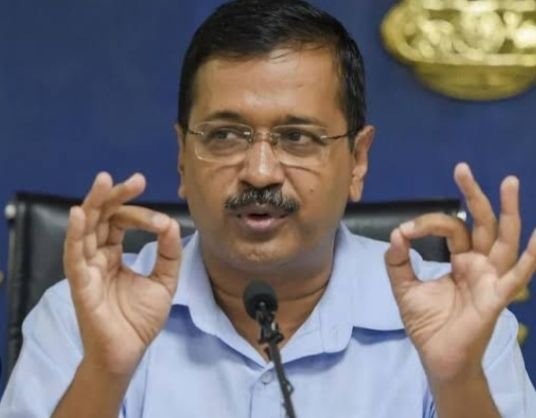
Saptrishi Soni: Arvind Kejriwal has sharply criticised the arrest of Aam Aadmi Party (AAP) leader Satyendar Jain, calling the case politically motivated and accusing the Bharatiya Janata Party (BJP) of using investigative agencies to target opposition leaders.
Kejriwal’s reaction, posted on social media following Jain’s arrest in connection with alleged corruption in the construction of classrooms during the previous Delhi government, has the potential to widen an already familiar political confrontation between the AAP and the BJP.
For the AAP, however, the controversy extends beyond Delhi. With the next Punjab Assembly election approaching, the arrest of one of the party’s prominent leaders could become another issue in the political battle over the AAP’s record, its leadership and its claims of facing pressure from the BJP-led central government.
Kejriwal alleged that Jain had been falsely implicated and recalled the former Delhi minister’s earlier incarceration, arguing that the treatment he received in custody had caused significant mental distress. He maintained that the earlier case against Jain was also politically motivated and predicted that the latest allegations would eventually be disproved.
The AAP leader went further, accusing the BJP of pursuing what he described as a pattern of political intimidation. He questioned how long, in his words, such “dictatorship” could continue and argued that opposition leaders were being subjected to legal action on what he considers fabricated charges.
The allegations reflect the broader political narrative that the AAP has repeatedly used when its leaders face action by investigative agencies. The BJP, meanwhile, has consistently rejected accusations of political vendetta and maintained that corruption allegations should be investigated independently of political affiliations.
Jain’s arrest therefore presents the AAP with both a political challenge and an opportunity. The party is likely to use the episode to reinforce its argument that its leaders are being targeted, while the opposition can use the case to question the AAP’s record on governance and corruption.
Punjab will be particularly important in this contest. The state remains the AAP’s strongest electoral base outside Delhi, and Chief Minister Bhagwant Mann’s government will face voters in the coming Assembly election. The party will be seeking to defend its record in office while countering criticism from the BJP, Congress and other political rivals.
The timing also gives the BJP an opportunity to intensify its attack on the AAP’s leadership. Any allegations involving senior party figures could become part of a wider campaign questioning the party’s claims of providing an alternative to the established political order.
For the AAP, the response is likely to be equally political. Kejriwal’s message sought to portray Jain’s arrest not simply as an individual legal case but as part of a larger struggle between the AAP and the BJP. He said the entire AAP and sections of the public would stand firmly behind Jain and predicted that the BJP’s alleged actions would ultimately be exposed.
The controversy also comes at a time when Punjab’s political landscape is beginning to take shape ahead of the Assembly polls. Issues of governance, corruption, law and order, employment and the performance of the Mann government are expected to dominate the electoral debate.
Whether the Jain case becomes a major campaign issue in Punjab will depend largely on how the investigation develops and how the competing parties frame it. For the AAP, it offers an opportunity to consolidate its narrative of political victimisation. For the BJP, it provides another avenue to challenge the credibility of the ruling party.
For now, Jain’s arrest has opened another front in the AAP-BJP confrontation. And with Punjab heading towards another high-stakes Assembly election, developments in Delhi could increasingly find their way into the political debate in the state.

*The allegations made by political leaders are claims and have not been established as facts in court.*