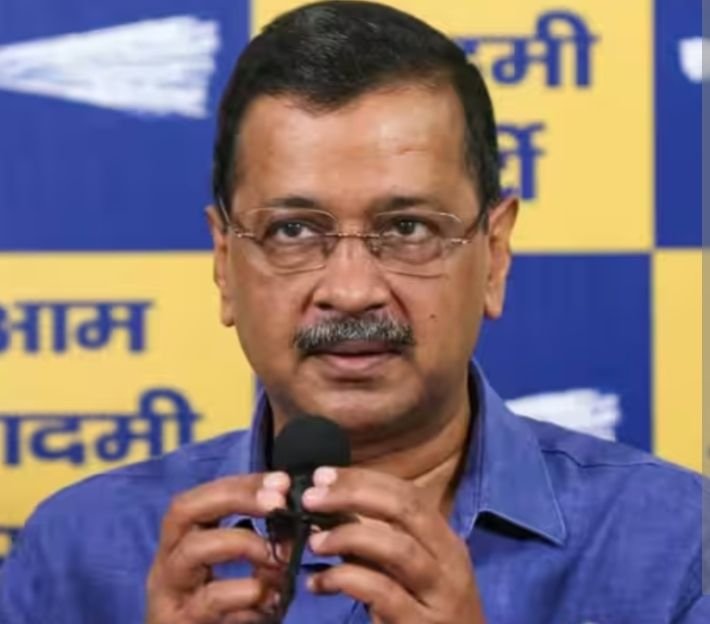
Saptrishi Soni: With the Punjab Assembly election approaching, Aam Aadmi Party leader Arvind Kejriwal has sought to place education at the centre of the party’s political narrative, highlighting the transformation of government schools in Delhi and Punjab and portraying education and healthcare as the foundations of the AAP’s model of governance.
In a social media post, Kejriwal said he was pleased that education and schools were now being discussed widely across the country, describing it as a “people’s movement”. He argued that the focus on public education should have begun much earlier and reiterated the AAP’s long-standing emphasis on government schools and healthcare.
For the AAP, the message comes at a politically significant moment. Punjab will be one of the party’s most important electoral battlegrounds as it seeks to retain power and defend its record under Chief Minister Bhagwant Mann. With political activity expected to intensify ahead of the Assembly polls, the party is increasingly highlighting issues that directly affect households, including education, healthcare, employment and public services.
Kejriwal said education and health had always been among the AAP’s principal priorities. According to him, a country cannot achieve sustained development without ensuring access to quality education and healthcare for all citizens.
He pointed to the experience of Delhi and Punjab as examples of the party’s approach to government schools. Kejriwal claimed that substantial improvements had been made in school infrastructure and the quality of education, with some government institutions now offering facilities comparable to leading private schools.
He also claimed that in both Delhi and Punjab there had been instances of parents moving their children from private schools to government institutions after improvements were made. Such claims have formed an important part of the AAP’s broader argument that public services can be strengthened through sustained government investment rather than dependence on private institutions.
Punjab is particularly important to this narrative. The AAP came to power in the state with a sweeping victory in the 2022 Assembly election and has since sought to present improvements in government schools as one of its key governance achievements.
Kejriwal said the process of upgrading government schools in Punjab was still underway. He claimed that, apart from a limited number of institutions, most schools had received basic facilities, while work remained to be completed in the remaining schools.
He further argued that several Punjab government schools were now capable of competing with the best private schools in terms of infrastructure and educational standards.
The comments also referred to an older video of a Punjab government school that had recently circulated on social media. Kejriwal welcomed the fact that Punjab’s Education Minister had personally visited the institution to assess the situation rather than relying solely on the video or reports circulating online.
His reference to the minister’s inspection is significant politically. It allows the AAP government to present itself as responsive to criticism and willing to verify claims on the ground. At the same time, the episode highlights the continuing scrutiny faced by the Punjab government over the condition of public schools.
As the Assembly election draws closer, education could become an important component of the AAP’s campaign strategy. The party has previously built much of its political identity around government schools, hospitals, electricity and public welfare, particularly in Delhi. In Punjab, it is seeking to establish that these policies have produced tangible results during its tenure.
The challenge for the party will be to convert claims of improvement into visible public satisfaction. Opposition parties are likely to question the scale and quality of reforms and highlight shortcomings wherever they exist. For voters, the debate is likely to centre less on political claims and more on whether government schools have actually improved in classrooms, teaching standards, infrastructure and learning outcomes.
Kejriwal’s latest intervention suggests that the AAP intends to make education a major part of its electoral conversation. By linking the Punjab government’s school reforms with the party’s wider governance model, the AAP is seeking to strengthen its political base and remind voters of the promises on which it originally sought their mandate.
With the Punjab Assembly election approaching, the contest is gradually moving beyond traditional political calculations. For the AAP, the emerging strategy appears to be clear: make the performance of government services—particularly schools and healthcare—a central measure of its five-year record.
Whether that narrative resonates with Punjab’s voters will be one of the important questions of the coming electoral campaign.