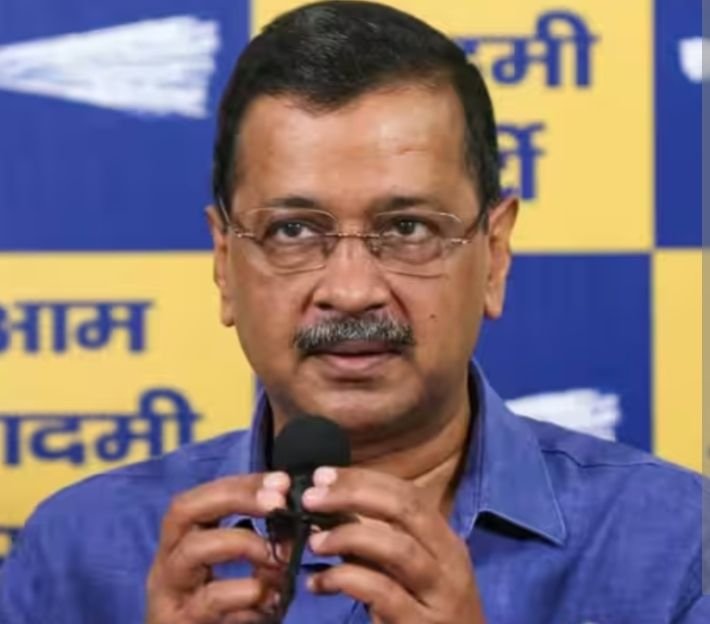
The Aam Aadmi Party has registered a striking electoral breakthrough in Rajasthan by securing a clear majority in the Baran Municipal Council, emerging as the single largest force in all 60 wards of the civic body. The result comes amid the ongoing counting of votes across Rajasthan’s 309 urban local bodies, where the Bharatiya Janata Party has so far established an overall lead over the Congress.
In Baran, the AAP won 32 of the 60 wards, crossing the halfway mark on its own and securing control of the Municipal Council without the need for support from other parties or independents. The Congress finished with 17 seats, while the BJP managed nine. Independents won two wards.
The scale of the AAP’s victory is significant because the contest in Baran was largely expected to revolve around the BJP and Congress, the two principal political forces in Rajasthan. Instead, the result has placed the AAP at the centre of the political conversation in a civic body where it has now demonstrated that it can translate its organisational campaign into a majority at the local level.
The result also gives the party an important political foothold beyond its stronger electoral bases in Delhi and Punjab. While one municipal council cannot by itself be treated as evidence of a statewide political realignment, the Baran verdict nevertheless provides the AAP with a valuable opportunity to project itself as a serious alternative in Rajasthan’s increasingly competitive political space.
The wider Rajasthan civic election picture, however, remains substantially different. Counting is underway across 309 urban local bodies comprising 10 municipal corporations, 51 municipal councils and 248 municipalities, with results being declared ward by ward. The elections cover 10,245 councillor positions, making them one of the most extensive tests of political support in Rajasthan’s urban areas.
Early trends have placed the BJP ahead of the Congress in the overall tally. Reports during the initial stages of counting showed the BJP registering victories across a number of urban centres, while Congress was also making gains in selected areas. Independents and smaller political forces have emerged as important players in several municipalities, underlining the fragmented nature of local electoral politics.
The Baran result therefore stands out precisely because it breaks the broader BJP-Congress pattern. The AAP contested all 60 wards in the Baran Municipal Council, indicating that its victory was not based on a limited presence in a handful of constituencies. The party entered the contest with candidates across the entire council, while the BJP also contested all 60 wards and Congress fielded candidates in 59.
The electoral significance of Baran becomes clearer when viewed against the council’s previous political history. In the 2020 civic elections, Congress had emerged as the largest party in the 60-member council with 32 seats, followed by the BJP with 21 and independents with seven. The latest verdict represents a substantial shift in that local political balance, with the Congress losing its previous dominance and the AAP moving from the margins to a commanding position.
The BJP, meanwhile, has reasons to draw confidence from the broader statewide picture even though Baran did not go its way. The party has been leading in several major urban centres and has secured victories in a number of municipal bodies during the early stages of counting. In Udaipur, for example, BJP won 10 of the first 15 declared wards, while Congress took five. In several other municipalities, the contest has remained close.
The civic verdict also needs to be viewed in the context of voter participation. Rajasthan recorded a high overall turnout of about 73 per cent across the 309 urban bodies, with the two phases of polling conducted on September 9 and 11. The second phase alone recorded turnout of around 70.7 per cent. Such participation has added weight to the political significance of the results, particularly in closely contested urban constituencies.
For the AAP, however, Baran offers something beyond the immediate control of a municipal council. It gives the party a concrete electoral result with which to build a narrative of expansion in Rajasthan. The challenge now will be to determine whether the Baran performance remains an isolated local success or becomes the foundation for a wider organisational presence.
For the BJP and Congress, the result is an equally important reminder that Rajasthan’s urban electorate cannot automatically be reduced to a two-party contest. Local issues, candidate credibility, ward-level organisation and independent political networks can significantly alter the outcome.
The Rajasthan civic elections are therefore producing a more nuanced picture than a simple BJP-versus-Congress contest. The BJP’s statewide lead gives it the strongest immediate claim to urban political dominance, but the Congress remains competitive in several pockets, independents are influencing the balance in a number of bodies, and the AAP’s Baran victory has introduced another dimension to the emerging political landscape.
For AAP, Baran is the headline. For Rajasthan’s established political parties, it is a warning that the urban electoral space may not remain exclusively bipolar. As the remaining results are declared, the larger question will be whether the Baran verdict represents a one-off local upset or the beginning of a broader attempt by the AAP to establish itself as a durable political force in Rajasthan.