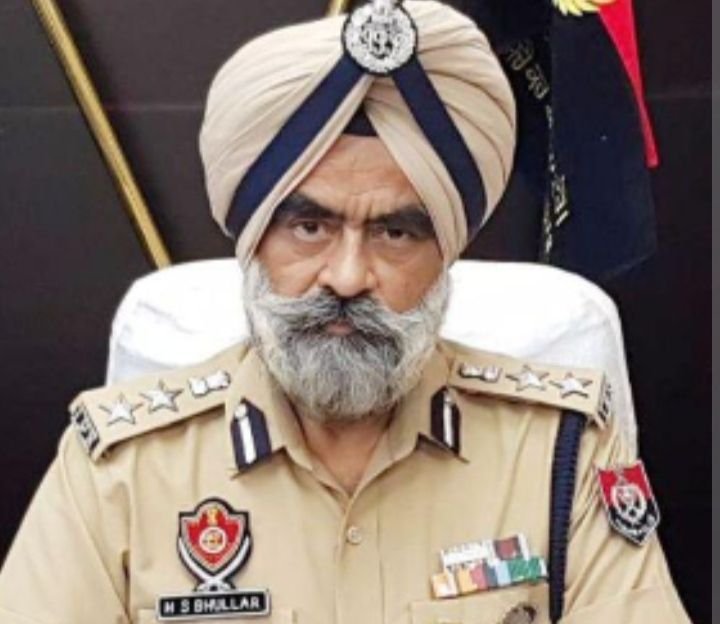
— The Supreme Court on Tuesday indicated that it was unlikely to grant relief to suspended Punjab Police DIG Harcharan Singh Bhullar, who has been in custody since October last year in a corruption case registered by the Central Bureau of Investigation (CBI).
A three-judge bench headed by Chief Justice of India Surya Kant, and comprising Justice Joymalya Bagchi and Justice V. Mohana, was hearing Bhullar’s challenge against the Punjab and Haryana High Court’s refusal to grant him regular bail. The Supreme Court, however, did not finally decide the plea on Tuesday and adjourned the matter for four weeks.
During the hearing, Bhullar’s counsel pointed out that the complainant and a key witness had not yet been examined. The defence also sought permission for the examination of two shadow witnesses.
The bench indicated that it would consider the bail plea after some of the material witnesses had been examined. While adjourning the case, Chief Justice Surya Kant made a pointed observation: “100% case of dismissal. You want to dismiss it now or later?” The remark indicated the court’s present view of the bail request, although no final order rejecting the plea was passed on Tuesday.
The case stems from a CBI investigation into allegations that Bhullar, who was serving as DIG of the Ropar Range at the time, sought illegal gratification through an intermediary in return for favourable treatment in a police case involving the complainant’s business.
According to the prosecution case, businessman Akash Batta submitted a written complaint to the CBI on October 11, 2025, alleging that Bhullar had sought money through Krishanu Sharda. The alleged payment was linked to a promise that coercive action would not be taken against Batta’s business in connection with an FIR registered at Sirhind police station and that he would receive favourable treatment.
The CBI subsequently carried out discreet verification of the allegations. During the verification process, conversations involving Sharda and the complainant were recorded. The investigation also allegedly captured a conversation in which Bhullar instructed Sharda to collect ₹8 lakh from the complainant. The Punjab and Haryana High Court, while examining Bhullar’s earlier bail petition, recorded these details as part of the prosecution material.
Following the verification, the CBI registered a case under Sections 7 and 7-A of the Prevention of Corruption Act, 1988, along with Section 61(2) of the Bharatiya Nyaya Sanhita. A trap was subsequently laid in Chandigarh on October 16, 2025.
Sharda was allegedly caught while accepting ₹5 lakh from the complainant as part of the alleged gratification. Bhullar was arrested the same day and has remained in custody since then. The CBI has since filed its final report under Section 193 of the Bharatiya Nagarik Suraksha Sanhita.
Bhullar has consistently contested the allegations and sought bail, arguing, among other things, that there was no recovery of the alleged bribe from him personally and that the prosecution case relied substantially on electronic communications and the testimony of witnesses. His lawyers have also argued that he is suspended from service and therefore no longer occupies the official position he held when the alleged events took place.
The Punjab and Haryana High Court rejected his regular bail plea in February 2026. It noted that although the investigation had resulted in the filing of the charge sheet, the proceedings were still at an early stage and the complainant and shadow witness had not been examined. The court also expressed concern about the possibility of witnesses being influenced, particularly because some of them were police personnel or government officials who had worked within Bhullar’s administrative jurisdiction.
Bhullar subsequently approached the Supreme Court. In April, the top court declined to grant bail at that stage but gave him liberty to return to the High Court if the trial did not commence within two months.
A subsequent bail petition before the Punjab and Haryana High Court was also rejected in August. By then, charges had been framed and the trial had commenced, although witnesses had not yet been examined. The High Court held that the circumstances did not show a sufficient change to justify granting bail and cited concerns about the possibility of influencing witnesses or obstructing proceedings.
The Supreme Court’s latest intervention therefore comes against the backdrop of repeated bail refusals and an ongoing trial. The court’s decision to defer the matter until after the examination of certain witnesses suggests that the stage of the proceedings remains central to its consideration of Bhullar’s request for release.
For now, Bhullar remains in custody, while the Supreme Court is scheduled to take up the bail plea again after four weeks.