Saptrishi Soni I
CHANDIGARH: The Aam Aadmi Party government in Punjab has entered a politically sensitive phase ahead of the 2027 Assembly elections, with a High Court-ordered CBI investigation into allegations of corruption involving transfers, government tenders, favourable policies and other administrative decisions adding to the issues likely to shape the electoral contest.
The development comes at a time when AAP has already begun its campaign for a second consecutive term. Chief Minister Bhagwant Mann formally launched the party’s 2027 election campaign in September, projecting the government’s four-year record in welfare, employment and governance as its principal electoral strength. The party has been seeking to turn the election into a contest between its record in office and what it describes as the failures of previous governments.
The latest controversy, however, gives the Opposition another issue with which to challenge that narrative.

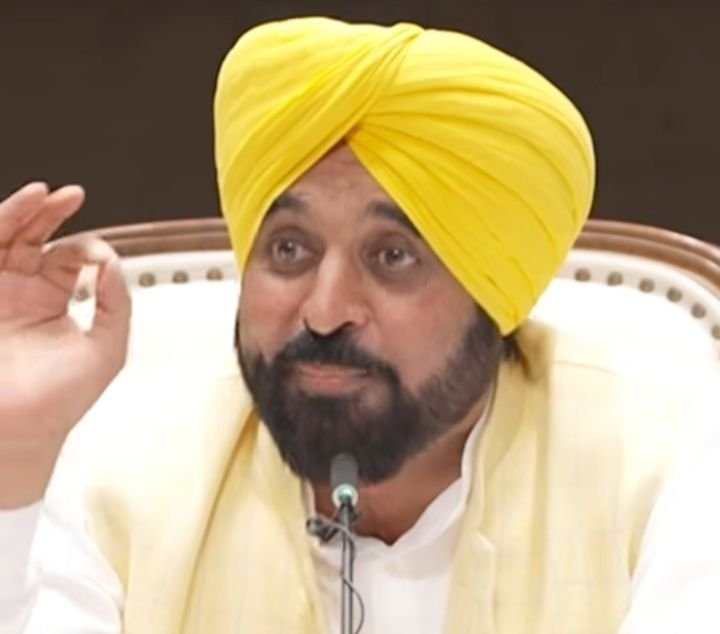
The Punjab and Haryana High Court has handed the investigation into allegations of a “cash-for-transfers, cash-for-getting favourable policies and cash-for-tenders” network to the Central Bureau of Investigation. The petition had alleged the involvement of public servants, private individuals and persons associated with the Chief Minister’s Office. The allegations include influencing transfers and postings of senior officials as well as obtaining tenders, permissions and licences for private interests.
These are allegations contained in the petition and have not been established by any court. The CBI investigation will now determine whether there is evidence to substantiate them.
For AAP, the timing is significant. The party came to power in 2022 with a massive mandate of 92 seats in the 117-member Assembly, campaigning heavily on promises of clean governance and an alternative to the established political system. A corruption-related investigation involving allegations connected to the functioning of government could therefore strike at one of the central themes of AAP’s political identity.
The Opposition is expected to make the issue a major part of its election campaign. Congress, which is currently the principal Opposition party, can use the allegations to question the transparency of the Mann government and demand accountability from the Chief Minister and his administration. The BJP is likely to combine the corruption issue with its campaign on drugs, law and order, governance and administrative accountability. The Shiromani Akali Dal, meanwhile, is attempting to rebuild its political base by raising issues concerning drugs, rural Punjab, healthcare, roads, education and the interests of the Sikh community.
The political battle is already becoming increasingly multi-cornered. Recent assessments of the 2027 contest point to AAP, Congress and SAD as the principal players, with the BJP also seeking a larger role. The 2026 civic elections gave AAP a sizeable organisational advantage, with the party winning 958 of the 1,977 wards, while Congress won 397 and SAD 192. However, municipal results cannot automatically be translated into Assembly outcomes.
For AAP, therefore, the challenge is not simply to defend its welfare and governance record but also to prevent corruption allegations from becoming a wider narrative about its style of administration.
The party has several issues on which it can campaign from a position of strength, including welfare schemes, government services, employment initiatives and its claim of improving public delivery. At the same time, the government faces criticism over drugs, unemployment, financial pressures, protests by sections of employees and other groups, and growing anti-incumbency concerns. These issues are likely to compete with each other for space in the election campaign.
The Opposition, on the other hand, faces its own political limitations. Congress must convert its position as the main challenger into a coherent statewide campaign while managing internal differences. SAD is fighting to recover from its severe electoral decline, while the BJP is attempting to expand beyond its traditional urban base. Speculation over a possible future BJP-SAD understanding also remains part of Punjab’s political conversation, although both parties have publicly indicated that they intend to contest the election independently.
The corruption allegations could nevertheless become more politically consequential if the CBI investigation produces documentary evidence, identifies individuals or uncovers a systematic pattern. Conversely, if the investigation does not substantiate the allegations, the political impact could be considerably weaker. Much will therefore depend on what emerges from the investigation rather than on the allegations themselves.
The 2027 election is also likely to be fought on a much wider range of issues, particularly drugs, employment, agriculture, welfare, law and order, state finances and governance. The election schedule has not yet been announced, but the Punjab Assembly is due to complete its term in March 2027, with the electoral contest already gathering momentum.
The immediate significance of the latest controversy is that the Punjab and Haryana High Court has itself found the matter serious enough to require an independent investigation. In its October 5 order, the Bench of Chief Justice Ashwani Kumar Mishra and Justice Rohit Kapoor said a fair and transparent investigation was necessary and transferred the case to the CBI, directing it to register an FIR and proceed with the investigation. The court has also sought a report on the outcome within two months, while directing the Punjab government and police to provide full assistance to the agency. For the AAP government, the findings of that CBI probe could therefore arrive at a politically crucial stage of the 2027 Punjab Assembly election campaign.