Large parts of the national capital resembled an open jail on Saturday as thousands of protesters were detained and extensive security restrictions were imposed ahead of a planned demonstration at Jantar Mantar against the Chief Election Commissioner. The sweeping clampdown disrupted movement across several areas, with barricades, police checkpoints and a heavy deployment of security personnel transforming the streets into tightly controlled zones.

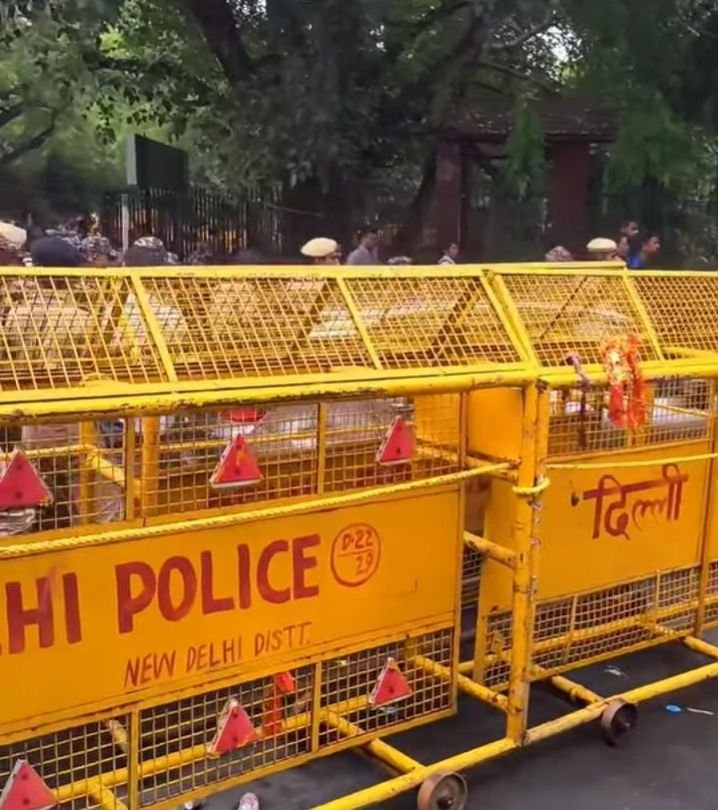
According to reports, more than 3,000 protesters were detained as they attempted to participate in the demonstration. Police action extended beyond the proposed protest site, with several participants reportedly detained before they could reach Jantar Mantar. The extensive security arrangements and restrictions prompted concerns about the space available for peaceful public demonstrations in the national capital.
Reports also indicated that security personnel were deployed in large numbers across sensitive locations, with strict checks on roads and restrictions affecting metro services. The reported closure of dozens of metro stations added to commuters’ difficulties, while barricading and traffic checks affected movement through parts of the city. For many residents and visitors, the scale of the arrangements created an atmosphere in which ordinary movement appeared subject to extraordinary controls.
The protest was organised over concerns regarding the Special Intensive Revision (SIR) of electoral rolls and changes relating to Form 6, the application used to seek inclusion in voter lists. Critics have raised questions about the transparency of the process and the possibility of eligible voters being left out. The Election Commission’s electoral-roll revision process has become a subject of wider political debate, with opposition parties demanding greater clarity and accountability.
The police had denied permission for the proposed gathering, citing law-and-order considerations. However, the scale of the detentions and the restrictions imposed across the capital drew criticism from opposition parties, which questioned whether such extensive measures were proportionate to the anticipated demonstration. AAP and Congress leaders condemned the security clampdown, with criticism focusing on the right to peaceful protest and the treatment of those seeking to assemble.
The developments have intensified the debate over the balance between maintaining public order and protecting democratic freedoms. While the authorities are responsible for preventing violence and managing unauthorised gatherings, large-scale preventive detentions and restrictions affecting public transport inevitably raise questions about proportionality, accountability and the practical exercise of constitutional rights.
With thousands reportedly detained and movement restricted across several parts of the capital, the situation has become a broader test of how the authorities respond to demonstrations concerning electoral transparency. The immediate controversy is no longer confined to Jantar Mantar: it has placed the spotlight on the wider security lockdown and its impact on the everyday lives of people in Delhi.
This is a web generated news report