MOHALI : Punjab Chief Minister Bhagwant Singh Mann on Saturday launched the final phase of the state government’s ‘Yudh Nashean Virudh’ campaign from the historic site of Chapparchiri, flagging off a bike rally aimed at mobilising public support against drug abuse and trafficking. The rally will travel across all 23 districts, spreading awareness, collecting public suggestions and encouraging citizens to share information about drug networks.

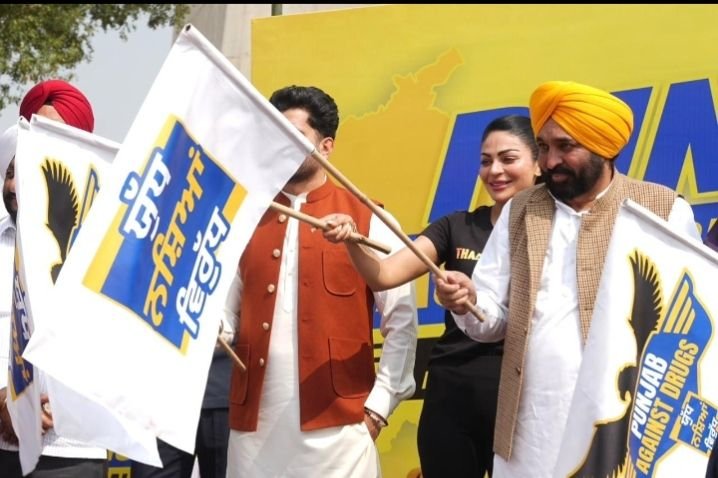
Calling for a united effort to make Punjab drug-free, Mann said the campaign could not succeed through government and police action alone and required sustained participation from communities, families, educational institutions and young people. He appealed to the state’s youth to stay away from drugs and focus on education, sports and constructive activities.
The initiative includes suggestion and complaint boxes accompanying the rally, allowing residents to share ideas for Punjab’s development and provide information about suspected drug traffickers. The Chief Minister said the aim was to take the campaign into villages and towns, strengthen public participation and encourage people affected by addiction to seek treatment and rehabilitation.
Addressing the gathering, Mann said Chapparchiri held historical significance because of its association with Baba Banda Singh Bahadur’s struggle against injustice. He said the courage and determination associated with that legacy should inspire the state’s collective fight against drugs.
The campaign also received support from the team of the Punjabi film ‘Thaapi’, which is expected to contribute to awareness efforts among young people. Mann thanked the artists and other participants for joining the initiative, saying that public figures and cultural platforms could play an important role in communicating the dangers of substance abuse.
Government cites arrests, seizures and rehabilitation efforts
Highlighting the enforcement measures undertaken by his government, Mann said more than 81,000 alleged drug smugglers had been arrested, while seizures included approximately 3,900 kg of heroin and 983 kg of opium. He also cited an 89 per cent conviction rate in drug-trafficking cases, presenting the figures as evidence of the administration’s action against organised drug networks.
According to the Chief Minister, around 15,000 Village and Ward Defence Committees had been established, with approximately 1.25 lakh members working as anti-drug volunteers. He said information received through the Safe Punjab helpline had helped authorities make arrests, while inputs from village-level committees had led to the registration of thousands of cases.
Mann said Punjab Police had held more than 75,000 public meetings under the campaign over 17 months. He also referred to the deployment of anti-drone systems along the international border to detect and intercept drones allegedly used to transport drugs into the state.
The Chief Minister stressed that enforcement needed to be accompanied by treatment and rehabilitation. He said admissions at government de-addiction centres had nearly tripled in a year and that more than 40,000 patients had been admitted for treatment, which is provided free of cost at these facilities.
He added that skill-development programmes had been introduced at de-addiction and rehabilitation centres to help recovering individuals rebuild their lives and reduce the risk of relapse. Training initiatives, he said, had been introduced in 21 districts since March 2025. The government’s ‘Soorme’ initiative, which recognises young people who have remained drug-free for two years, was also cited as an effort to encourage recovery and create role models for others.
Education and sports positioned as alternatives to drugs
Mann said approximately 7.5 lakh students had been covered under drug-prevention programmes designed to discourage substance use among young people. He urged parents, teachers and community organisations to help children recognise the risks of addiction and encourage healthier choices.
The Chief Minister also highlighted the state’s investment in sports, citing an allocation of ₹1,791 crore for the sector and plans to develop 3,100 rural sports grounds and 3,000 gyms. He said the ‘Khedan Watan Punjab Diyan’ initiative had helped expand participation in sports across age groups and encouraged families to take part in sporting activities.
Punjab’s contribution to Indian sports, he said, demonstrated the talent and potential of the state’s youth. Mann referred to leading figures from cricket, hockey and other disciplines, as well as sporting legends such as Milkha Singh and Dara Singh, arguing that investment in sports could provide young people with discipline, ambition and opportunities beyond addiction.
He also said the government had provided 70,885 government jobs on merit, describing employment generation as part of its wider effort to offer young people productive opportunities.
Wider development agenda
Beyond the anti-drug campaign, Mann outlined several initiatives relating to healthcare, education, rural development and infrastructure. These included free electricity, Aam Aadmi Clinics, improvements in government schools, road development, village playgrounds and the Mukh Mantri Mawan Dheeyan Satkar Yojna.
He also announced plans for a modern film city in Punjab, saying the proposed project could create opportunities for artists and professionals and strengthen the Punjabi entertainment industry. The cleaning and rejuvenation of village ponds through the Seechewal and Thapar models were highlighted as part of the state’s rural-development efforts.
The Chief Minister reiterated his government’s commitment to protecting religious sentiments and referred to legislation prescribing stringent punishment for sacrilege against Sri Guru Granth Sahib Ji.
Mann said the final phase of ‘Yudh Nashean Virudh’ would focus on expanding public participation and sustaining the campaign at the grassroots level. The effectiveness of the initiative, however, will ultimately depend on whether enforcement against drug suppliers is matched by accessible treatment, long-term rehabilitation, prevention programmes and measurable reductions in drug availability and addiction.
Cabinet Minister Balbir Singh and other dignitaries attended the launch.