Saptrishi Soni।
The killing of anti-drug activist Parvinder Singh Jhota in Mansa has once again brought Punjab’s long-running drug crisis into sharp focus, exposing the gap between successive governments’ promises to eliminate narcotics and the continuing fear, addiction and illegal drug trade reported across the state.

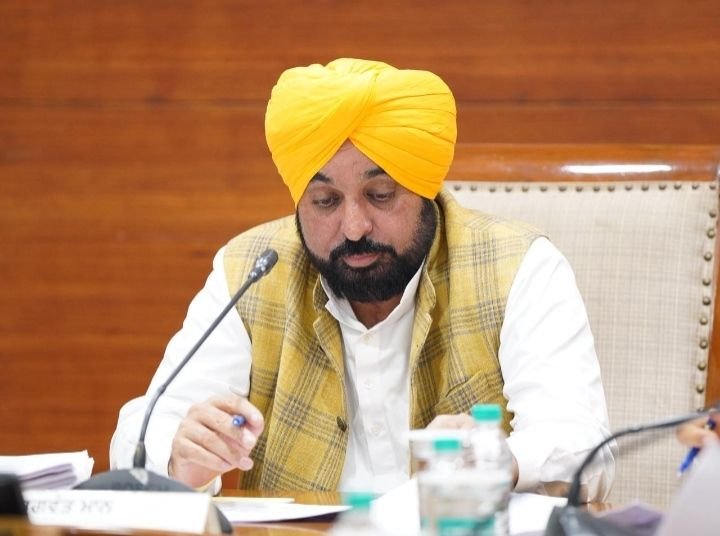
Jhota was shot dead on October 13, 2026, after confronting a medical store owner over the alleged illegal sale of addictive drugs. The confrontation was recorded during a Facebook live session, and four of Jhota’s companions were also reported injured. Police said special teams had been formed to arrest the accused. The incident triggered a political backlash, with Congress, the Shiromani Akali Dal (SAD) and the BJP questioning the Bhagwant Mann government’s record on law and order and its anti-drug campaign.
Yet the significance of Jhota’s death goes beyond an individual crime or the immediate political confrontation. It raises a difficult question for Punjab: why has a problem that has dominated election campaigns, government declarations and public debate for more than a decade remained so deeply entrenched?
The answer cannot be reduced to the record of one chief minister or one political party. Punjab’s drug crisis has survived successive administrations, changing enforcement strategies and repeated promises of eradication. It now demands an assessment based not merely on arrests and seizures, but on whether the supply networks are being dismantled, vulnerable young people are receiving treatment, and ordinary citizens can report suspected drug activity without fear.
A crisis that has outlasted governments
Punjab’s drug problem did not begin with the Aam Aadmi Party government, nor has it been confined to a single political era. It became a major electoral issue during the Shiromani Akali Dal–BJP alliance government that ruled the state from 2007 to 2017. By the 2012 and 2014 elections, allegations about the spread of drugs had become a prominent part of political debate, with opposition parties accusing the then government of failing to break the networks responsible for trafficking and addiction.
The Congress, led by Captain Amarinder Singh, made the eradication of drugs a central promise in the 2017 Assembly election. Amarinder famously pledged to break the drug network within four weeks of taking office. The Congress won the election, but the problem persisted, leaving the government open to criticism over the gap between its promise and the results on the ground.
The AAP subsequently made a similar commitment during the 2022 election campaign, promising action against the powerful interests behind the trade. After taking office, Chief Minister Bhagwant Mann launched enforcement drives and intensified action against alleged traffickers.
The recurring pattern is significant: each government has inherited an entrenched problem, promised decisive action and then faced questions about its achievements. As Punjab approaches the 2027 Assembly elections, drugs have once again become a central political battleground.
Yudh Nasheyan Virudh: Enforcement has intensified, but the challenge remains
The Mann government’s principal response has been its Yudh Nasheyan Virudh campaign, which combines police action against alleged peddlers with efforts to dismantle trafficking networks and encourage public participation.
According to figures reported by All India Radio in July 2026, the Punjab government said that during the campaign’s first 500 days, 73,000 alleged drug peddlers had been arrested and properties worth ₹847 crore belonging to drug smugglers had been confiscated or demolished. The state also reported that more than 6,600 kg of heroin had been recovered over four years. These are substantial enforcement figures, although arrests and seizures alone cannot establish how much the overall availability of drugs or the rate of addiction has declined.
The government has also sought to involve local communities and people recovering from addiction. Its approach recognises that the problem cannot be addressed exclusively through criminal cases: people dependent on drugs need accessible treatment, rehabilitation and sustained support to rebuild their lives.
Mann has repeatedly defended his government’s actions by pointing to arrests, seizures and property action against suspected traffickers. His administration has also argued that the drug supply chain extends beyond Punjab and requires cooperation from central agencies and neighbouring states.
The persistence of the problem, however, raises questions that official enforcement totals cannot answer. Are major suppliers and financiers being prosecuted successfully? Are convictions following arrests? Are drugs becoming harder to obtain? Are treatment centres reaching the people who need them most?
These are the measures against which the campaign’s effectiveness must ultimately be assessed.
Why Punjab cannot fight the battle alone
Punjab’s geography makes the challenge particularly complex. The state shares a 553-kilometre international border with Pakistan, and security agencies have repeatedly reported attempts to smuggle narcotics, weapons and other contraband using drones and cross-border networks.
The scale of the challenge was illustrated by figures cited in an India Today investigation published in September 2026. The Border Security Force reportedly seized 272 drones from Pakistan and recovered more than 367 kg of heroin during 2025, alongside weapons and other material. Such incidents demonstrate why border surveillance and intelligence-sharing are essential components of the anti-drug effort.
But the border is only one part of the problem.
Synthetic drugs, illegally diverted pharmaceutical medicines and supplies transported from other Indian states also require attention. Punjab Police investigations have previously traced suspected pharmaceutical supplies to businesses outside the state, highlighting the importance of coordination between state police forces, drug regulators, customs authorities, the Narcotics Control Bureau and other central agencies.
Mann has sought to place this wider supply chain at the centre of the debate. He has criticised the Centre over alleged trafficking routes and questioned why the national anti-narcotics effort is not doing more to address supplies moving through other states and ports. His government has also said that Punjab has invested in anti-drone capabilities despite border security being a central responsibility.
These arguments raise a legitimate question about the division of responsibilities, but they do not remove the state government’s own obligations. The Centre has a major role in international border security, inter-state coordination and national-level investigations. Punjab, meanwhile, is responsible for effective policing within the state, regulation and inspection of medical stores under the applicable framework, prosecution of offenders and the delivery of addiction treatment.
Neither level of government can successfully address the crisis in isolation. Equally, political disagreement cannot be allowed to become an excuse for failures within either system.
Jhota’s killing raises questions about enforcement and accountability
The killing of Parvinder Singh Jhota brings the issue into immediate focus.
According to reports, Jhota was confronting a medical store owner over alleged illegal drug sales when an argument escalated into gunfire. The confrontation was captured during a Facebook live session. Four companions were also reported injured, and police announced the formation of special teams to arrest the accused.
The incident raises several questions that require answers through a proper investigation. Were there previous complaints about the medical store? Had any inspections been conducted? Were there earlier warnings or disputes? Did the authorities have information about suspected illegal sales, and, if so, what action had been taken?
These questions must be investigated rather than answered through political speculation. The allegations against the store owner must be established through evidence, while the circumstances of the shooting and the responsibility of everyone involved must be determined through due process.
Nevertheless, the incident highlights a serious public-safety concern: citizens should not have to place themselves in danger to expose suspected illegal activity. People who report suspected drug trafficking should be able to approach the police and regulatory authorities with confidence that their complaints will be investigated and that they will not be left vulnerable to retaliation.
The killing should therefore prompt not only a criminal investigation but also a review of how complaints about suspected illegal pharmaceutical sales are received, recorded, investigated and followed up.
Opposition’s criticism and the politics of the 2027 election
The political reaction was swift. Congress, SAD and BJP leaders criticised the Mann government after Jhota’s killing, questioning law and order and the effectiveness of Yudh Nasheyan Virudh.
SAD president Sukhbir Singh Badal alleged that the government’s anti-drug campaign had failed to curb the menace. BJP leaders questioned the accountability of drug inspectors and the administration’s ability to prevent the illegal sale of addictive medicines. Congress leaders also joined the criticism of the government’s handling of the situation.
Their concerns about drug availability, public safety and enforcement deserve answers. But the political debate also needs to acknowledge the history of the problem.
The SAD-BJP government faced sustained criticism over drugs during its decade in office. The Congress government led by Amarinder Singh failed to fulfil its highly publicised four-week promise. The present AAP government, despite launching a major enforcement campaign, is now being judged against its own commitments.
That history does not absolve the Mann government of responsibility for current conditions. Nor does it establish that every allegation made by the opposition is correct. It demonstrates instead that the problem has proved resistant to successive governments and that political promises have repeatedly exceeded the results that could be demonstrated.
The BJP has launched its Nasha Mukt Punjab Yatra, while SAD has organised its own campaign, including the Mawan Dhiyan Insaaf Yatra. These initiatives have brought drug addiction and affected families back into public debate, but they are also unfolding in the run-up to the next Assembly election.
The test for every party is whether its campaign can translate into a practical, measurable programme. Promising to eliminate drugs within a fixed period is politically powerful, but a credible plan must explain how supply chains will be dismantled, corrupt practices exposed, prosecutions secured and addiction treated.
Political will must extend beyond speeches and arrests
Punjab needs a stronger, sustained and measurable response that goes beyond periodic raids or election-season campaigns.
First, enforcement must focus on the entire chain, from local sellers and transporters to major suppliers, financiers and those who facilitate the trade. Investigations should follow financial transactions and assets, while prosecutions must be pursued effectively. Arrest totals should be accompanied by transparent reporting on chargesheets, trials, convictions and repeat offences.
Second, medical stores and pharmaceutical distribution networks require consistent oversight. Licensing rules must be enforced, records audited and suspicious sales investigated. Where evidence establishes illegal activity, action must follow irrespective of the accused person’s influence or political connections.
Third, Punjab and the Centre need a coordinated operational strategy. Border surveillance, anti-drone systems, intelligence-sharing, action against inter-state suppliers and financial investigations should function as parts of a common effort. The Union government and Punjab government should establish clear responsibilities and publicly review progress rather than exchange accusations over which side is doing enough.
Fourth, addiction must be treated as a public-health and social challenge as well as a law-enforcement problem. Accessible de-addiction services, trained counsellors, follow-up care, family support and opportunities for education and employment are essential. People who recover need a realistic route back into society, without the stigma that can push them towards isolation and relapse.
Finally, citizens must be able to report suspected trafficking safely. Police stations, drug-control authorities and district administrations should have accessible complaint mechanisms, clear response deadlines and safeguards for complainants. Independent oversight would help establish whether complaints are being acted upon promptly.
These measures require sustained funding, trained personnel, reliable data and political accountability. They also require the willingness to investigate allegations against influential individuals rather than focusing only on low-level sellers and couriers.
The road to 2027: A test of credibility for every party
As Punjab moves towards the 2027 Assembly elections, the drug crisis will inevitably remain a major issue in the contest between AAP, Congress, SAD and BJP. The killing of Jhota has intensified scrutiny of the Mann government, but it has also reminded voters that the crisis has persisted across different political administrations.
For the ruling party, the challenge is to demonstrate that Yudh Nasheyan Virudh is producing lasting results, not merely large enforcement figures. That means providing credible evidence of reduced availability, stronger prosecutions, effective regulation and better outcomes for people seeking treatment.
For the opposition, the challenge is to move beyond criticism and present detailed, implementable plans. Parties that previously held power must also explain what they achieved, where their strategies failed and how their proposed measures would be different.
For the Centre, the responsibility includes stronger action against cross-border trafficking, better coordination among national agencies and effective cooperation with Punjab’s law-enforcement machinery. A border state confronting a narcotics network that crosses international and state boundaries cannot be expected to solve the entire problem through local policing alone.
Above all, Punjab’s families cannot afford another cycle in which drugs become a defining election issue, promises are made and the same questions return after the next government takes office.
Parvinder Singh Jhota’s killing should be a catalyst for a more accountable response. His death does not, by itself, prove that a particular campaign has failed or that one government bears sole responsibility for the state’s drug crisis. It does, however, expose the urgent need to ensure that complaints about suspected illegal drug sales are investigated, public safety is protected and enforcement reaches the networks that sustain the trade.
Punjab needs political will that survives beyond election campaigns, cooperation that rises above party lines and action that can be measured in safer communities and lives recovered from addiction. The real test will not be how many times political leaders promise a drug-free Punjab, but whether they can work together to make the promise credible.