At Bathinda and Mansa, new PPCC chief reaches out to party workers and families affected by tragedy, makes drugs, farmers’ distress and governance central to Congress’s political pitch

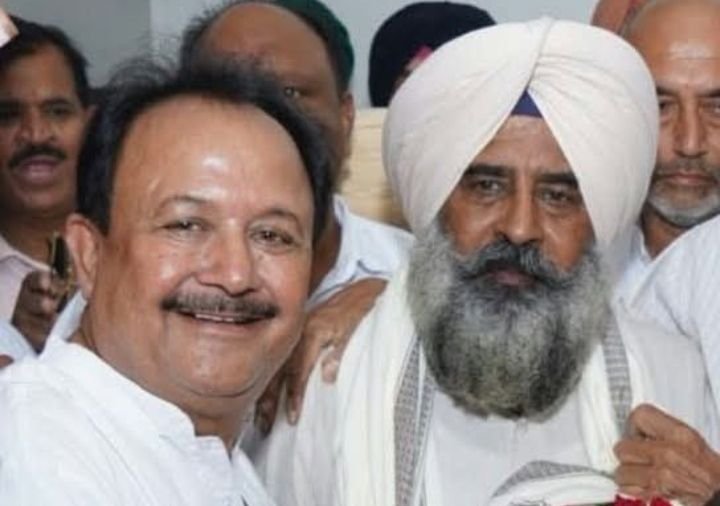
Bathinda/Mansa : Punjab Congress president Pargat Singh has begun asserting his leadership at a politically sensitive moment for the party, placing the state’s drug crisis, farmers’ indebtedness, unemployment and alleged corruption at the centre of his message ahead of the 2027 Assembly elections. During visits to Bathinda and Mansa, Singh met party workers and bereaved families, while signalling that the Congress intends to turn public concerns over drugs and law and order into a major political issue.
Singh’s visit to Bathinda included a meeting with the family of late Khushbaz Singh Jatana, a former district Congress president. Offering condolences to Jatana’s mother and wife, Singh assured them of the party’s support and said their views would be considered in discussions concerning the forthcoming elections. He subsequently visited the residence of Bathinda Urban district Congress president Rajan Garg, where party workers gathered to welcome him in his capacity as the state party chief.
The outreach comes as the Congress seeks to consolidate its organisation across Punjab and establish a clear political narrative against the ruling Aam Aadmi Party (AAP). Singh has sought to frame the state’s difficulties not as isolated administrative failures, but as interconnected challenges involving public health, employment, agriculture, environmental pressures and governance.
Drug menace becomes the central political battleground
The killing of anti-drug activist Parvinder Singh Jhota in Mansa has brought the issue of narcotics and the safety of people opposing the drug trade back into sharp focus. During their visit to Mansa, Singh, Congress Working Committee member Charanjit Singh Channi, former minister Vijay Inder Singla and other party leaders met the bereaved family and expressed their condolences.
Jhota’s death has intensified public concern over the persistence of the drug problem and the risks faced by those who challenge suspected drug-related activities. The incident has also created a fresh political flashpoint, with the opposition likely to press the state government for accountability, effective policing and a more comprehensive response to narcotics trafficking.
For Pargat Singh, the challenge is to translate these concerns into a sustained political campaign rather than confine the issue to statements following individual incidents. The Congress will need to explain how it proposes to strengthen action against trafficking networks, investigate the financial and supply chains behind the drug trade, improve rehabilitation and protect people who report suspected criminal activity.
The party president has also criticised the handling of law and order under Chief Minister Bhagwant Mann. He alleged that the drug problem, criminal violence and governance failures reflected the inability of successive authorities to deliver lasting solutions. These are political allegations by the Congress leadership; their wider implications will depend on evidence, official investigations and the effectiveness of government action.
Pargat Singh targets both Centre and Punjab government
Speaking to the media in Bathinda, Singh described Punjab’s situation as critical and accused both the BJP-led Union government under Prime Minister Narendra Modi and the AAP government in Punjab of failing to address the state’s pressing concerns.
He highlighted drug addiction among young people, farmers’ debt, unemployment, environmental degradation and pressure on water resources as issues demanding urgent attention. Singh argued that these challenges were threatening Punjab’s social and economic future and alleged that the state government had not responded adequately.
He also accused the chief minister of prioritising political interests over Punjab’s needs and raised questions about corruption and the administration’s handling of crime. The allegations form part of the Congress’s emerging political attack on the AAP government, which has repeatedly presented its anti-drug campaign and governance initiatives as key achievements.
The confrontation sets up a familiar but consequential debate in Punjab politics: whether the state government’s actions have delivered measurable improvements in tackling narcotics and organised crime, and whether opposition parties can offer a credible alternative with clear targets, transparent implementation and public accountability.
Farmers’ distress and unemployment widen Congress’s attack
Singh’s political message extended beyond drugs. He pointed to mounting pressure on farmers, indebtedness, environmental damage and the state’s water crisis, arguing that these problems were closely linked to Punjab’s long-term economic security.
Agriculture remains central to the state’s economy and rural identity. Concerns over farm incomes, debt, groundwater depletion and the sustainability of existing agricultural practices affect not only cultivators but also rural employment and the prospects of young people who see limited opportunities outside traditional farming.
By linking these issues with drug abuse and unemployment, Singh is attempting to broaden the Congress’s appeal beyond individual controversies. The strategy places the party’s opposition to the AAP government within a wider argument about livelihoods, social stability and the future of Punjab’s younger generation.
However, the political test will be whether the Congress can present detailed policy commitments on employment, agricultural diversification, water conservation, drug rehabilitation and policing alongside its criticism of the government.
Organisation and unity key to the 2027 election strategy
The Bathinda visit also carried an organisational message. Singh expressed confidence in the Congress’s readiness for the next Assembly election and said responsibilities within the party would be allocated fairly, without factional considerations.
Several Congress leaders accompanied him, including former ministers Vijay Inder Singla and Bharat Bhushan, Bathinda Urban district president Rajan Garg, media in-charge Rupinder Bindra and other party functionaries. The presence of senior leaders underlined the importance the party is attaching to district-level engagement as it prepares for the electoral contest.
For Singh, who has recently taken charge of the Punjab Pradesh Congress Committee, the immediate task is to bring the organisation together, maintain communication with local leaders and turn public dissatisfaction into a coherent political programme. His visits to Bathinda and Mansa combine condolences and grassroots outreach with an effort to establish drugs, law and order and farmers’ distress as defining issues of the campaign.
The 2027 election is still ahead, and the political contest will depend on developments over the coming months, the performance of the incumbent government and the credibility of the opposition’s alternatives. For now, Pargat Singh is signalling that the Congress intends to challenge the AAP government on the ground where public anxiety remains acute: the safety of Punjab’s youth, the persistence of drugs, the security of rural livelihoods and confidence in governance.
The larger question is whether the political debate will move beyond competing accusations towards verifiable outcomes. Punjab’s voters will ultimately assess the parties not only on what they say about the drug crisis and other structural problems, but also on the policies, implementation and accountability they can demonstrate.