Saptrishi Soni
Punjab Chief Minister Bhagwant Singh Mann on Friday launched a sharp attack on the BJP-led Centre over the Special Intensive Revision (SIR) of electoral rolls, demanding that the exercise be scrapped and that an impartial investigation be conducted into alleged irregularities. The Punjab Vidhan Sabha passed a resolution against SIR by voice vote, with Mann asserting that protecting every eligible citizen’s right to vote was essential to safeguarding the country’s democratic foundations.

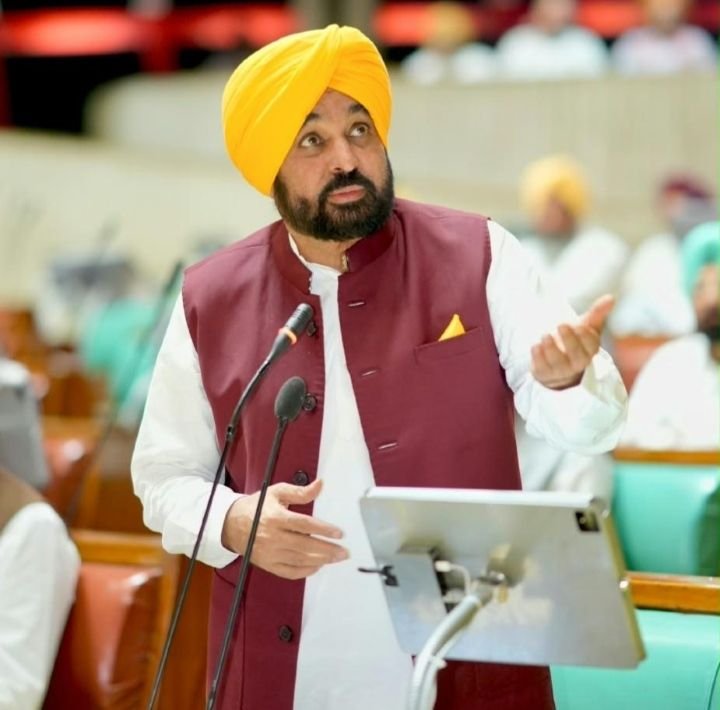
Addressing the Assembly during a discussion on protecting citizens’ voting rights, Mann alleged that electoral rolls were being manipulated under the cover of the Election Commission, with votes allegedly being added in favour of the BJP and Opposition voters’ names being deleted. He described the alleged practice as “vote-chori” and called for accountability wherever irregularities were established.
The Chief Minister also alleged that elections in Bihar, West Bengal, Haryana and Maharashtra had been won through vote manipulation. These were political allegations made by Mann during his address and were not established as findings of the Assembly resolution.
Mann said the right to vote was a constitutional entitlement, not a concession granted by those in power. He argued that no eligible citizen should face arbitrary exclusion or unnecessary hurdles in establishing eligibility during the revision of electoral rolls.
“The right to vote is not a favour bestowed by any government. It is the foundation of democratic participation,” Mann said, stressing that the electoral process must be transparent, fair and accountable.
Mann questions the electoral roll revision process
The Chief Minister raised concerns about the reported deletion of voters’ names and questioned the timing of objections in the Assembly constituency, asking why they had reportedly emerged only after protests began. He also referred to the Election Commission’s decision to formally record the minutes of its meetings and to reported differences among election commissioners over the Commission’s decision-making process.
Mann called for greater public scrutiny of the process and demanded an impartial inquiry into any alleged irregularities. He maintained that the credibility of elections depended not only on the conduct of polling but also on ensuring that electoral rolls were prepared fairly and that eligible voters were not left out.
Invoking the constitutional principles associated with Dr B.R. Ambedkar, Mann said equality, dignity and political participation must remain central to the democratic system. He warned that doubts over voter-list revisions could undermine public confidence in electoral institutions if complaints were not addressed transparently.
He also criticised the functioning of central investigative agencies, including the Enforcement Directorate and the Central Bureau of Investigation, arguing that constitutional and investigative institutions should operate independently and without political pressure.
Punjab resolution puts SIR at the centre of political debate
The passage of the resolution by voice vote gave the issue a prominent place in Punjab’s political debate. Mann said Punjab had taken the lead by formally opposing the SIR exercise and called upon democratic forces to defend citizens’ voting rights irrespective of political affiliation.
He argued that electoral reforms must strengthen public participation rather than create uncertainty among voters about whether their names would remain on the rolls. The government’s position, as outlined by Mann, was that the process should be reviewed and that responsibility should be fixed wherever evidence of wrongdoing emerged.
The resolution is also likely to intensify the political debate over the Election Commission’s role, the safeguards governing voter-list revisions and the responsibilities of authorities in handling objections and complaints.
Mann raises concerns over Punjab’s investment prospects
Beyond the SIR controversy, the Chief Minister used his Assembly address to raise concerns about the Union Government’s approach towards Punjab’s efforts to attract international investment. Mann said his government had been presenting the state to international business communities as an investment destination, highlighting its industrial potential, skilled workforce and entrepreneurial base.
He said obstacles had affected a proposed foreign visit intended to promote investment in Punjab and suggested that subsequent developments warranted scrutiny. He also called for transparency and accountability in the functioning of the Customs establishment.
Mann stressed that economic development should not become a casualty of political differences, arguing that investment, employment generation and prosperity were closely linked to the future of Punjab’s youth.
Farmers and trade arrangements also figure in address
The Chief Minister also expressed concern over proposed international trade arrangements, warning that they could expose Indian agriculture to external commercial pressure. He said any agreement affecting agriculture must be examined transparently, with Parliament, state governments and farming communities given an opportunity to assess its consequences.
Referring to Punjab’s farmers’ movement, Mann said farmers had demonstrated their determination to protect their livelihoods and would resist arrangements that compromised their interests. He argued that the lessons of the movement reinforced the importance of peaceful democratic action when the rights and economic security of ordinary people were at stake.
Mann called for farmers, labourers, traders and young people to have a meaningful voice in decisions affecting their future. He maintained that trade policy should not indirectly introduce agricultural measures that farming communities had previously opposed.
Appeal to protect constitutional values
Concluding his address, Mann urged citizens and democratic forces to defend the Constitution, uphold equality and justice, and protect the sanctity of the vote. He said governments elected through democratic processes had a responsibility to preserve the institutions that make free and fair elections possible.
His central message was that public confidence in democracy depends on transparent institutions, accountable decision-making and the protection of every eligible citizen’s political rights.
With the Punjab Vidhan Sabha passing the resolution against SIR, the controversy is set to remain a significant issue in the state’s political discourse. The debate will now centre on the concerns raised over voter-list revisions, the response of the Election Commission and the measures required to ensure that electoral procedures remain transparent and accessible to all eligible voters.