
Six-Day Session of 14th Assembly Set for Stormy Debates; Sukhu’s Remarks on Possible Leadership Change in BJP Add a New Political Dimension, While Opposition Questions Government’s Welfare Guarantees and Financial Priorities
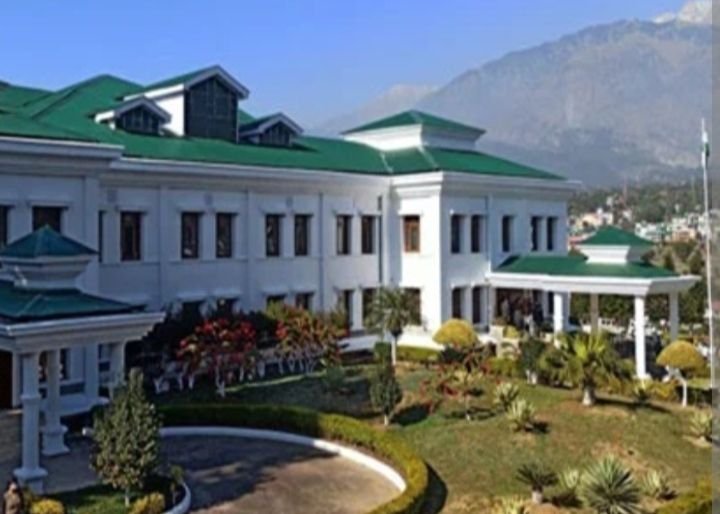
DHARAMSHALA: The political temperature in Himachal Pradesh is set to rise as the six-day Winter Session of the state Legislative Assembly begins at Tapovan in Dharamshala, with the ruling Congress and opposition BJP preparing for an intense confrontation over governance, financial commitments, welfare schemes and the pace of development.
The session, which is the final Winter Session of the 14th Legislative Assembly, comes at a politically sensitive time for both parties. With the next Assembly elections approaching in 2027, the proceedings are likely to become an important platform for the Congress government to defend its record and for the BJP to challenge its claims of fulfilling electoral commitments.
The Assembly proceedings are scheduled to commence at 2 pm. Legislators have submitted more than 413 questions covering departmental performance, implementation of government schemes, pending development projects and issues affecting ordinary residents. More than a dozen legislative proposals are also expected to come before the House, making the six-day sitting significant from both administrative and political perspectives.
However, beyond legislative business, the session is expected to be dominated by an increasingly sharp political exchange between Chief Minister Sukhvinder Singh Sukhu and Leader of Opposition Jai Ram Thakur.
Sukhu’s Political Attack on BJP Leadership Adds New Dimension
The recent political exchanges between the Chief Minister and the opposition have added another layer to the forthcoming Assembly confrontation.
Sukhu has taken a direct dig at the BJP’s internal functioning, alleging that differences within the opposition party have reached a point where some of its legislators are seeking a change in leadership and are working to replace Jai Ram Thakur as Leader of Opposition.
The Chief Minister has also claimed that the BJP in Himachal Pradesh is divided into multiple factions, making internal coordination a major challenge for its leadership.
These remarks are likely to provide the Congress benches with an opportunity to question the BJP’s internal unity and leadership stability during the session.
The opposition, however, is expected to turn the spotlight back on the government’s performance, arguing that political commentary about the BJP cannot divert attention from issues concerning employment, economic management, public services and promises made to voters.
₹1,500 Women’s Assistance and 300 Units of Free Power Under Opposition Scanner
Among the most politically sensitive issues expected to dominate the proceedings is the Congress government’s recently announced financial assistance of ₹1,500 per month for eligible women, along with the proposed provision of 300 units of free electricity and ₹10 lakh insurance cover under the new welfare initiative.
The BJP has already questioned the government’s decision, arguing that the original Congress election guarantee was much wider and did not carry the eligibility restrictions now being proposed.
Jai Ram Thakur has pointed out that approximately 28 lakh women fall in the relevant age group of 18 to 59 years in Himachal Pradesh, whereas the government has restricted the proposed benefit to around 3.50 lakh eligible women. He has questioned why the remaining women have been excluded and how the government intends to finance the commitment.
The opposition has also challenged the government’s claim regarding 300 units of free electricity, arguing that the Congress had promised this benefit to every household but has now attached conditions to its implementation.
Thakur has accused the government of remembering its electoral guarantees only towards the end of its tenure. He has also indicated that the BJP would review decisions and commitments made during the final year of the present government’s tenure if it returns to power.
For the Congress, however, the recently announced welfare measures are part of its effort to fulfil electoral commitments and extend financial security to eligible families.
The Assembly is therefore likely to witness a sharp debate over whether these announcements represent meaningful welfare delivery or an attempt to revive electoral promises ahead of the next Assembly elections.
Financial Crisis, Debt and Management of Public Assets on BJP’s Agenda
Beyond the welfare announcements, the BJP is preparing to raise questions about Himachal Pradesh’s financial position, increasing public debt, additional taxes and cess, and the government’s management of public assets.
The opposition has repeatedly alleged that the state’s economic and administrative condition has deteriorated under the Congress government. It is also expected to question the proposed public-private partnership arrangements involving properties of the Himachal Pradesh Tourism Development Corporation.
The possible restructuring or private management of prominent HPTDC properties, including Peterhoff, is likely to attract particular attention.
For a state heavily dependent on tourism, the future of government-owned hotels and hospitality infrastructure is an important political and economic issue. The government will have to explain its position on protecting public assets, improving their financial performance and ensuring that tourism infrastructure continues to benefit the state.
The Congress government, meanwhile, is expected to defend its decisions by highlighting financial constraints, development priorities and its approach towards improving the functioning of public-sector institutions.
Drug Menace, Law and Order and Unemployment to Test Government
The growing drug problem is another issue that could generate considerable discussion during the session.
The BJP is expected to question the government’s efforts to control drug trafficking, strengthen enforcement and protect young people from substance abuse. Issues relating to crime, law and order and the effectiveness of the police machinery are also likely to feature in the opposition’s attack.
Employment remains another major area of political confrontation. The Congress government had made extensive commitments regarding jobs before coming to power, and the opposition is expected to seek details of appointments, vacant government positions and progress in recruitment.
Questions concerning roads and bridges, delayed development projects, drinking water, healthcare facilities, educational infrastructure, horticulture and tourism are also expected to bring constituency-level concerns into the House.
These issues will require ministers to provide specific answers on departmental performance rather than limit the proceedings to political exchanges.
More Than a Dozen Bills and Important Legislative Proposals
The six-day session is also expected to have a substantial legislative agenda, with more than a dozen bills and amendments likely to be introduced or considered.
Among the proposals attracting attention are measures concerning the extension of road permits for Shimla residents to three years, regulation of overhead utility cables in urban areas and stricter provisions to prevent encroachments on public pathways.
The proposed changes relating to overhead cables seek to improve the management of utility infrastructure and establish greater accountability among the agencies responsible for maintaining such networks.
Similarly, amendments concerning public pathways are aimed at addressing unauthorised occupation and obstruction of spaces meant for public use.
Other legislative proposals expected to figure in the government’s agenda include changes intended to simplify business-related regulatory provisions, amendments concerning the technical university’s administrative structure and proposed changes to relevant state laws.
The legislative programme will provide the government an opportunity to demonstrate progress on policy and administrative reforms, even as the opposition seeks to scrutinise the rationale and implications of these measures.
414 Questions Put Government Under Legislative Pressure
The scale of legislative scrutiny is reflected in the questions submitted by members.
According to the Assembly Secretariat, 414 questions have been received for the session, comprising 291 starred questions requiring oral replies and 123 unstarred questions to be answered in writing.
Several additional notices have also been submitted seeking discussions on important matters concerning the state.
The subjects range from infrastructure development and recruitment to healthcare, education, tourism, horticulture, drinking water and the drug problem.
With six sittings scheduled between November 16 and 21, the session offers legislators an important opportunity to raise issues affecting their constituencies and seek accountability from the government.
A Political Test Before the 2027 Assembly Elections
The political importance of this Winter Session extends beyond its legislative agenda. It is the last Winter Session of the present 14th Assembly before the next year’s electoral contest, making it an important opportunity for both political formations to shape the narrative ahead of 2027.
For Chief Minister Sukhvinder Singh Sukhu, the challenge will be to defend the government’s welfare initiatives, explain its financial decisions and demonstrate that development commitments are translating into tangible outcomes.
For Jai Ram Thakur and the BJP, the priority will be to expose what they describe as the gap between Congress’s election promises and their implementation, while projecting the opposition as a credible alternative.
The recent personal and political exchanges between the two leaders have further sharpened this contest. Sukhu’s allegations about factionalism within the BJP and attempts to replace the opposition leader have brought the BJP’s internal leadership question into the political debate. The opposition, in turn, is likely to argue that the Chief Minister should concentrate on governance instead of commenting on its internal affairs.
Separate strategy meetings of the Congress and BJP legislative parties, chaired by their respective leaders, are expected to finalise the approach for the proceedings.
Ultimately, the Tapovan session will test both sides. The Congress will be expected to provide answers on governance and fulfilment of guarantees, while the BJP will need to move beyond political allegations and present substantive alternatives on the issues confronting Himachal Pradesh.
With the 2027 Assembly elections drawing closer, every major debate, government response and political confrontation in the House is likely to become part of the larger electoral narrative.
Tapovan is therefore set to become more than a legislative venue for the next six days: it will be a political battleground where the Congress government’s record and the BJP’s claims to an alternative mandate will face public scrutiny.