
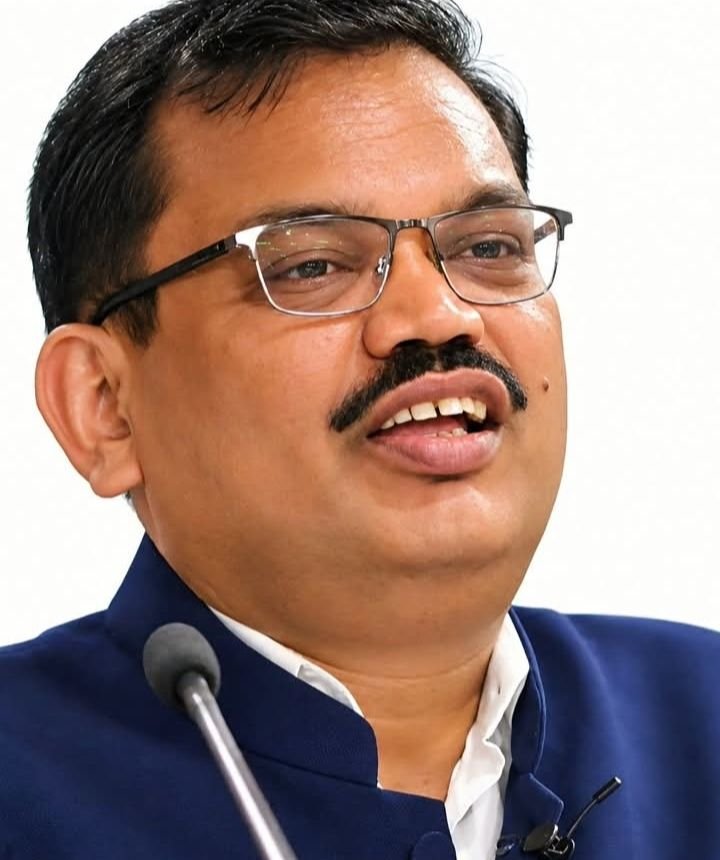
Move puts Punjab’s top administrative leadership under the scanner; November 26 appearance scheduled at ED’s Jalandhar office as investigation widens into PSIEC and GMADA land transactions
Chandigarh, The Enforcement Directorate’s decision to summon Punjab Chief Secretary K.A.P. Sinha for questioning in a money-laundering investigation has brought an extraordinary development to the state’s administrative and political landscape. The agency has also issued a summons to the Principal Secretary, Finance, as it steps up its investigation into alleged irregularities in government land transactions, including the controversial disposal of 31 acres of prime industrial property in Mohali.
Sinha, a 1992-batch IAS officer who has been serving as Punjab’s Chief Secretary since October 2024, has been directed to appear before the ED at its zonal office in Jalandhar on November 26. The Finance Department’s senior secretary has also been called for questioning under the Prevention of Money Laundering Act (PMLA).
The development is particularly significant because the summonses have reached the highest levels of the state bureaucracy. The investigation is no longer confined to the alleged actions of individual officials or private beneficiaries; the agency is now seeking information from senior administrative functionaries about government decisions, approvals and financial procedures connected with the transactions under scrutiny.
The 31-acre Mohali property at the centre of the controversy
One of the principal matters being examined by the ED concerns approximately 31 acres of industrial land belonging to the now-liquidated JCT Electronics in Phase 8, Mohali. The property was auctioned by ARCIL in February 2020, during the previous Congress government, when Sunder Shyam Arora was the Industries and Commerce Minister.
According to details reported about the investigation, one of the plots, identified as A-32, was transferred to GRG Developers and Promoters LLP for Rs 90.56 crore. The ED is examining whether the statutory and financial dues payable to the Punjab Small Industries and Export Corporation (PSIEC) were properly recovered as part of the transaction.
The agency’s reported position is that PSIEC was entitled to 50 per cent of the sale value as unearned increase, besides enhanced land cost and applicable transfer charges. The investigation is examining whether these amounts were paid in full and whether the manner in which the property was transferred resulted in a substantial loss to the public exchequer.
Earlier reports on the case have put the alleged loss to the state at more than Rs 100 crore. This remains an allegation under investigation and should not be treated as an established financial loss until the relevant findings are formally established.
ED searches and investigation into former minister
The latest summonses follow searches conducted by the ED on November 2 and 3 at 14 locations across Punjab and Chandigarh. The searches were part of a money-laundering investigation involving former Punjab Industries Minister Sunder Shyam Arora, his son Parteek Arora and their associates.
During the searches, the agency reportedly seized documents relating to PSIEC plots, property papers, digital devices and other records. The ED has also been examining records concerning several high-value industrial plots in Mohali and Amritsar.
The wider investigation has its roots in allegations of irregularities in industrial plot allotments. A 2024 FIR registered by the Punjab Vigilance Bureau had alleged collusion between certain PSIEC officials and real estate interests, including the use of relatives and dummy applicants to secure plots. The ED subsequently expanded its inquiry to examine the money trail and related property transactions.
Why the Chief Secretary’s summons matters
The summoning of the Chief Secretary has considerable administrative significance. The Chief Secretary is the senior-most civil servant in the state and plays a central role in coordinating government departments and ensuring the implementation of Cabinet and departmental decisions.
Sinha also holds an important institutional position in Punjab’s development-authority framework. Reports indicate that he was appointed chairman of the state’s development authorities in June 2025, a role that includes oversight of bodies such as the Greater Mohali Area Development Authority (GMADA).
This institutional responsibility makes his appearance before the ED especially consequential in the context of an investigation involving land transactions, development authorities and alleged financial concessions. Investigators may seek to understand the administrative framework, the sequence of decisions and the records maintained by the departments and agencies concerned.
However, the issuance of a summons does not establish wrongdoing or imply that the officer has been accused of committing an offence. Under the PMLA, the ED can summon individuals to provide statements or produce information relevant to an investigation. The precise capacity in which each official has been called, and the specific questions the agency intends to raise, have not been publicly detailed.
A wider probe involving GMADA and other land transactions
The investigation is also being reported in the context of alleged irregularities involving GMADA, PSIEC and other connected matters. The ED is examining decisions relating to land use, allotments, acquisitions and financial concessions extended to private entities.
Recent reports have indicated that several senior officials and former functionaries have been questioned or summoned as the agency widens its scrutiny of these transactions. The Chief Secretary’s summons therefore appears to be part of a broader examination of the administrative and financial decisions taken by government departments and development authorities, rather than an inquiry limited to a single plot transaction.
There are, however, differences in media reports over the name of the Finance Department official summoned. Some reports have identified Principal Secretary Krishan Kumar, while others have named Alok Shekhar. The designation is therefore used here without attributing a name until the identity is independently confirmed.
Is this the first time a sitting Chief Secretary has been summoned by the ED?
The development has prompted questions about whether a serving Chief Secretary has ever before been summoned by the Enforcement Directorate. It would, however, be factually incorrect to describe the Punjab case as the first such instance in India.
In November 2021, the ED summoned then Maharashtra Chief Secretary Sitaram Kunte in connection with its money-laundering investigation into allegations against former state Home Minister Anil Deshmukh. Kunte was called to record his statement regarding alleged transfers and postings of police officers.
The Punjab case is therefore not the first known instance of the ED summoning a serving state Chief Secretary. Nevertheless, the present development is a major event for Punjab because of the seniority of the officers called and the sensitivity of the land transactions under investigation.
Political and administrative implications
With Punjab heading towards Assembly elections in 2027, the timing of the investigation is likely to intensify the political debate over corruption, the use of central agencies and accountability in the state administration.
For the ED, questioning senior officials could be important in reconstructing the decision-making process, identifying the movement of documents and money, and determining whether any public authority suffered a financial loss. For the state government, the summonses raise questions about the functioning of its departments and the need for transparency in the management and disposal of public assets.
At the same time, the investigation must be assessed on the basis of evidence and due process. A summons is an investigative step, not a finding of guilt. The officials concerned are entitled to explain the decisions and records falling within their administrative responsibilities, while the agency must establish its allegations through legally admissible evidence.
The November 26 appearance of Chief Secretary K.A.P. Sinha is now expected to be a key moment in the investigation. What information the ED obtains from the senior bureaucrats, and whether the questioning leads to further action or a clearer picture of the alleged financial irregularities, will determine the next phase of this high-profile case.