
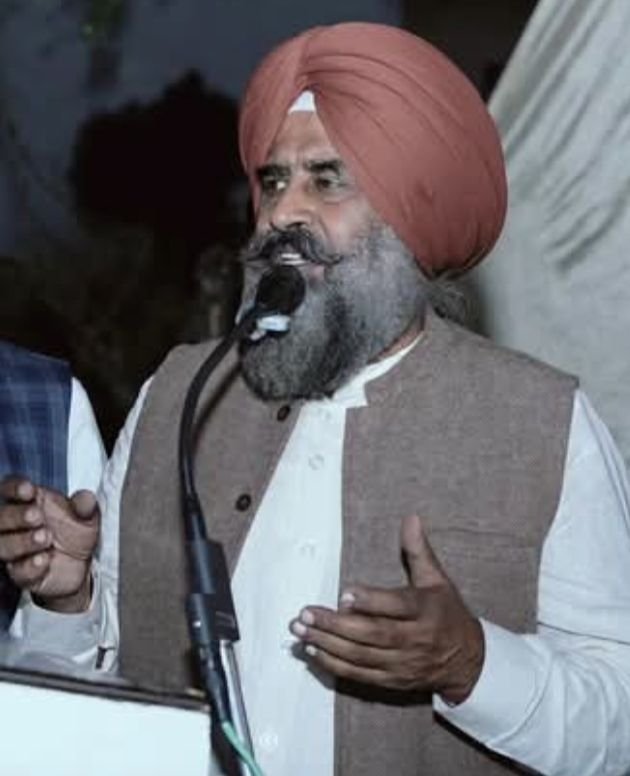
Punjab Congress chief questions the rationale behind the former allies’ reunion, asks Sukhbir Badal to explain the 2020 NDA exit and says the partnership lacks a roadmap for the state’s development
Punjab Congress president Pargat Singh on Tuesday dismissed the renewed alliance between the Bharatiya Janata Party and the Shiromani Akali Dal as a politically motivated arrangement, alleging that the two parties had reunited primarily to regain power rather than offer Punjab a credible programme for development.
Reacting to the announcement that BJP and SAD would contest the 2027 Assembly elections together, Singh described the partnership as “directionless” and questioned what he said was the absence of a clear vision for the state’s economic and social challenges.
“The reunion between the SAD and the BJP is only for the greed for power,” Singh told PTI. He alleged that neither party had presented a development agenda or a roadmap for taking the border state towards progress and prosperity.
“They have no development agenda for Punjab or roadmap for the state’s progress. They have joined hands merely for their own development,” he said, adding that the alliance had been formed with the objective of capturing power.
The Congress leader’s criticism comes as the BJP and SAD attempt to revive a political partnership that had shaped Punjab’s electoral landscape for two decades. The two parties formally began contesting Assembly elections together in 1997 and remained allies until September 2020, when the Akali Dal withdrew from the BJP-led National Democratic Alliance over the Centre’s three farm laws.
The split was particularly significant because agriculture is central to Punjab’s economy and political identity. The laws had triggered a prolonged farmers’ movement, with large numbers of protesters from Punjab participating in demonstrations at Delhi’s borders. Harsimrat Kaur Badal resigned from the Union Cabinet before the SAD formally ended its alliance with the BJP. The laws were repealed in late 2021.
Singh has sought to make that history a central question for the Akali Dal leadership. He specifically asked party president Sukhbir Singh Badal to explain to the people of Punjab why the SAD had left the NDA in 2020 and why it now considered a return to the same political arrangement appropriate.
The question could become an important point of confrontation during the election campaign. The Akali Dal is likely to present the renewed alliance as a practical arrangement based on changed political circumstances, while its opponents may portray it as a reversal driven by electoral calculations.
For the Congress, the alliance presents both a political challenge and an opportunity. A combined BJP-SAD campaign could create a more organised contest against the AAP government, particularly in constituencies where the two parties have complementary support bases. At the same time, Congress will seek to argue that the reunion does not resolve the questions surrounding the previous governments’ record or the circumstances of the 2020 split.
The BJP-SAD announcement also comes at a time when the Congress is attempting to consolidate its position as a principal challenger to AAP in Punjab. The party will need to demonstrate that it can offer a credible alternative on employment, agriculture, public finances, law and order, drug abuse and industrial investment.
Singh’s remarks indicate that Congress intends to challenge the alliance not merely on its electoral arithmetic but also on its political credibility. The party is likely to remind voters of the two former allies’ earlier period in government and the controversies that subsequently weakened their position.
However, dismissing the alliance as directionless will not, by itself, be enough to neutralise its potential electoral impact. BJP’s growing vote share in the 2024 Lok Sabha election and the Akali Dal’s established rural network could make the partnership competitive if both parties manage to coordinate their candidates and transfer votes.
For Pargat Singh and the Congress leadership, the task will be to turn criticism of the BJP-SAD reunion into a wider argument about governance and Punjab’s future. The 2027 election will test whether voters view the alliance as a credible political alternative or as a reunion driven mainly by the desire to return to power.