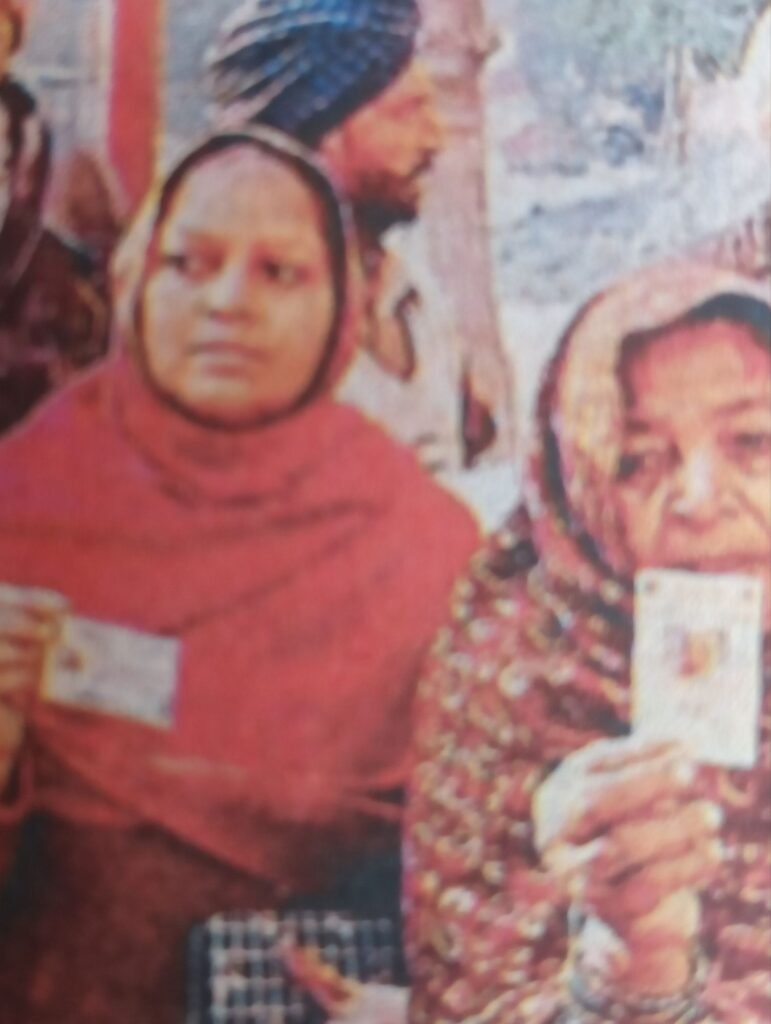
Punjab recently witnessed the conclusion of its rural local body elections, where voters turned out to elect representatives to zila parishads and panchayat samitis across the state. The elections, which took place on a Sunday, involved over 1.36 crore eligible voters who were registered to cast their ballots across more than 19,000 polling booths in 23 districts of the state. Polling began early in the morning and was scheduled to continue until late afternoon, and officials stated that the counting of votes was set to take place on December 17.
Despite a vigorous campaign by multiple political parties and candidates, the overall voter turnout was reported to be around 48 percent, indicating that less than half of the electorate participated in the polling process. While turnout has traditionally varied in rural elections, political analysts in the state noted that such figures might reflect a growing disengagement among large segments of the rural population, stemming from voter fatigue and skepticism about local governance impacts.
The elections were held amid heightened security arrangements, with authorities deploying tens of thousands of personnel to maintain law and order. Officials identified hundreds of polling locations as sensitive or hyper-sensitive due to historical disputes, reports of local rivalries, and other political tensions. These measures aimed to ensure that the electoral process remained peaceful and free from undue influence.
However, the process did not proceed without controversy. Opposition parties and some independent candidates raised allegations of irregularities in several parts of the state, particularly in the Malwa region. A significant complaint emerged from Muktsar district, where voters and political representatives accused agents affiliated with the Aam Aadmi Party (AAP) of attempting to capture a polling booth and improperly stamp ballots. The specific involvement of a political figure’s family member in this incident intensified scrutiny and triggered a temporary halt in voting in that village.
Another point of contention arose in Fatehgarh Sahib, where a reportedly premature photograph of a ballot paper shared on social media by an AAP candidate fueled further debate. Opposition leaders claimed that the act could influence voters or signal collusion with election officials, though the candidate maintained that the image was of a sample or instructional ballot rather than an official one. Election authorities responded by replacing the polling team at the location to address procedural concerns and launched an inquiry into the matter.
Political commentators have pointed out that local issues—including the distribution of development funds, the performance of elected representatives, and the implementation of welfare programmes—played a substantial role in shaping voter attitudes. Unlike high-profile state or national elections, rural body polls often focus on everyday concerns such as water supply, road construction, and agricultural support. Despite this, turnout figures suggest that voters may not feel fully confident that these elections will lead to meaningful change in their daily lives.
In anticipation of the December 17 counting exercise, political parties have already begun strategizing for potential outcomes, particularly with an eye toward the state’s next major electoral battle in 2027. Given the diversity of opinions among the rural electorate, analysts predict that results could serve as a bellwether for broader political shifts in Punjab over the coming year