Saptrishi Soni ।
The Punjab government has renewed its aggressive stance against the drug menace, launching a fresh phase of enforcement operations across several districts as public concern over narcotics abuse continues to rise. Senior officials have described the campaign as a coordinated effort involving the police, excise department, and district administrations, aimed at dismantling both street-level networks and larger supply chains operating within and across state borders.
Over the past few weeks, law enforcement agencies have conducted targeted raids in border districts such as Tarn Taran, Amritsar, Ferozepur, and Fazilka, regions long considered vulnerable due to their proximity to international smuggling routes. Officials report multiple arrests, seizures of synthetic drugs, heroin, and unlicensed pharmaceutical substances, and the identification of financial trails linked to organized networks.
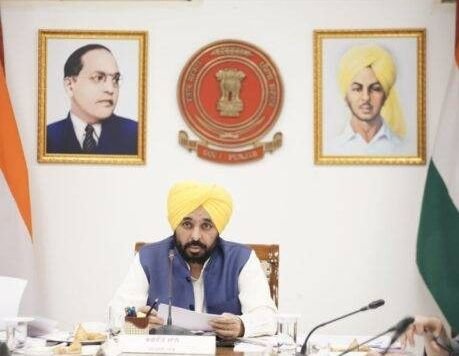
Chief Minister Bhagwant Singh Mann has repeatedly emphasized that the fight against drugs is not merely a law-and-order issue but a social and generational challenge that threatens Punjab’s future. Addressing senior officers during a recent review meeting, he directed the police to act without political pressure and warned that any official found shielding offenders would face strict consequences. The government has also reiterated that elected representatives will not be spared scrutiny if their names surface in investigations.
Politically, the renewed crackdown carries significant weight. The Aam Aadmi Party came to power in Punjab on the promise of eradicating drugs and restoring social stability. Opposition parties, particularly the Congress and Shiromani Akali Dal, have questioned the pace and depth of action, accusing the government of recycling announcements without structural reform. In response, the ruling party has argued that entrenched networks built over decades cannot be dismantled overnight, but insists that its approach is more transparent and data-driven than past efforts.
Beyond policing, the government has also focused on rehabilitation and prevention. De-addiction centers are being reviewed for staffing, medicine availability, and treatment protocols, while awareness campaigns are being expanded in schools and colleges. Officials say the objective is to break the cycle of addiction by addressing demand alongside supply.
Civil society groups have cautiously welcomed the renewed momentum but stress that sustained political will is crucial. Many activists argue that previous campaigns faltered due to selective enforcement and lack of follow-through. Whether the current drive marks a turning point will depend on consistent action, institutional accountability, and visible outcomes on the ground.
As Punjab moves forward, the drug issue remains both a governance test and a political benchmark, one that could shape public perception well ahead of the next assembly elections.