Saptrishi Soni।
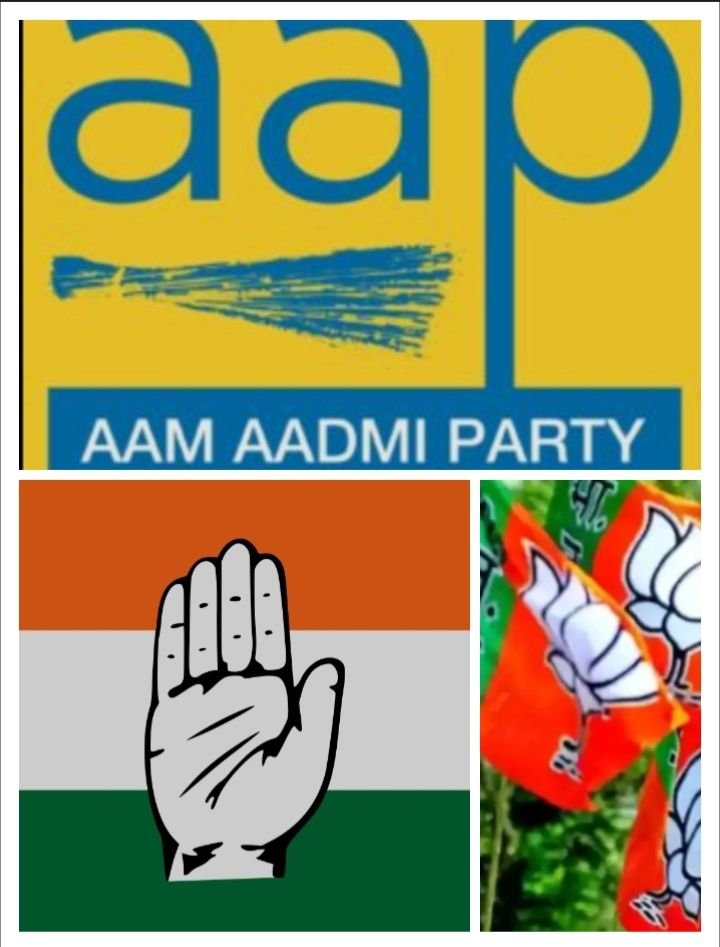
Punjab’s political landscape is once again at a crossroads, revealing a complex interplay of power, persistence, decline and recalibration. Recent rural-level outcomes and broader political signals point not to a single dominant narrative, but to a layered reality where governance advantage, opposition resilience, legacy politics and national ambitions intersect uneasily. For observers of Punjab politics, the message is clear: while power currently rests with the Aam Aadmi Party, the ground beneath remains far from settled.
At the heart of the current moment lies AAP’s control of the state government and its visible impact on rural politics. Governance, in Punjab’s context, is not an abstract concept. It is deeply embedded in everyday interactions with the state—procurement centres, power supply, schools, health facilities, tehsil offices and panchayat institutions. The party in power naturally enjoys greater visibility and influence in these spaces, and AAP has leveraged this advantage effectively.
The ruling party’s rural performance reflects how administrative presence translates into political capital. Welfare schemes, grievance redressal mechanisms and frequent engagement by ministers and MLAs have helped create a perception of responsiveness. For many voters, especially in villages, the line between governance and politics is thin. When benefits are delivered efficiently, credit follows automatically.
Yet, incumbency also brings heightened expectations. Punjab’s rural electorate is politically alert and historically unforgiving. Issues such as farm incomes, debt, youth unemployment and drug abuse remain unresolved at structural levels. While AAP has managed to retain momentum so far, the sustainability of this support will depend on outcomes rather than intent. Governance advantage can quickly turn into liability if delivery falters.
Complicating the picture is the nature of opposition politics in Punjab. Unlike states dominated by a single challenger, Punjab’s opposition space is fragmented. Congress, Shiromani Akali Dal and BJP operate simultaneously, often cutting into each other’s vote banks. This division has indirectly strengthened the ruling party, allowing it to emerge ahead even in tightly contested areas.
Among the opposition, Congress stands out as the most enduring force. Despite leadership crises and electoral setbacks, the party has consistently demonstrated its ability to remain relevant. Its strength lies not in momentary surges but in organisational depth. Village-level networks, experienced local leaders and historical social coalitions continue to give Congress a base that refuses to erode completely.
Congress’s electoral story in Punjab is one of missed opportunities rather than collapse. Time and again, the party has shown signs of resurgence, only to be undone by internal rivalries. Factionalism, leadership ambiguity and public airing of differences have repeatedly weakened its position at crucial moments. This self-inflicted damage has prevented Congress from converting its vote share into decisive victories.
Nevertheless, Congress remains a significant political variable. Its presence shapes outcomes even when it does not win. In multi-cornered contests, Congress has the capacity to emerge from behind, alter margins and disrupt the ruling party’s calculations. For AAP, this makes Congress a latent threat—less visible but persistently relevant.
The Shiromani Akali Dal presents a different challenge. Once the central pillar of Punjab’s politics, the party now struggles with credibility and confidence. Recent wins in select villages indicate that its traditional base has not vanished entirely. However, these successes are symbolic rather than transformative.
The Akali Dal’s problem is not organisational survival but political reinvention. Voters associate the party with a past era, and legacy alone no longer guarantees trust. To rebuild relevance, the party must address internal divisions, project renewed leadership and articulate a forward-looking agenda that resonates beyond its core supporters.
Regrouping is essential, but it must be accompanied by ideological clarity and organisational reform. Without this, the Akali Dal risks remaining confined to pockets of influence rather than reclaiming statewide significance.
For the BJP, Punjab continues to be a difficult and unfamiliar terrain. Despite its national dominance and strong organisational machinery, the party has struggled to gain electoral traction in the state. The reasons are structural rather than tactical. Punjab’s political identity is shaped by regional consciousness, agrarian concerns and historical experiences that do not always align with national narratives.
The BJP’s challenge lies in translating national appeal into local trust. Visibility alone is insufficient. Punjab demands a leadership that understands its social fabric and communicates in a language rooted in regional priorities. Without strong local faces and consistent grassroots engagement, the party’s expansion will remain limited.
This phase should prompt serious introspection within the BJP. Punjab cannot be approached as an extension of national politics. It requires a tailored strategy, sensitive alliances and patient organisational work. Until this recalibration occurs, electoral breakthroughs will remain elusive.
Looking ahead, Punjab’s political future appears shaped by two competing forces: fragmentation and consolidation. In the short term, a divided opposition benefits the ruling party. AAP’s position remains secure as long as challengers operate in silos. However, politics is dynamic, and alignments evolve in response to governance outcomes and public sentiment.
The real test will come when voters begin to assess performance beyond symbolism. Rural Punjab, in particular, evaluates governments on tangible improvements in livelihoods and opportunities. If expectations are met, incumbency will continue to favour AAP. If not, the same electorate could swing decisively.
Opposition consolidation, even partial, could dramatically alter the balance. Congress resolving its internal conflicts, Akali Dal redefining its relevance, or BJP successfully localising its strategy—any of these developments could reshape the political equation.
Punjab’s democracy has always resisted permanence. Power changes hands not through waves of rhetoric but through accumulated trust or dissatisfaction. The coming years will test every party’s ability to adapt, introspect and connect authentically with the people.
What is unfolding is not merely an electoral cycle but a broader contest over credibility. Governance will be scrutinised, opposition strategies will be tested, and voters will decide who truly understands Punjab’s present and future.
In this evolving landscape, one conclusion stands out: Punjab’s politics may appear settled today, but beneath the surface, it remains fluid, competitive and deeply responsive to performance. Power may offer advantage, but in Punjab, it is never a guarantee.