Saptrishi Soni
MUKTSAR — The winter air in Sri Muktsar Sahib carries a unique weight every January, heavy with the dual resonance of ancient sacrifice and modern ambition. As the sun rises over the sacred sarovar (pool), thousands of devotees immerse themselves in its waters, honoring a vow of redemption made three centuries ago. Yet, just beyond the perimeter of this spiritual solemnity, the roar of loudspeakers and the swell of political rallies signal a different kind of battle—one for the soul of Punjab’s electorate ahead of the 2027 Assembly polls.

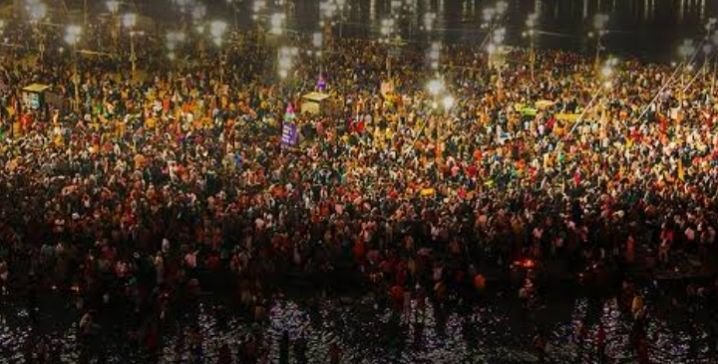
The Anchor of History: Redemption at Khidrana
To understand the political gravity of Maghi, one must first grasp its spiritual bedrock. The festival marks the Magh Sankranti, but for the Sikhs, it is a sombre commemoration of the Battle of Khidrana in 1705. It was here that forty Sikh warriors, the Chali Mukte (Forty Liberated Ones), who had previously deserted Guru Gobind Singh during the siege of Anandpur Sahib, returned to fight in his defense.
Led by the fierce Mai Bhago, these warriors achieved martyrdom while holding off a massive Mughal force, allowing the Guru to secure a critical water reservoir. Touched by their ultimate sacrifice, Guru Gobind Singh tore up the deed of disavowal (Bedawa) they had signed, granting them spiritual liberation (Mukti). This act of forgiveness transformed the dusty tract of Khidrana into Muktsar, the “Pool of Liberation,” making the Maghi Mela a profound symbol of resilience and the possibility of returning to the path of righteousness.
The Political Barometer of Malwa
For decades, this potent historical narrative has made the Maghi Mela the de facto launchpad for Punjab’s political calendar. Situated in the heart of the Malwa region—the state’s largest political belt with 69 Assembly seats—the Mela has traditionally offered parties a captive audience to test their narratives and measure public mood. While the Akal Takht issued an edict in 2017 discouraging political conferences at religious gatherings, the 2026 Mela witnessed a brazen revival of political pageantry, with parties viewing the event as a dress rehearsal for the upcoming election cycle.
The 2026 Showdown: New Lines Drawn
The political landscape at this year’s Maghi Mela was defined by significant strategic shifts, most notably the aggressive entry of the Bharatiya Janata Party (BJP) and the calculated return of the Aam Aadmi Party (AAP).
For the first time in history, the BJP held an independent political conference at the Mela, signaling its intent to shed the “junior partner” tag it once held in its alliance with the Shiromani Akali Dal (SAD). Leaders including Union Minister of State Ravneet Singh Bittu used the platform to critique the state’s governance, accusing the AAP administration of misusing state machinery—specifically government buses—to ferry crowds to their rallies. The BJP’s narrative focused heavily on a “double-engine” government model, urging Punjab’s voters to align with the center for stability and development.
The ruling AAP, meanwhile, returned to the Maghi stage after a nearly decade-long hiatus. Chief Minister Bhagwant Mann’s presence was a strategic move to reclaim the narrative in Malwa, a region that was instrumental to his party’s landslide victory in 2022. Mann utilized the platform to defend his governance model and counter opposition claims of corruption, framing his administration as the true inheritors of the revolutionaries’ dreams.
The Battle for Panthic Identity
For the Shiromani Akali Dal (SAD), the Maghi Mela remains home turf. The party, which claims a lineage intertwined with Sikh history, held its conference at its traditional venue near the SGPC ground. SAD President Sukhbir Singh Badal framed the current political climate as a struggle against “modern-day invaders” looting Punjab’s resources, drawing a sharp parallel to historical oppression. For the Akali Dal, the Mela is not just a rally but an existential assertion of its Panthic identity, crucial for its survival and revival before 2027.
A Conspicuous Absence
In stark contrast to the cacophony of rallies, the Congress party chose to abstain from holding a formal conference during the Mela days. Citing adherence to the Akal Takht’s moral code against politicizing religious events, the Congress leadership opted to hold a separate rally after the conclusion of the religious festivities. While positioned as a respectful stance, political analysts view this as a calculated risk that may have ceded valuable ground to rivals in the highly contested Malwa belt.
As the dust settles on the grounds of Muktsar, the dual reality of the Maghi Mela stands clearer than ever. On one side, the quiet prayers at the sarovar continue to honor the timeless lesson of the Chali Mukte—that it is never too late to correct one’s path. On the other, the political class has turned the Mela into a high-stakes arena, signaling that the road to the 2027 Punjab Assembly will be paved with fierce contestation, historical appropriation, and an unrelenting battle for the voters’ trust.
.