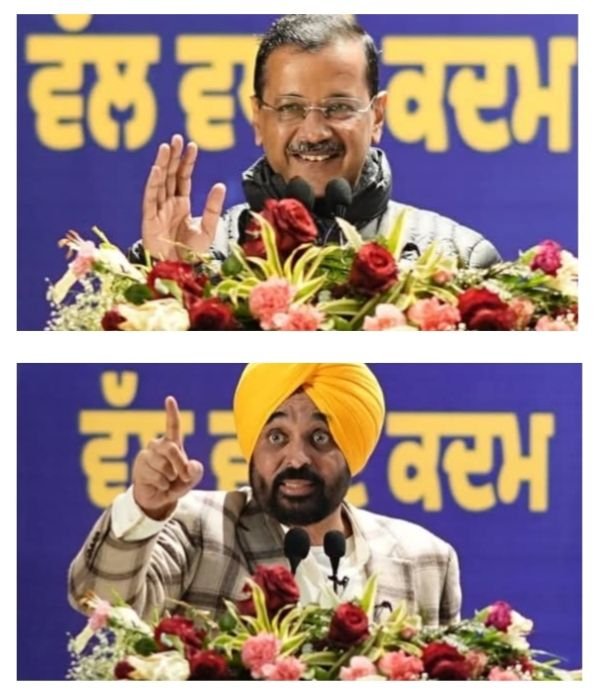
Punjab’s ruling Aam Aadmi Party (AAP) is facing a serious political setback, with cracks becoming visible in what was once considered Arvind Kejriwal’s strongest fortress outside Delhi. The crisis deepened after the Banga Assembly constituency MLA Dr. Sukhwinder Kumar Sukhi, who enjoyed cabinet-rank status, announced his resignation in a dramatic public move that has intensified tensions within the party and stirred strong reactions across the Sikh community.
On Saturday, Dr. Sukhi reached Gurdwara Raja Sahib (Nabh Kanwal Rasokhana) in Banga, where he formally announced his resignation. The decision was not taken behind closed doors. Instead, he chose to go live on social media from the gurdwara premises, underlining the seriousness of his protest and the religious sensitivity of the issue involved. His resignation has sent shockwaves through Punjab’s political landscape, particularly at a time when AAP is already under pressure over governance and perception issues.
At the heart of the controversy lies a recent statement made by Chief Minister Bhagwant Mann during the Maghi Mela at Sri Muktsar Sahib. While addressing the gathering, Mann referred to the long-pending issue of the missing swaroops of Sri Guru Granth Sahib Ji. He stated that out of 328 missing swaroops, 169 were allegedly recovered from a dera linked to Banga’s Gurdwara Raja Sahib, and further claimed that 139 of these had no official records.
This remark triggered widespread anger among sections of the Sikh sangat, who viewed the statement as insensitive and damaging to the sanctity of religious institutions. Sikh bodies, including the Shiromani Gurdwara Parbandhak Committee (SGPC), along with leaders of the Shiromani Akali Dal, strongly objected to the chief minister’s remarks, accusing the government of mishandling a deeply emotional and faith-related issue.
Dr. Sukhi, while explaining his resignation, said he could not remain silent when sentiments of the Sikh community were hurt. He made it clear that his decision was directly linked to the chief minister’s statement, which, according to him, had caused pain and unrest among devotees. By resigning at a gurdwara and making his stand public, he sought to position himself as acting in defence of religious dignity rather than political convenience.
The episode has also added to the growing narrative of internal unease within AAP’s Punjab unit. Statements made earlier by senior party leaders, including Delhi Chief Minister Atishi and Bhagwant Mann, have already been under scrutiny, and this latest development has further fuelled speculation about leadership challenges and ideological disconnects within the party.
For AAP, which came to power in Punjab on the promise of clean politics and respect for all communities, the resignation of a sitting MLA over a religious issue is a significant blow. It not only raises questions about internal cohesion but also about the party’s handling of sensitive faith-related matters in a state where religion and politics are deeply intertwined.
As opposition parties sharpen their attacks and Sikh organisations continue to voice their concerns, the coming days will be crucial for the Mann government. How AAP responds to this crisis may well determine whether it can contain the political damage or whether this episode marks the beginning of a deeper erosion of trust in Punjab.