
Punjab has once again secured national recognition for its startup ecosystem, with the state being ranked as a “Top Performer State” in Category A in the 5th edition of the State Startup Ranking conducted by the Department for Promotion of Industry and Internal Trade under the Government of India. The announcement marks the second consecutive time Punjab has achieved this status, reinforcing the state’s growing reputation as a supportive and forward-looking destination for startups, innovation and entrepreneurship.
Cabinet Minister for Industries and Commerce Sanjeev Arora said the recognition reflects sustained efforts by the state government to build a strong and enabling environment for new enterprises. He said the ranking highlights Punjab’s consistent progress and underlines the impact of policy reforms, institutional support and ecosystem development initiatives taken over the last several years. According to the minister, the achievement is a clear signal that Punjab is moving in the right direction to position itself as a competitive player in India’s fast-expanding startup economy.
The State Startup Ranking exercise is carried out by DPIIT to encourage states and union territories to adopt proactive reforms and best practices to strengthen their startup ecosystems. In the latest edition, 34 out of 36 states and union territories participated, reflecting the growing national emphasis on innovation-driven growth and entrepreneurship as key engines of economic development. The assessment covered the period from 1 January 2023 to 31 October 2024 and evaluated performance across six major reform areas considered critical for nurturing startups, including policy support, institutional capacity, access to funding, infrastructure, capacity building and market linkages.
The ranking framework categorises states and union territories into five groups: Best Performer, Top Performer, Leader, Aspiring Leader and Emerging State. Punjab’s continued placement in the Top Performer category is being seen as evidence of policy continuity and steady institutional strengthening, rather than one-time gains. Officials say this reflects the state’s long-term approach to creating a startup-friendly ecosystem that can support enterprises from early stages through to scale-up.
Under the leadership of Chief Minister Bhagwant Singh Mann and the stewardship of Industries and Commerce Minister Sanjeev Arora, Punjab has placed innovation and entrepreneurship at the centre of its industrial and economic development strategy. The government has focused on simplifying processes, improving access to support mechanisms and encouraging young entrepreneurs to explore technology-driven and knowledge-based ventures alongside traditional sectors.
Startup Punjab, the state’s nodal agency for startups, has played a central role in this progress. Headed by Director Industries and Commerce and State Startup Nodal Officer Surabhi Malik, IAS, the agency has consistently participated in the DPIIT ranking process and worked to improve the state’s performance across key indicators. Senior officials in the Industries and Commerce and Investment Promotion Department said that systematic monitoring, feedback-based reforms and closer coordination with stakeholders have helped Punjab steadily improve its national standing.
Punjab’s journey in the national startup rankings shows a clear upward trend. In the first edition of the framework in 2018, the state was categorised as an Emerging Startup Ecosystem. It moved to the Aspiring Leader category in 2019, advanced to Leader State in 2020, and reached the Top Performer category in 2022. Retaining the Top Performer status again in the 2024 edition is being viewed as confirmation that earlier reforms have been sustained and strengthened over time.
A key factor behind Punjab’s strong performance has been the focus on financial and institutional support for startups. Through Startup Punjab, the state provides a range of incentives, including a seed grant of Rs. 3 lakh, interest subsidy on loans and lease rental reimbursement. These measures are aimed at reducing early-stage financial pressure and helping entrepreneurs focus on product development, market entry and business growth. During the ranking assessment period, more than 200 startups received funding support, which officials say has significantly boosted entrepreneurial activity across multiple sectors.
At present, over 2,000 startups from Punjab are registered with DPIIT, indicating growing confidence in the state’s startup ecosystem. Government officials say this reflects increasing awareness among entrepreneurs about the benefits of formal registration, access to government schemes and the broader support network available within the state. The diversity of registered startups, spanning technology, agribusiness, manufacturing, services and emerging innovation areas, is also being highlighted as a sign of a maturing ecosystem.
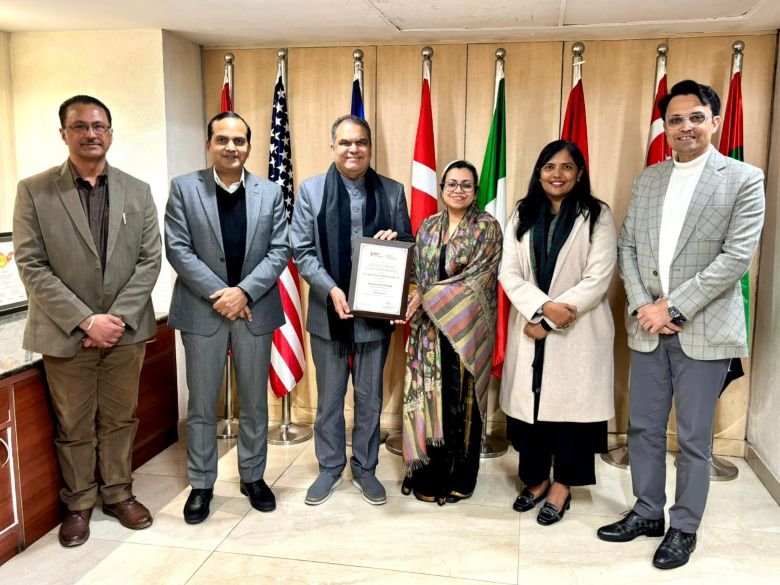
The Certificate of Appreciation for the latest ranking was presented by the Director, Startup India to the Startup Punjab team. State officials described the recognition as a validation of proactive policies, effective implementation and a collaborative approach involving government departments, incubators, accelerators, academic institutions, industry bodies, investors, mentors and partner organisations.
Minister Sanjeev Arora said the achievement belongs not only to the government but to the entire startup community in Punjab. He emphasised that continued progress will depend on strengthening partnerships, expanding infrastructure, improving access to capital and enhancing mentorship and market linkages. The government, he said, remains committed to further policy support and ecosystem development with the objective of positioning Punjab as a leading hub for startups and innovation in India.
With back-to-back Top Performer rankings, Punjab is now seeking to build on this momentum to attract more investment, retain local talent and encourage young entrepreneurs to see the state as a viable and competitive base for building high-growth ventures. The latest recognition is being seen as both an endorsement of past efforts and a roadmap for deeper reforms in the years ahead.