
Chandigarh/Haryana: Political heat has surged in Haryana following the presentation of the Union Budget 2026–27, with starkly contrasting reactions emerging from the state’s ruling Bharatiya Janata Party (BJP) and its opposition rivals. The debate — intensifying on 2 February 2026 — mirrors broader national fault lines over fiscal priorities, social welfare and development strategy, but also reflects deepening political contestation ahead of future state and national elections.
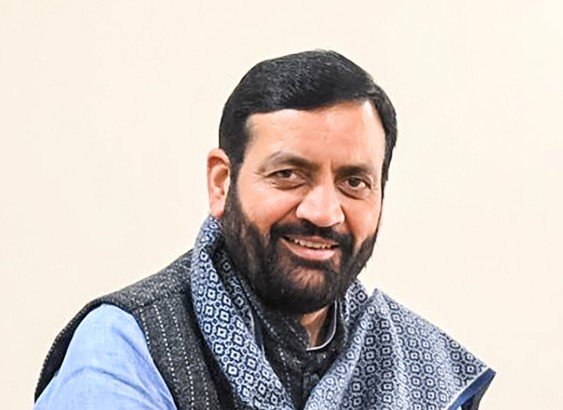
Haryana Chief Minister Nayab Singh Saini, speaking on the Budget within hours of its presentation in Parliament, described it as a “visionary and inclusive roadmap” for economic growth, employment generation and sectoral expansion. According to official statements, CM Saini emphasised that the Budget’s overall outlay of ₹53.5 lakh crore and an elevated capital expenditure of ₹12.2 lakh crore would be particularly beneficial for accelerating infrastructure projects, boosting industrial competitiveness and strengthening the state’s role in national development trajectories.
Saini pointed specifically to enhanced tax devolution figures under the 16th Finance Commission framework, which maintained a 41 percent share for states, thereby promising stronger fiscal support for education, health, rural roads and allied development initiatives. He highlighted that key sectors — including agriculture, rural development, semiconductors, MSMEs, and biotechnology — were positioned to gain traction. According to the Chief Minister’s office, these allocations would help translate national priorities into results on the ground in fast-growing states like Haryana.
Senior BJP leaders praised the Budget’s focus on speed, capacity building and inclusive growth, echoing the Prime Minister’s vision of “Antyodaya” and shared prosperity. Party functionaries in Haryana argued that the Budget aligns well with the state government’s priorities of infrastructure modernisation, youth empowerment and technology-led development.
However, the felicitation within ruling ranks has been matched by sharp criticism from opposition quarters. Political rivals, particularly from the Congress and allied parties, argued that the Union Budget falls short of addressing core socio-economic challenges in states like Haryana, especially those rooted in agrarian distress and rural livelihoods.
Former Chief Minister Bhupinder Singh Hooda, a senior Congress voice in Haryana, described the Union Budget as “hollow and disappointing,” asserting that it failed to provide substantive relief for inflationary pressures, tax burdens or financial support to farmers, labourers and the rural poor. Critics protested that despite peripheral mentions of sectoral growth, the Budget missed opportunities to tackle the structural issues facing core economic actors in the state.
Furthermore, leaders from Punjab and Haryana, including finance ministers and farmer advocates, expressed concern that the Budget ignores pressing agricultural concerns. They highlighted that despite a nominal 7 percent increase in agriculture allocations, substantive support mechanisms to address crop input costs, market infrastructure deficits, and Minimum Support Price (MSP) clarity remain unaddressed. These critiques portrayed the Budget’s agriculture focus as a nominal gesture rather than a robust policy response.
Beyond state politics, national opposition figures including Congress leaders also weighed in, labelling the Budget politically “directionless” and inadequate for addressing citizen priorities such as health, education, employment and rural development. Their remarks reflect a broader strategy to position the budget debate as a critique of central governance priorities ahead of nationwide electoral calculations.
Political analysts say the Budget’s reception in Haryana underscores larger tensions about fiscal federalism, development equity and centre–state relations. While ruling parties view the allocations as enabling growth and reinforcing cooperation, opposition groups frame them as insufficient and misaligned with ground-level needs. The divergent responses signal competing political narratives that are likely to take centre stage in public discourse and party campaigns in the run-up to future electoral contests across the region.