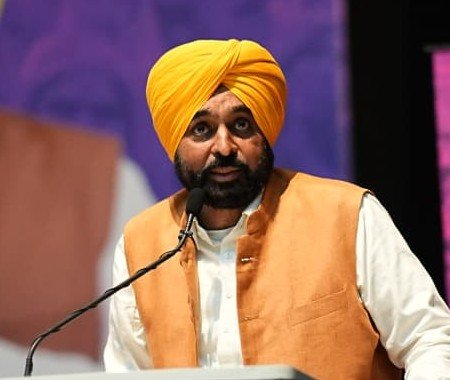
Punjab witnessed a series of significant developments across governance, healthcare, politics, and economic policy on Tuesday, reflecting the evolving priorities of the government led by Bhagwant Mann. While the administration continued to highlight its achievements in public service delivery, particularly in healthcare, opposition voices raised concerns over the state’s fiscal health, indicating a growing policy debate in the run-up to the 2027 Assembly elections.
Healthcare Expansion Gains Momentum
In a major boost to public healthcare infrastructure, the Chief Minister inaugurated a newly upgraded hospital and a Maternal and Child Health (MCH) facility in Dhuri, located in Sangrur district. The project, developed at a cost exceeding ₹21 crore, includes a 50-bed sub-divisional hospital and a 30-bed MCH unit equipped with modern diagnostic and emergency services.
The facility is expected to benefit tens of thousands of residents across nearly 70 nearby villages, significantly reducing dependence on tertiary care institutions in larger cities. The move is part of the government’s broader strategy to strengthen secondary healthcare systems and ensure equitable access in rural and semi-urban regions.
This initiative complements the ongoing expansion of primary healthcare services through the widely publicized network of Aam Aadmi Clinics, which continue to serve as the first point of contact for patients across the state.
Political Messaging and 2027 Outlook
On the political front, Bhagwant Mann struck a confident note, asserting that his government’s performance has laid a strong foundation for a decisive victory in the 2027 Punjab Assembly elections. Emphasizing what he described as the fulfillment of “core guarantees,” the Chief Minister positioned his administration as delivery-oriented and accountable.
He also took aim at traditional political rivals, including the Congress and the Shiromani Akali Dal, suggesting that their influence is diminishing in the face of governance-driven politics. These remarks signal the early shaping of an electoral narrative, with the ruling establishment seeking to consolidate public support through performance claims.
Fiscal Concerns Trigger Policy Debate
Even as the government projected confidence, concerns over Punjab’s financial health surfaced prominently. Opposition leaders flagged issues related to rising public debt, increasing fiscal deficit, and the sustainability of subsidy-driven welfare schemes.
The growing expenditure on power subsidies and social welfare initiatives has sparked a wider discussion on balancing development commitments with fiscal discipline. Experts believe that this debate is likely to intensify in the coming months, particularly within legislative and policy-making forums.
The evolving discourse highlights a key challenge for the state government—maintaining its welfare-oriented approach while ensuring long-term economic stability.
Strategic Move in Power Sector
In a notable development in the energy sector, the Punjab government has taken over a thermal power plant at Goindwal Sahib, renaming it in honour of Guru Amar Das Ji. The acquisition is being viewed as a strategic step towards enhancing the state’s control over power generation infrastructure and ensuring energy security.
The decision also carries symbolic significance, linking governance initiatives with Punjab’s cultural and spiritual heritage.
Social Sector Outreach Continues
The government also reiterated its commitment to strengthening grassroots healthcare through the expansion of Aam Aadmi Clinics. With over 800 clinics already operational and plans to add around 200 more, the initiative is emerging as a key pillar of the state’s social sector policy.
These clinics have played a crucial role in providing free medical consultations, diagnostics, and medicines, particularly benefiting economically weaker sections and residents in remote areas.
A State at a Policy Crossroads
The developments on March 18 present a comprehensive picture of Punjab’s current governance landscape—marked by strong emphasis on public welfare, assertive political positioning, and emerging economic challenges.
While the Mann government continues to push its agenda of accessible healthcare and infrastructure development, the concerns raised over fiscal sustainability indicate that Punjab is entering a critical phase of policy balancing.
As the state moves closer to the next electoral cycle, the interplay between governance outcomes, economic management, and political messaging will play a decisive role in shaping its future trajectory.