Saptrishi Soni
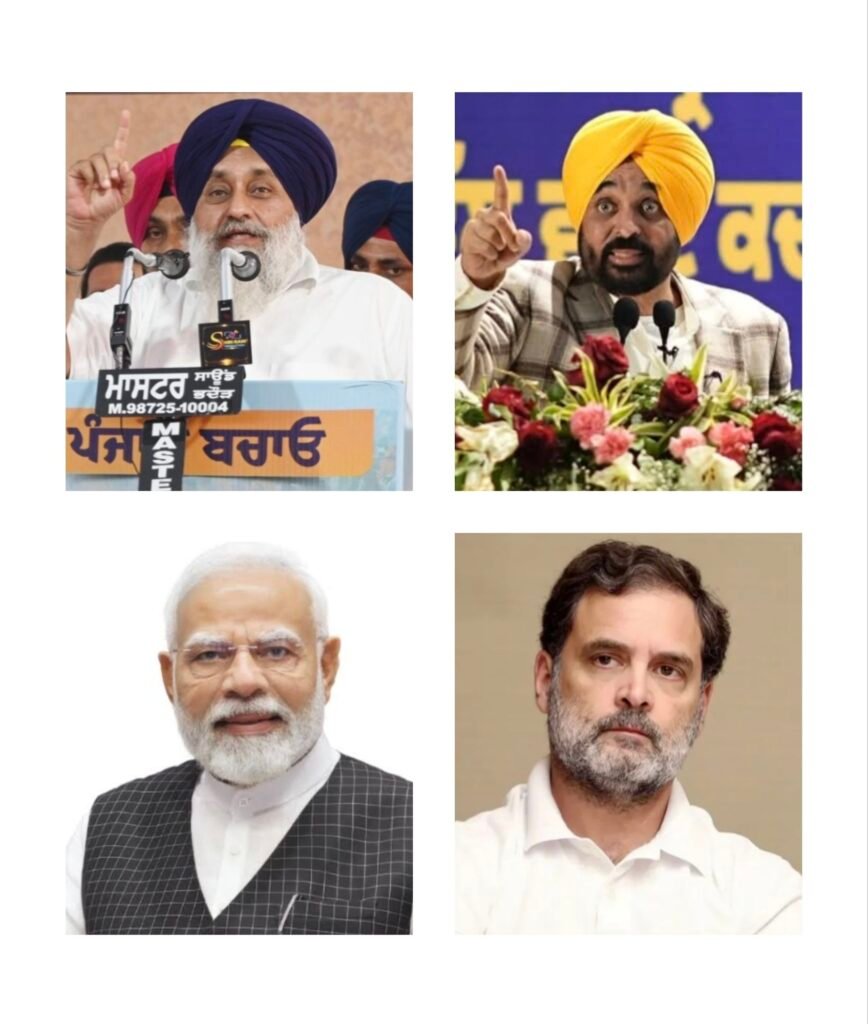
With the 2027 Punjab Assembly elections gradually coming into view, the state’s political landscape is witnessing a marked intensification in debate, positioning, and public outreach. The evolving discourse is no longer confined to routine criticism but is shaping into a broader policy-driven contest among the state’s principal political stakeholders—the ruling Aam Aadmi Party (AAP), and opposition parties including Congress, Shiromani Akali Dal, and the Bharatiya Janata Party (BJP).
At the centre of this momentum is Chief Minister Bhagwant Mann, whose government continues to project governance delivery as its primary political plank. From healthcare expansion and education reforms to power subsidies and administrative restructuring, the AAP government has consistently highlighted its efforts to redefine public service delivery in Punjab. Initiatives such as the expansion of primary healthcare infrastructure and targeted welfare schemes are being positioned as evidence of a governance model focused on accessibility and inclusivity.
However, the opposition has increasingly sharpened its stance, questioning both the sustainability and effectiveness of these initiatives. The Congress, seeking to reclaim its traditional support base, has focused its critique on the state’s financial health, raising concerns about rising debt levels and fiscal management. Senior leaders have called for a more balanced approach that combines welfare delivery with long-term economic stability, arguing that unchecked expenditure could pose structural challenges in the future.
The Shiromani Akali Dal, with its deep-rooted political and social presence in Punjab, has also reasserted itself in the debate by focusing on agrarian concerns, federal issues, and the preservation of Punjab’s socio-cultural fabric. The party has been particularly vocal on matters related to farmers, rural distress, and the need for policy continuity in agriculture—an area that remains central to the state’s economy and identity.
Meanwhile, the BJP has made a visible attempt to expand its political footprint in Punjab, especially through high-profile rallies and organisational mobilisation. The recent outreach led by senior leadership, including Amit Shah, signals a strategic intent to position the party as a viable alternative in the state. BJP leaders have focused on issues such as law and order, drug control, and economic revival, while also attempting to frame a broader narrative around governance efficiency and national integration.
State BJP leadership, including Sunil Jakhar, has echoed these themes, emphasising organisational strengthening and voter outreach. The party’s approach appears to be aimed at consolidating urban support while gradually expanding into rural constituencies, particularly in regions where traditional political alignments are showing signs of flux.
The interplay between these political forces reflects a deeper shift in Punjab’s electoral dynamics. Unlike previous election cycles dominated by bipolar or triangular contests, the current scenario points towards a more complex and competitive political environment. Each party is attempting to carve out a distinct narrative—AAP through governance delivery, Congress through economic critique, Akali Dal through identity and agrarian issues, and BJP through national-level positioning and organisational expansion.
Importantly, the discourse is also becoming increasingly policy-centric. Issues such as healthcare access, employment generation, industrial growth, fiscal discipline, and social harmony are taking centre stage in political messaging. This shift indicates a more informed and engaged electorate, where performance and policy clarity are likely to play a decisive role.
At the same time, political rhetoric has intensified, with parties responding swiftly to each other’s statements and public engagements. While such exchanges are a natural part of democratic competition, they also underline the high stakes involved as Punjab approaches a crucial electoral phase.
The coming months are expected to witness further consolidation of strategies, alliances, and narratives. Public rallies, policy promise, and grassroots mobilisation will likely define the trajectory of political engagement across the state. For voters, this period offers an opportunity to assess competing visions for Punjab’s future—ranging from welfare-driven governance to fiscal prudence, from agrarian reform to industrial revival.
As the pre-election momentum gathers pace, Punjab stands at a significant political crossroads. The direction chosen in the next electoral cycle will not only determine the composition of the government but also shape the state’s developmental priorities for years to come.