
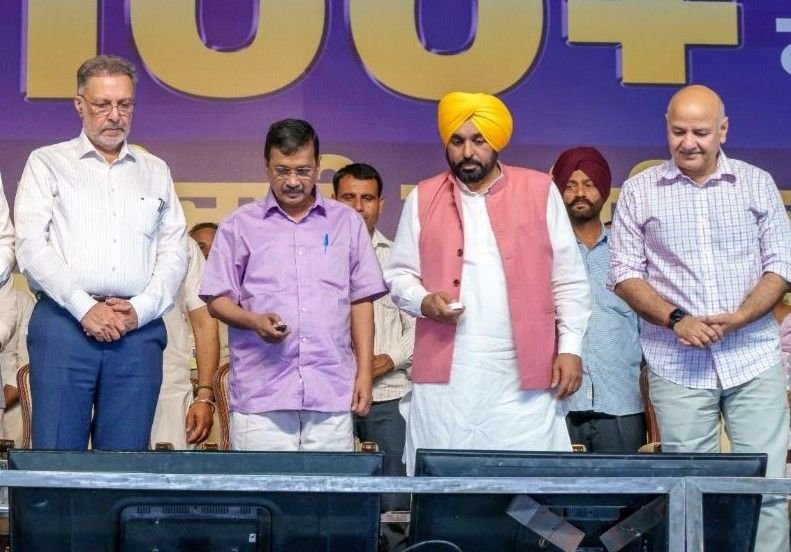
In a major expansion of its flagship public healthcare model, the Punjab government led by Bhagwant Mann has significantly scaled up its network of neighbourhood clinics, positioning the initiative as a cornerstone of its governance strategy ahead of future electoral cycles. With the inauguration of 109 new facilities, the total number of Aam Aadmi Clinics across the state has reached 990, marking one of the fastest expansions of decentralised healthcare infrastructure in India. Officials indicate that the network is set to grow further, with hundreds of additional clinics planned in the coming phase.
The expansion underscores the ruling Aam Aadmi Party’s emphasis on delivering accessible and free healthcare services at the grassroots level. Addressing a large public gathering in Fatehgarh Sahib, party leader Arvind Kejriwal described the initiative as a transformative model aimed at bridging longstanding gaps in primary healthcare delivery. He highlighted that the clinics are providing a comprehensive basket of essential services, including free consultations, medicines, and diagnostic tests, thereby reducing out-of-pocket expenditure for millions of households.
According to official estimates shared during the event, the clinics collectively offer over a hundred essential medicines and dozens of diagnostic services at no cost. The scale of public engagement has been substantial, with cumulative outpatient visits reportedly crossing the 50 million mark within a relatively short period. This volume of footfall, significantly higher than the state’s population, reflects repeat usage by patients managing chronic conditions such as diabetes and hypertension, indicating a growing reliance on the system for routine healthcare needs.
The leadership projected the clinics as more than just healthcare facilities, framing them as instruments of social equity. The model seeks to decentralise healthcare access by bringing basic medical services closer to residential clusters, particularly in rural and underserved urban areas. By eliminating user charges at the point of service, the government aims to ensure that financial constraints do not delay or prevent treatment, a persistent issue in many parts of India.
Alongside the clinic network, the state government is simultaneously rolling out a broader healthcare coverage framework. A large-scale health assurance programme is being implemented to extend financial protection for secondary and tertiary care, including treatment in select private hospitals. The initiative is designed to complement the primary care network by ensuring that patients requiring advanced medical interventions are not burdened by high costs.
The government has also initiated the distribution of health cards to millions of families, enabling streamlined access to healthcare services. Early implementation data suggests that a significant number of beneficiaries have already availed treatment under the scheme, though the programme is still in its expansion phase. Officials maintain that the integration of primary clinics with insurance-backed hospital care will create a more cohesive and inclusive healthcare ecosystem.
A key feature highlighted by the leadership is the monitoring mechanism embedded within the system. Feedback loops, including direct outreach to patients, are being used to assess service delivery and identify gaps. The administration claims that real-time oversight has helped maintain the availability of medicines, ensure staffing levels, and address operational issues promptly—challenges that have historically plagued public health facilities in several states.
The expansion of healthcare services is being positioned within a broader governance narrative that also includes free electricity for households, improved irrigation infrastructure for farmers, and enhanced public service delivery. The leadership drew contrasts with previous administrations, arguing that earlier governments had not prioritised accessible healthcare at the community level. While such claims remain politically contested, the scale and visibility of the clinic network have undeniably made it a central feature of Punjab’s policy landscape.
Criticism from opposition parties has centred on fiscal sustainability and implementation efficiency, particularly given the scale of financial commitments involved. However, the government has defended the programme as a necessary investment in human development, arguing that preventive and primary care can reduce long-term healthcare costs and improve productivity.
The political messaging accompanying the rollout has been equally assertive, with the leadership linking welfare delivery to electoral accountability. The expansion of clinics, coupled with promises of further social support schemes, is being framed as evidence of a governance model focused on public service delivery rather than patronage networks.
As Punjab moves towards the next phase of its healthcare expansion, the success of the Aam Aadmi Clinics will likely be evaluated not only by their reach but also by their long-term sustainability and quality of care. For now, the rapid scale-up signals a clear policy direction—one that places accessible healthcare at the centre of the state’s development agenda while reinforcing the political narrative of welfare-driven governance.