
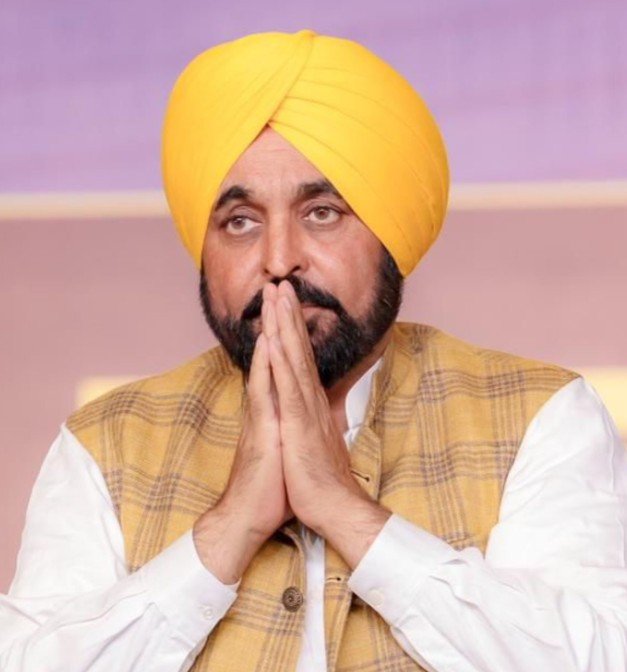
In a detailed and politically significant press briefing in Chandigarh, Punjab Chief Minister Bhagwant Singh Mann outlined what he described as a structural turnaround of the state’s power sector, positioning it as a model where public welfare and financial sustainability coexist. The address highlighted a series of reforms undertaken over the past four years, with a focus on affordability, infrastructure expansion, and long-term energy security.
At the core of the government’s narrative is the claim that Punjab’s electricity department, once burdened with heavy losses, has now returned to profitability through improved management practices and a crackdown on inefficiencies. The Chief Minister emphasized that despite extending up to 600 units of free electricity to nearly 90 percent of households, the state exchequer has not experienced additional strain. According to him, this reflects a governance approach where welfare schemes are not treated as fiscal liabilities but as instruments of inclusive growth.
Mann also drew a sharp contrast with previous administrations, accusing them of divesting public assets and weakening the state’s control over critical infrastructure. In a move he described as a “strategic correction,” the government acquired the Goindwal thermal power plant from the private sector, a decision he framed as a milestone in restoring public ownership and energy self-reliance. The plant, now renamed after Guru Amar Das, was purchased at a significantly lower cost compared to the projected expense of establishing a new facility, thereby saving substantial public funds.
The Chief Minister noted that operational efficiency at the plant has improved considerably since the acquisition, with its load factor witnessing a sharp increase. He attributed this to better resource management and steady coal supply, particularly from the Pachwara coal mine, ensuring uninterrupted generation across key thermal plants in the state.
Beyond domestic consumers, the government has also targeted industrial and commercial sectors with reduced electricity tariffs, aiming to stimulate economic activity and improve Punjab’s investment climate. Mann argued that high power costs under previous regimes had discouraged business growth, whereas the current pricing framework is designed to enhance competitiveness and support industrial revival.
Significant investments have also been directed towards strengthening infrastructure under Punjab State Power Corporation Limited. The installation of new substations and transformers has been prioritized to address voltage fluctuations and improve service reliability. The Chief Minister highlighted that PSPCL has achieved an A+ rating at the national level, securing a top position among power utilities, which he described as evidence of improved governance and operational efficiency.
Employment generation has been another pillar of the government’s strategy. Mann revealed that over 9,500 young individuals have been provided permanent jobs within the power sector, combining direct recruitment and compassionate appointments. Additionally, recruitment for over 1,700 positions is currently underway, with completion targeted by mid-2026. He framed this as part of a broader effort to align sectoral growth with youth employment, ensuring that institutional strengthening goes hand in hand with social upliftment.
In the agricultural domain, the government has pushed for a shift towards canal-based irrigation, significantly increasing its share in overall water usage. This transition is aimed at reducing dependence on groundwater while ensuring cost-effective irrigation for farmers. Enhanced electricity supply during daytime hours has further eased operational challenges for the farming community, particularly during peak cropping seasons.
Looking ahead, the Chief Minister placed strong emphasis on renewable energy, announcing ambitious plans to increase the share of green energy in Punjab’s power mix from current levels to nearly 80 percent over the next six years. Falling solar energy tariffs have made this transition more viable, and the government is exploring innovative measures, including undergrounding high-tension power lines in agricultural fields to reduce risks and optimize land use.
Mann also reiterated the government’s commitment to broader governance priorities, including law enforcement and public safety. Efforts to modernize policing, particularly in tackling cybercrime and narcotics networks, were highlighted as part of a parallel strategy to ensure that economic progress is supported by a secure and stable social environment.
The press conference reflected a carefully constructed narrative of governance that blends welfare policies with fiscal prudence and long-term planning. By focusing on electricity—a sector central to both economic development and daily life—the Punjab government is attempting to demonstrate that targeted reforms can deliver both immediate relief and structural transformation.
As Punjab navigates the challenges of economic recovery, resource management, and social equity, the policies outlined by Chief Minister Bhagwant Singh Mann signal an approach that prioritizes people-centric development while striving to build a financially resilient and forward-looking state.