
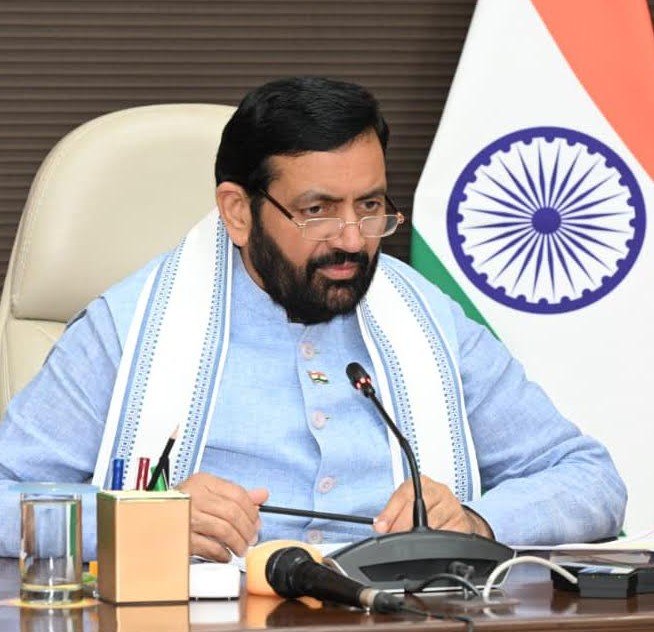
As political activity gathers pace in Haryana ahead of the next electoral cycle, the state government has intensified its focus on governance delivery and infrastructure expansion, positioning these as key pillars of its public outreach strategy. In a series of high-level meetings, Chief Minister Nayab Singh Saini reviewed both citizen grievance redressal mechanisms and large-scale development projects, underlining a governance model built on accountability, monitoring, and time-bound execution.
At the centre of the review was the statewide “Samadhan Camps” initiative, a citizen-centric grievance redressal programme that has emerged as a flagship administrative exercise. Conducted twice weekly across district headquarters and sub-divisional offices, these camps are designed to provide a direct interface between citizens and the administration. During the virtual review, the Chief Minister personally interacted with complainants from multiple districts, reinforcing the government’s emphasis on real-time governance and direct public engagement.
Officials reported that since the launch of the campaign in mid-2024, approximately 150,000 complaints have been registered, with nearly 78 percent resolved. While the government projects this as a significant administrative achievement, the Chief Minister made it clear that the remaining cases must be addressed with urgency. He directed district officials to ensure that unresolved complaints are cleared within a strict timeline, warning that any delays or negligence would invite action.
Significantly, the review also exposed administrative lapses, with the Chief Minister taking strong exception to the absence of key officials from certain districts during the camps. He instructed Deputy Commissioners and Sub-Divisional Magistrates to personally oversee these grievance platforms, signalling a shift towards stricter bureaucratic accountability. Weekly monitoring mechanisms have also been reinforced, with explicit directions for district-level review meetings and penalties for non-compliance.
Parallel to governance reforms, the state government has also moved aggressively on the infrastructure front. In a meeting of the High Powered Purchase Committee, chaired by the Chief Minister, approvals were granted for projects worth over ₹1,000 crore across multiple departments. These include critical investments in urban infrastructure, irrigation, healthcare, energy, and industrial development.
Among the key decisions were approvals for large-scale water supply and sewage treatment projects in Gurugram and Faridabad, expansion of industrial effluent treatment capacity in Panipat, and the establishment of new public infrastructure such as a Home Guard training centre in Karnal and a shooting range complex in Panchkula. The government also cleared procurement processes for essential utilities, including power infrastructure components and smart metering systems.
In the education and healthcare sectors, targeted interventions were also approved, including the rollout of a digital life-cycle management system in government medical colleges and the construction of new health facilities in underserved regions. Additionally, projects aimed at environmental sustainability and agricultural development—such as an integrated aqua park for saline land utilisation—were given the green light.
Chief Minister Saini emphasised that all projects must adhere to strict timelines and quality benchmarks, adding that he would personally monitor progress. He reiterated that public funds must be utilised efficiently and transparently, framing this approach as central to the government’s development philosophy.
However, the timing and scale of these announcements have also drawn political attention. Opposition parties have questioned whether the accelerated pace of approvals and reviews is driven by governance priorities or electoral considerations. Critics argue that while project announcements are substantial, the real challenge lies in timely execution and equitable distribution of benefits across regions.
The ruling Bharatiya Janata Party, on the other hand, has defended its record, asserting that the combination of grievance redressal mechanisms and infrastructure expansion reflects a governance model focused on both immediate citizen needs and long-term development. Party leaders have increasingly highlighted the Samadhan Camps as evidence of a responsive administration, contrasting it with what they describe as slower, less accountable systems under previous regimes.
Political analysts note that Haryana’s electoral narrative is gradually shifting towards governance efficiency, service delivery, and infrastructure outcomes. Initiatives like Samadhan Camps, combined with visible development projects, are likely to play a crucial role in shaping voter perception in the months ahead.
As the state moves closer to elections, the intersection of governance and politics is becoming more pronounced. For the Saini-led administration, the challenge will be to convert policy decisions into on-ground results, while for the opposition, the focus will remain on scrutinising these claims and presenting an alternative narrative to the electorate.