
In a significant policy push aimed at transforming the education landscape, the government of Punjab has initiated a comprehensive move to integrate Artificial Intelligence (AI) into its school education system. The development comes as part of a broader reform agenda under Chief Minister Bhagwant Mann, positioning the state as an early adopter of technology-driven learning in India.
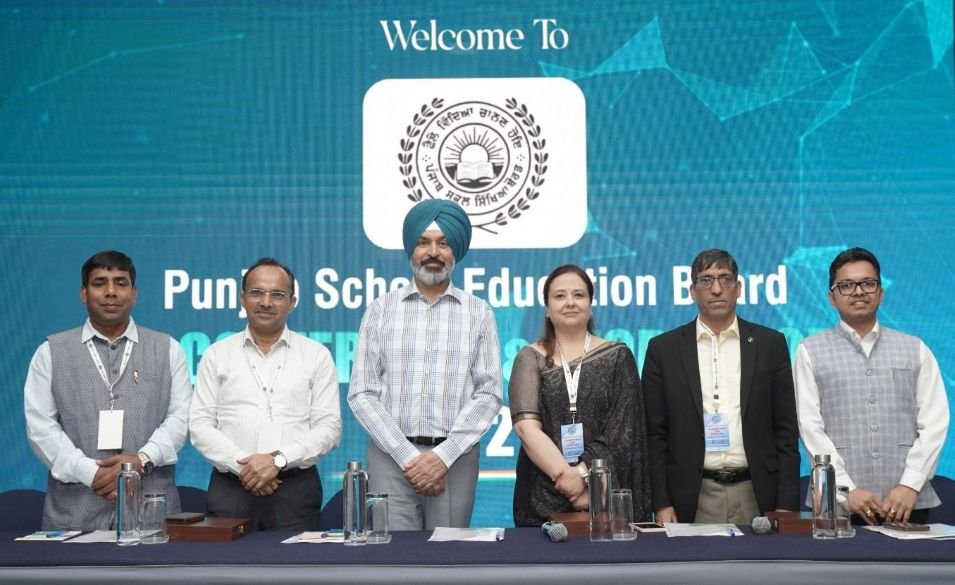
The initiative gained momentum with a national-level AI Conference and Workshop hosted by the Punjab School Education Board, bringing together policymakers, education experts, technology leaders, and academic institutions to deliberate on the future of classrooms in a rapidly evolving digital world. The event reflected a clear shift in governance priorities, where education is being aligned with global technological trends and workforce demands.
Punjab’s Education Minister Harjot Singh Bains described the move as a forward-looking intervention that seeks to redefine how students learn and prepare for the future. He emphasized that Artificial Intelligence will not remain a peripheral subject but will become central to improving educational quality, fostering innovation, and modernizing the overall system. According to him, the objective is to equip students with skills that are not only relevant today but adaptable to future global challenges driven by technology.
A key announcement during the conference came from PSEB Chairman Dr. Amarpal Singh, who outlined structural changes in the curriculum. Building on the state’s already mandatory Computer Science education, AI will now be embedded as a core component of the syllabus. This marks a critical transition from traditional theoretical learning to application-based digital education. Importantly, Computer Science performance, including AI-related competencies, will now be formally reflected in board certificates, elevating the subject’s academic significance and encouraging students to engage more deeply with technological disciplines.
The broader vision driving this reform goes beyond technical skill-building. Officials highlighted that Artificial Intelligence is reshaping not only industries but also everyday life, and education systems must evolve accordingly. The focus, therefore, is on responsible and ethical adoption of AI, ensuring that students emerge not just as users of technology but as informed and responsible digital citizens.
The conference also served as a platform for national-level dialogue on integrating AI across disciplines. Experts stressed that AI education should not be confined to Computer Science alone but should extend into subjects such as mathematics, science, and even humanities, enabling interdisciplinary learning. This approach is expected to democratize access to emerging technologies, ensuring students from diverse backgrounds can benefit equally.
Concerns around equity and ethical implementation were also central to discussions. Education leaders pointed out that while AI offers transformative potential, its adoption must be carefully managed to avoid widening the digital divide. Ensuring access to infrastructure, teacher training, and standardized implementation across regions remains critical to the success of such initiatives.
Industry participation added another dimension to the conference, highlighting the importance of collaboration between education systems and technology companies. Experts from global firms emphasized that aligning classroom learning with industry requirements is essential for building a workforce that is ready for the demands of Industry 4.0. Initiatives aimed at teacher training and curriculum development were discussed as key enablers of this transition.
The event also featured an exhibition showcasing AI-driven student projects, startup innovations, and educational models, reflecting a growing ecosystem of technological creativity within the state. These demonstrations underscored how early exposure to AI can foster problem-solving skills and entrepreneurial thinking among students.
Panel discussions during the conference explored the practical challenges and opportunities in implementing AI in education. Conversations ranged from translating policy into classroom practice to understanding the implications of automation on future employment. Experts agreed that reskilling and continuous learning would become essential as AI increasingly influences job markets.
The conference concluded with a strong consensus that Punjab’s initiative represents a decisive step toward building a future-ready education system. Under the leadership of the Bhagwant Mann government, the state is attempting to move beyond conventional reforms and embrace a model that integrates technology, ethics, and employability.
As India navigates the complexities of educational transformation in the digital age, Punjab’s approach could serve as a template for other states. By embedding Artificial Intelligence into its academic framework, the state is not only preparing its students for tomorrow’s challenges but also redefining the role of public education in a technology-driven world.