
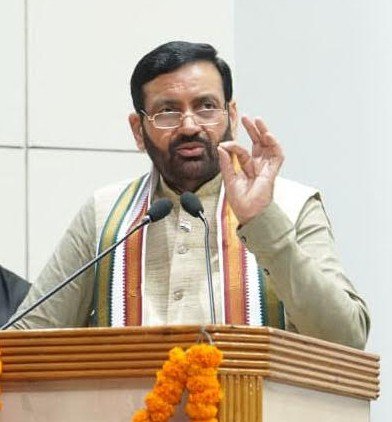
Reinforcing the enduring relevance of spiritual wisdom in contemporary times, Nayab Singh Saini emphasized that the teachings of Kabir Das continue to offer guidance to a world grappling with division, conflict, and social fragmentation. Addressing a seminar on the life and philosophy of the saint in Mohali, the Chief Minister described Kabir as a transformative voice whose ideas remain deeply significant even centuries later.
Saini noted that Kabir’s teachings, rooted in simplicity and universal truth, challenged entrenched social evils such as religious intolerance, caste-based discrimination, and societal hypocrisy during the 15th century. According to him, these messages have not lost their relevance; rather, they have gained greater importance in today’s global environment marked by rising tensions and ideological divides.
He observed that gatherings dedicated to saints and spiritual discourse transcend formal events, evolving into spaces of collective reflection and inner peace. Such platforms, he said, serve as a form of spiritual congregation, fostering harmony and instilling positive energy within society.
Highlighting Kabir’s universal appeal, the Chief Minister described him as a true humanitarian who spoke directly to the masses. His words, free from complexity and deeply rooted in everyday experiences, continue to inspire generations. Saini underlined that Kabir’s consistent opposition to inequality and social injustice positions him as a guiding figure for building an inclusive and compassionate society.
The Chief Minister also linked Kabir’s philosophy with the governance approach of the Haryana government. He pointed to initiatives such as the “Sant-Mahapurusha Vichar Samman and Prasar Yojana,” which aims to promote the teachings of saints and great thinkers among the public. According to him, these efforts are part of a broader vision to align governance with values of equality, social justice, and inclusivity.
Expanding on welfare initiatives, Saini highlighted schemes designed to make spiritual and cultural experiences accessible to citizens, particularly those from economically weaker sections. Under the Chief Minister’s pilgrimage initiative, elderly citizens are being facilitated to visit major religious destinations. He cited the recent departure of a special train from Ambala to Ayodhya as an example of the government’s commitment to enabling such journeys, with more destinations planned in the future.
Further, he noted that financial assistance is being extended to key Sikh pilgrimage sites under dedicated schemes, alongside support for religious travel initiatives such as the Sindhu Darshan and Kailash Mansarovar pilgrimages. These programs, he said, reflect an effort to preserve spiritual traditions while ensuring wider participation.
Saini reiterated that Kabir’s life and teachings underscore the importance of unity, mutual respect, and coexistence. He urged citizens to go beyond merely reading or reciting spiritual texts and instead incorporate their principles into daily life. According to him, only through such practical application can a truly harmonious and discrimination-free society be realized.
The seminar, organized by the Bhagat Kabir Welfare Foundation, brought together several prominent figures, including Members of Parliament and public representatives, reflecting the broader significance of Kabir’s legacy in public discourse.
As India navigates complex social and cultural challenges, the Chief Minister’s remarks highlight a renewed emphasis on drawing from timeless philosophical traditions to address modern realities. In invoking Kabir’s message, the focus remains clear: building a society anchored in compassion, equality, and shared humanity.