
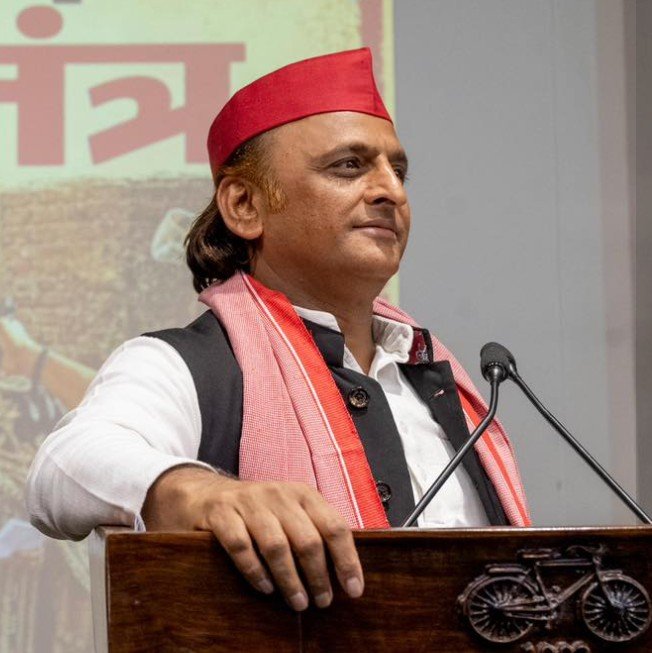
In a candid and measured address to the media in Lucknow, Akhilesh Yadav offered clarity on the Samajwadi Party’s decision to end its brief association with political consultancy firm Indian Political Action Committee (I-PAC), underscoring that the move was driven purely by financial considerations rather than electoral performance or strategic disagreements.
Positioning the decision as a reflection of fiscal discipline, Yadav stated that while the party had engaged I-PAC for a limited period as part of its early preparations for the 2027 Uttar Pradesh Assembly elections, sustaining such an arrangement required resources beyond the party’s current capacity. He explained that the collaboration, though professional and productive during its duration, could not be extended due to budgetary constraints.
Yadav’s remarks projected a pragmatic leadership approach, highlighting his willingness to make difficult yet necessary choices in the interest of the party’s long-term stability. By openly acknowledging funding limitations, he reinforced a narrative of transparency that is often rare in political discourse, especially when it comes to campaign management strategies.
The Samajwadi Party chief also addressed speculation suggesting that recent electoral outcomes in other states may have influenced the decision. Firmly rejecting such claims, he described them as unfounded and disconnected from reality. According to Yadav, the party’s decision-making process remains independent and internally driven, rather than reactive to external political developments.
Injecting a touch of humour into the interaction, Yadav took a light-hearted swipe at the growing ecosystem of political consultancies that have become increasingly prominent in India’s electoral landscape. He remarked that there is no shortage of firms offering a wide range of services—from data-driven surveys and social media management to opposition research and negative campaigning. His comments subtly underscored the evolving nature of electioneering in the country, where professional agencies now play a significant role alongside traditional grassroots mobilization.
At the same time, Yadav’s tone suggested a degree of scepticism toward over-reliance on such consultancies. By pointing out the proliferation of agencies and the varied, sometimes aggressive tactics they propose, he appeared to reaffirm the Samajwadi Party’s focus on organic political engagement and direct voter connect as its core strength.
The reference to Prashant Kishor, a prominent figure in India’s political consulting space who has been associated with I-PAC and has advised multiple major parties including the BJP and Congress, further contextualised the significance of such firms in shaping contemporary campaign strategies. However, Yadav’s stance indicated that while these organisations can add value, they are not indispensable to a party’s electoral prospects.
In a moment that drew attention for its wit, Yadav quipped that if financial resources were not a constraint, the party could consider engaging not just one but multiple agencies, even inviting the media to contribute funding if they wished to see such collaborations continue. The remark, though humorous, reinforced his central point about the financial realities that political parties must navigate.
The episode ultimately reflects a broader shift in how regional parties like the Samajwadi Party are balancing modern campaign tools with traditional political instincts. Under Yadav’s leadership, the party appears to be charting a course that prioritises financial prudence and strategic autonomy, while remaining open to innovation within realistic limits.
As preparations gradually build toward the 2027 Uttar Pradesh elections, Yadav’s clear articulation of priorities signals a leadership style grounded in practicality and adaptability. By addressing the issue directly and dispelling speculation, he has not only brought clarity to the party’s immediate strategy but also reinforced confidence among supporters about its readiness to compete effectively in the evolving political landscape.