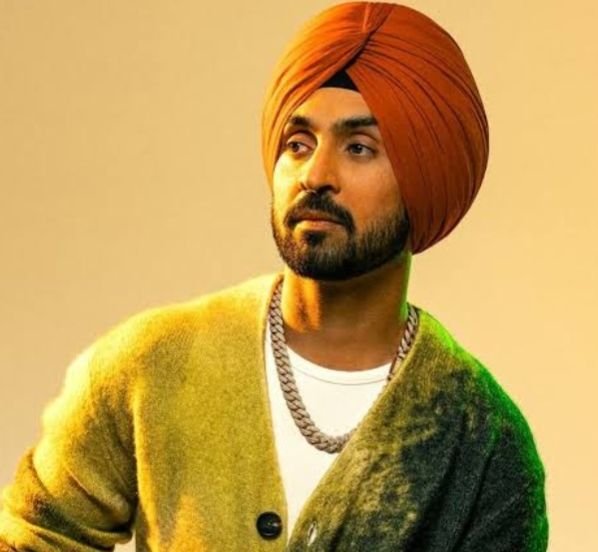
A firing incident outside the Karnal residence of Gurpartap Singh Kang, said to be associated with Punjabi singer and actor Diljit Dosanjh, has triggered a major political controversy in Punjab, with the ruling Aam Aadmi Party alleging that the episode carries “political overtones” and could have far-reaching implications for the state’s political and cultural landscape.
The incident, reported from Gonder village in Haryana’s Karnal district, has rapidly moved beyond a law-and-order issue and entered the centre of Punjab’s increasingly charged political discourse. Leaders of the ruling Aam Aadmi Party have publicly claimed that the Lawrence Bishnoi gang taking responsibility for the firing has raised serious questions about the political environment surrounding prominent Punjabi personalities.
Punjab Finance Minister Harpal Singh Cheema strongly criticised the BJP while reacting to the incident. He alleged that the attack was intended to create pressure on Diljit Dosanjh after speculation emerged regarding efforts to politically align influential Punjabi figures with the BJP ahead of future political developments in the state.
Cheema accused the BJP of creating an atmosphere of fear and intimidation in Punjab politics. He further alleged that the Lawrence Bishnoi network continues to operate despite repeated crackdowns because of political protection, an allegation that has intensified the political confrontation between the AAP and the BJP.
The controversy deepened after a citizens’ platform, Jaago Punjab Manch, publicly appealed to Diljit Dosanjh to take a leadership role in Punjab politics. Soon after, political speculation began regarding whether the globally known Punjabi artist could be drawn into mainstream politics. Against that backdrop, the firing incident has acquired larger political significance.
While no official evidence has yet emerged linking the firing to any political force, the ruling party’s aggressive response indicates that the issue is likely to become part of a broader political narrative in Punjab. Political observers believe the controversy could influence not only law-and-order debates but also discussions around freedom of expression, cultural identity and the growing overlap between entertainment and politics in the region.
Punjab has historically witnessed a deep connection between artists, singers and political mobilisation. From folk singers to actors, public figures in the state often carry significant social and political influence. In recent years, several Punjabi artists have either openly supported political parties or have been approached by competing political camps seeking broader public outreach.
Analysts say that if artists and public personalities begin to feel politically vulnerable or threatened, it could create a chilling effect across Punjab’s cultural space. The perception that influential voices are being pressured or politically cornered may also generate public sympathy toward such figures, especially among Punjab’s youth and diaspora communities, where Diljit Dosanjh enjoys considerable popularity.
The incident also comes at a time when the BJP is attempting to expand its footprint in Punjab after years of political limitations in the state. Opposition parties have repeatedly accused the BJP of attempting to weaken rival political formations by attracting influential leaders and public figures into its fold. Political rivals often point to the induction of several former MPs and leaders from Punjab into the BJP as part of a wider expansion strategy.
In that backdrop, the allegations surrounding the firing incident could politically backfire if the perception grows that intimidation or pressure tactics are being used against independent or influential Punjabi voices. At the same time, BJP leaders have not officially accepted the allegations made by AAP leaders, and the matter remains under investigation.
Security agencies are expected to examine the motive behind the firing incident, including whether it was linked to criminal intimidation, extortion, personal rivalry or any larger political context. Until concrete evidence emerges, much of the debate is likely to remain political rather than legal.
However, the larger concern emerging from the controversy is the growing intersection of crime, celebrity influence and political competition in Punjab. Many observers believe that if political narratives begin revolving around fear, gang influence and symbolic targeting of cultural personalities, it could deepen public mistrust and further polarise Punjab’s already sensitive political atmosphere.
The coming days are expected to be politically significant, particularly if more details emerge from the investigation or if prominent Punjabi personalities begin publicly reacting to the controversy.