
Kulbir Kalsi:
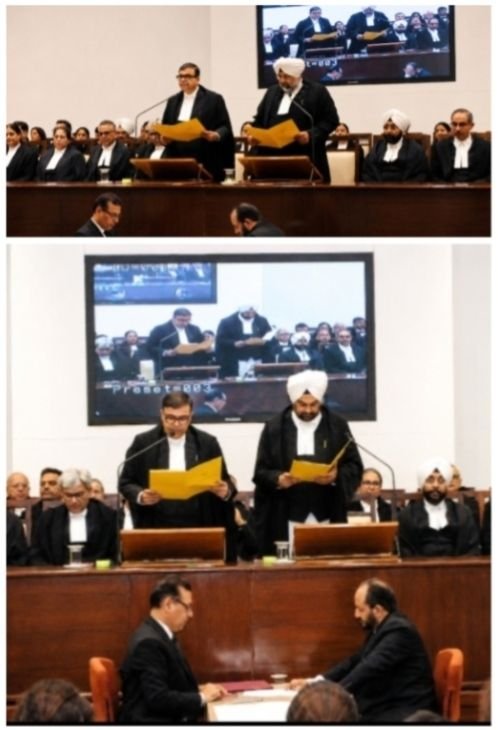
The Punjab and Haryana High Court marked a significant addition to its judicial strength on Monday as Hon’ble Mr. Justice H.S. Grewal and Hon’ble Mr. Justice Deepinder Singh Nalwa were sworn in as permanent judges of the High Court, a move expected to bolster the institution’s capacity to handle its growing caseload.
The oath of office was administered by Acting Chief Justice Justice Ashwani Kumar Mishra during a formal swearing-in ceremony held at the Punjab and Haryana High Court in Chandigarh. The ceremony was attended by judges, members of the Bar, senior judicial officers and other dignitaries.
The appointments come at a time when the High Court, one of the busiest constitutional courts in the country, continues to face mounting pressure due to a large number of pending civil, criminal and constitutional matters. The addition of permanent judges is being viewed as an important step towards enhancing judicial efficiency and strengthening the delivery of justice in Punjab, Haryana and the Union Territory of Chandigarh.
Legal experts have consistently underlined that increasing judicial strength remains one of the most effective ways to address the growing backlog of cases. For several years, members of the legal fraternity and litigants have urged the timely filling of judicial vacancies, arguing that delays in appointments often contribute to prolonged litigation and increased pressure on the existing judges.
The confirmation of Justice H.S. Grewal and Justice Deepinder Singh Nalwa as permanent judges is expected to improve the Court’s disposal rate, allowing benches to hear a greater number of matters on a daily basis and helping reduce waiting periods for litigants seeking judicial relief.
The Punjab and Haryana High Court exercises jurisdiction over the states of Punjab and Haryana, as well as the Union Territory of Chandigarh. It hears a wide range of matters, including constitutional challenges, public interest litigations, commercial disputes, criminal appeals, service matters and civil litigation, making it one of the country’s most significant judicial institutions.
The latest appointments are expected to contribute to the judiciary’s broader objective of ensuring quicker adjudication of cases, reducing pendency and reinforcing public confidence in the justice delivery system. For thousands of litigants awaiting hearings, the strengthening of the High Court’s judicial bench is being seen as a positive development towards more timely and effective access to justice.