Saptrishi Soni: Welfare delivery is rapidly becoming one of the central political themes around the Bhagwant Mann government as Punjab moves closer to the 2027 Assembly election, with AAP increasingly presenting direct financial assistance and public welfare schemes as evidence of a government focused on household-level economic security.
The latest emphasis on welfare comes at a time when political parties across Punjab are attempting to establish their own voter constituencies. For AAP, schemes involving direct transfers and subsidised public services provide an opportunity to demonstrate that government support can reach beneficiaries without intermediaries.
The Mann government has particularly focused on women, senior citizens, economically weaker households and other vulnerable groups. The Mawan Dheeyan Satkar Yojna has emerged as one of the government’s prominent initiatives, with financial assistance being transferred directly into beneficiaries’ bank accounts.
The government says the programme is intended not simply as an income-support measure but as a way of improving women’s financial independence and dignity. The political significance of such direct transfers is considerable because women have become an increasingly important electoral constituency across India.
AAP’s argument is straightforward: welfare should be measured by whether money and services actually reach households. The government has therefore emphasised direct benefit transfer mechanisms and digital systems designed to reduce intermediaries.
The Opposition is expected to challenge the government from a different angle. Questions about the long-term financial sustainability of welfare commitments, the state’s debt burden and the ability to maintain social spending while funding development projects are likely to become more prominent as the election approaches.
That debate is already beginning to emerge around Punjab’s fiscal position. The Mann government argues that improved revenue collection, industrial investment and administrative reforms can create a stronger financial base for welfare programmes. Critics, however, are likely to ask whether recurring commitments can be sustained without increasing pressure on the state’s finances.
The government’s political strategy is therefore increasingly built around a combination of welfare and development. It is not presenting welfare schemes in isolation but linking them with employment generation, education reform, healthcare expansion and industrial investment.
The same strategy can be seen in AAP’s emphasis on government jobs. The administration has repeatedly highlighted recruitment through merit-based processes and is seeking to make employment one of the principal measures of its performance since 2022.
Industrial investment provides the second side of the argument. The government has claimed that Punjab has attracted thousands of investment proposals worth substantial amounts, with the potential to create hundreds of thousands of employment opportunities.
The political challenge is converting investment proposals into functioning projects and actual jobs. Similarly, welfare schemes will have their greatest electoral impact if beneficiaries experience timely, transparent and uninterrupted payments.
For the Opposition, the task will be to question the government’s performance without appearing to oppose welfare itself. Congress, BJP and the Akali Dal will have to offer alternative approaches on employment, fiscal management and social security if they want to convert criticism into electoral support.
AAP, meanwhile, has the advantage of being able to point to existing schemes and beneficiaries. But incumbency also means that voters can judge the government against four years of actual performance.
The coming election debate is therefore likely to be less about whether welfare is necessary and more about what form it should take, how it should be financed and whether it is producing durable improvements in household incomes.
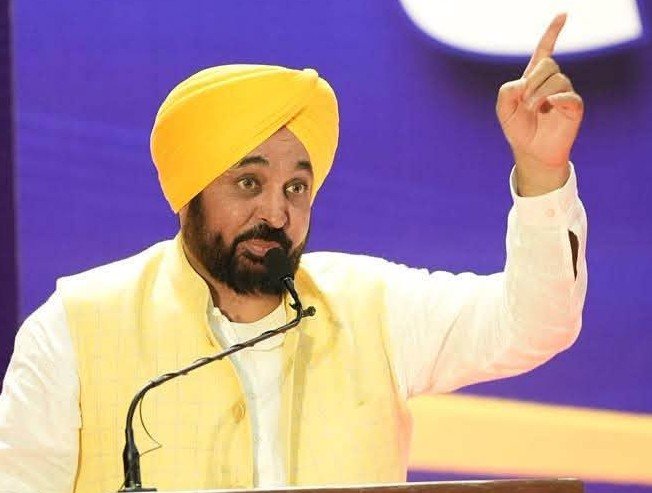
For Bhagwant Mann, the welfare narrative is an attempt to build a direct political relationship between the government and beneficiaries. For the Opposition, it represents an opportunity to question the sustainability and effectiveness of the government’s economic model.
As Punjab approaches 2027, the contest between welfare delivery, employment generation and fiscal responsibility could become one of the defining political debates of the election.
This is a web generated news report.