

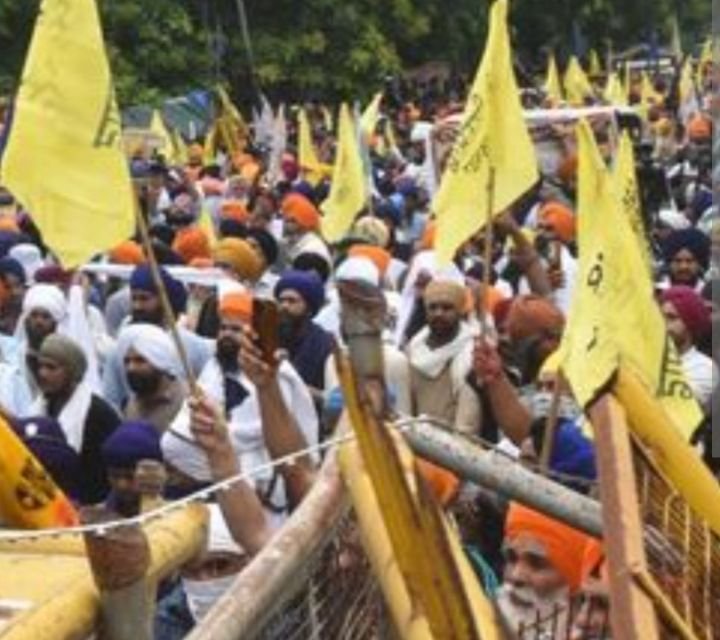
Punjab is witnessing a statewide shutdown on Friday, 21 August, after the Qaumi Insaaf Morcha called for a bandh demanding the release of Sikh prisoners commonly referred to by Sikh organisations as “Bandi Singhs”. The shutdown is scheduled from 7am to 2pm and has drawn support from several organisations, including sections of Sikh groups and political formations.
The protest is centred on a long-running demand: the release of prisoners whom supporters say have completed their sentences but remain incarcerated. The issue has emotional and political significance in Punjab, where questions surrounding Sikh prisoners, justice and the treatment of the Sikh community have periodically returned to the centre of public debate.
The Qaumi Insaaf Morcha has urged people across the state to participate in the shutdown. The organisers have also raised the issue of parole for Jagtar Singh Hawara and cases registered against some of their supporters. Their argument is that authorities should take a more decisive approach to prisoners who, according to the campaigners, have already served the terms imposed on them.
The bandh has also exposed differences within Punjab’s political and social landscape. Some organisations and political groups have supported the call, while others have been more cautious. In Ludhiana, for example, the response has been described as mixed, with some transport operators announcing that buses would remain off the roads while political parties have taken different positions.
The issue has already generated confrontation. Earlier this week, protesters at the Chandigarh-Mohali border attempted to move through police barricades, leading to clashes. Police used water cannons and tear gas after demonstrators allegedly tried to remove barricades with tractors.
The authorities have sought to distinguish between legitimate protest and disruption of public order. Essential services are expected to remain operational, while transport, markets, educational institutions and some private establishments have been affected by the shutdown call. Reports indicate that arrangements regarding schools have varied, with private-school bodies announcing closures while government institutions have followed separate instructions.
The bandh also comes at a politically sensitive time for Punjab. The state is already entering an increasingly competitive political phase, with the ruling Aam Aadmi Party, Congress, Shiromani Akali Dal and BJP all seeking to strengthen their positions ahead of the next Assembly election.
For the Sikh political space, the prisoner issue remains particularly significant. The demand cuts across questions of law, rehabilitation, constitutional powers and political representation. Supporters see the continued incarceration of some prisoners as an unresolved injustice, while governments and authorities have to consider the legal status of individual prisoners and the conditions governing their release.
The immediate impact of the bandh will be measured by public participation and the extent to which normal life is disrupted. More importantly, however, the protest highlights how unresolved questions surrounding Sikh prisoners continue to influence Punjab’s politics.
The state government faces a difficult balancing act: ensuring public order while dealing with an issue that has deep historical and emotional resonance. Any confrontation between protesters and police could further intensify the political debate.
For now, the bandh represents not merely a call for a day-long shutdown but another indication that questions of Sikh identity, prisoners’ rights and political representation remain powerful forces in Punjab’s public life.