
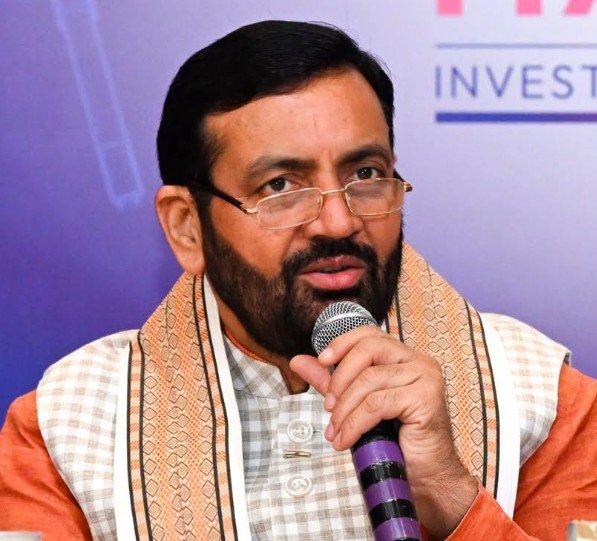
The Nayab Singh Saini government has intensified its effort to position Haryana as one of India’s leading investment destinations, securing investment proposals worth more than ₹66,000 crore during its latest outreach to industry in Mumbai. The scale of the commitments gives the BJP government an opportunity to strengthen its economic-development narrative, but it also raises a more difficult question: how effectively can the administration convert investment promises into factories, businesses and jobs on the ground?
The latest investment push has come under the “Happening Haryana 2.0” campaign, through which the state government is reaching out directly to major investors and industrial groups. During the Mumbai engagement, Saini sought to assure investors that Haryana would offer policy stability, faster clearances and coordinated government support. The Chief Minister has emphasised that investors should not have to navigate unnecessary bureaucratic hurdles while establishing projects in the state.
For the Saini government, this is more than an economic roadshow. Investment has become an important part of its political proposition for Haryana.
The BJP government is seeking to demonstrate that its second consecutive mandate can be converted into a new phase of economic expansion, industrial development and employment generation. The latest commitments, therefore, give the administration a substantial political opportunity to argue that Haryana continues to command confidence among major businesses.
But the government also knows that MoUs and investment announcements are only the first stage.
The real measure of success will be implementation.
Large investment proposals have to move through land acquisition or allotment, regulatory clearances, infrastructure development, financing and construction before they become operational businesses. The administration will eventually be judged on how many projects actually reach the production stage and how many employment opportunities are created.
That makes Saini’s promise of faster approvals particularly significant.
The government is attempting to create an ecosystem in which investment proposals can move quickly from commitment to execution. This requires coordination between departments dealing with land, power, roads, environment, urban development, taxation and labour.
For Haryana, the stakes are high because the state is competing with several other industrial destinations that are aggressively offering incentives to attract companies.
Haryana nevertheless possesses major structural advantages.
Its proximity to Delhi, access to the National Capital Region, established manufacturing clusters, extensive road connectivity and existing corporate ecosystem make it a natural choice for investors seeking access to one of India’s largest consumer markets.
Gurugram remains the most visible symbol of this economic strength, but the government’s larger challenge is to ensure that the next phase of investment does not remain concentrated around the NCR.
The political importance of geographical distribution should not be underestimated.
Young people in districts outside the major urban centres are looking for employment opportunities closer to home. If new investments generate jobs only in already prosperous areas, the broader social impact of the investment campaign will remain limited.
The Saini government therefore needs to connect industrial expansion with smaller cities, emerging industrial clusters, rural areas and local businesses.
This is where the state’s proposed policy initiatives for MSMEs and exports could become important. A strong investment cycle should ideally create opportunities not only for large corporations but also for Haryana’s small and medium enterprises, suppliers, contractors and service providers.
The government has increasingly spoken about skill development alongside investment. That linkage could prove critical.
New industries require workers with specialised skills, while Haryana’s young population needs access to training that matches changing market requirements. If investment and skill development are planned together, the economic benefits could extend beyond direct employment.
For Saini, this is an important political message: industrial growth should translate into opportunities for ordinary families.
The Opposition, however, is likely to scrutinise the investment figures carefully.
Congress and other political opponents can reasonably ask how much of the announced investment has actually materialised and how many jobs have been created from earlier investment commitments. Such questions will become increasingly relevant as the government highlights large figures during its investor campaigns.
The BJP government will therefore have to maintain a transparent record of implementation.
The political advantage of an investment announcement can be significant, but so can the political cost if promised projects remain on paper.
The government is also dealing with a second, more immediate challenge in Gurugram, where heavy rainfall has again caused waterlogging and traffic disruption. The episode has prompted criticism from Congress leaders over the city’s drainage and infrastructure.
The juxtaposition is politically revealing.
On one side, Haryana is presenting itself to investors as a modern, infrastructure-ready and business-friendly state. On the other, one of its most important economic centres continues to face recurring urban infrastructure problems during intense rainfall.
For the Saini government, resolving this contradiction will be important.
Investors do not assess a state only on the basis of tax incentives or government policies. They also consider transport infrastructure, urban services, reliability of utilities, quality of life and the availability of skilled manpower.
Gurugram’s development therefore has significance far beyond the city itself.
If the government can improve drainage, roads, traffic management and urban planning while simultaneously attracting new investment, it can reinforce the credibility of its broader development model.
If infrastructure problems persist, the Opposition will have an opportunity to question whether the state’s rapid economic expansion is being matched by adequate civic planning.
This makes the current phase of Haryana politics particularly interesting.
The BJP government has a strong electoral mandate, but that mandate also creates higher expectations. Voters are likely to demand visible outcomes rather than simply policy announcements.
Employment will remain one of the most important measures.
Saini has repeatedly emphasised merit-based recruitment and opportunities without political recommendation or financial influence. The government’s economic strategy now needs to complement that approach by creating a larger private-sector employment market.
This is particularly important because government jobs alone cannot absorb the state’s expanding workforce.
Private investment can potentially provide a much broader employment base, but only if companies actually establish operations and recruit locally.
The ₹66,000-crore investment pipeline could therefore become one of the defining economic stories of Saini’s tenure.
For the Chief Minister, the political opportunity is substantial. Successful execution would allow the BJP to argue that Haryana is not merely maintaining its existing economic strength but preparing for a new phase of industrial and technological growth.
For the Opposition, the focus will naturally remain on delivery, accountability and whether the benefits reach ordinary citizens.
Both sides therefore have a clear political test ahead.
The Saini government must turn investment commitments into functioning projects, strengthen infrastructure and ensure that employment opportunities are distributed across the state. The Opposition must demonstrate that its criticism is supported by evidence and present an alternative economic vision rather than simply questioning government announcements.
Ultimately, Haryana’s investment story will be decided on the ground.
A memorandum signed in Mumbai is a beginning, not an achievement in itself. The real achievement will come when factories open, offices begin operations, supply chains expand, local businesses gain contracts and young people find jobs.
That is the point at which the Saini government’s investment strategy will acquire genuine social and political meaning.
For now, the government has succeeded in generating substantial investor interest. The next challenge is considerably harder — delivering on the promise.