
Saptrishi Soni :
BABA BAKALA — Punjab’s annual Rakhar Punia gathering has once again become more than a religious and cultural occasion. With the 2027 Assembly election less than six months away, the gathering at Baba Bakala has turned into an early test of political strength, as the state’s major parties chose separate platforms to mobilise supporters and sharpen their messages.
The political significance of the event lies in its timing. The Aam Aadmi Party (AAP), Congress, Shiromani Akali Dal (SAD), Bharatiya Janata Party (BJP) and Waris Punjab De all used the occasion to project themselves before voters, while attacks between rival parties showed how quickly Punjab’s electoral campaign is taking shape.
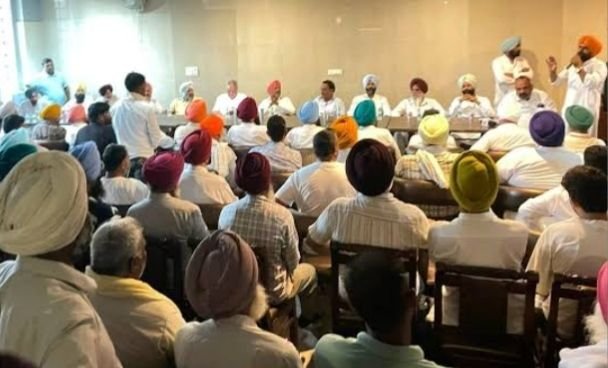
Chief Minister Bhagwant Mann addressed the AAP gathering near Rayya, while opposition parties held their own programmes. Rather than presenting a united political spectacle, Baba Bakala exposed the increasingly fragmented nature of Punjab politics.
For the ruling AAP, the gathering provided an opportunity to showcase the government’s welfare and development record and to portray Mann as the principal political alternative to the traditional parties. The party is likely to enter the election seeking a second consecutive term, something no political party can take for granted in a state where electoral loyalties have shifted dramatically over the past decade.
The Congress, meanwhile, is attempting to regain the ground it lost to AAP in the 2022 Assembly election. But its challenge is complicated by continuing differences between different factions of the state unit. Former chief minister Charanjit Singh Channi’s presence and political mobilisation have increasingly become part of the discussion about the party’s leadership strategy.
The SAD faces perhaps an even more complicated political calculation. Once the dominant force in Punjab politics, the party is attempting to rebuild its traditional support base while also navigating speculation over a possible return to an alliance with the BJP.
The BJP, for its part, is trying to expand beyond its traditional urban and Hindu support base and become a serious statewide contender. The party’s decision to prepare for a contest on all 117 Assembly seats suggests that it wants to test its independent organisational strength rather than depend entirely on an alliance.
Baba Bakala therefore offered an early glimpse of what could become a four-cornered or multi-cornered contest. AAP’s incumbency, Congress’s organisational recovery, SAD’s attempt at revival and BJP’s expansion will all intersect over the next few months.
The significance of the event was consequently not simply about speeches or crowds. It was about who could establish political momentum first.
For Punjab voters, the more important question may be whether the coming election is fought primarily over governance, jobs, agriculture, drugs and public finances — or whether identity, alliances and political personalities once again dominate the campaign.