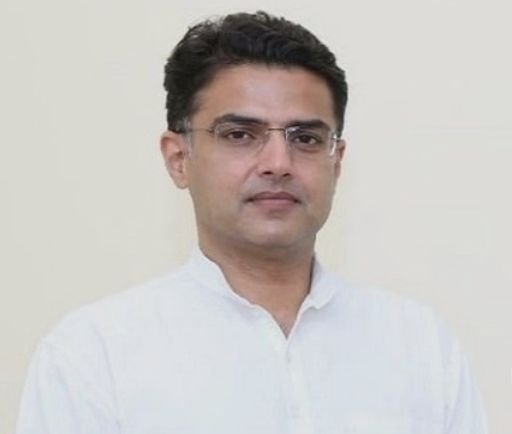
The Congress has decided against projecting a chief ministerial candidate before the 2027 Punjab Assembly elections, newly appointed state in-charge Sachin Pilot has said, signalling a deliberate attempt to prevent the party’s internal leadership contest from becoming the centrepiece of its campaign.
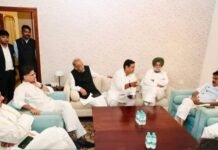
Pilot’s announcement comes at a sensitive moment for the Punjab Congress, which has been struggling with factional differences involving several senior leaders. Instead of naming one leader as the prospective chief minister, the party intends to fight the election under collective leadership, with the question of who will head the government to be decided only after securing a majority.
Pilot also indicated that Congress leader Rahul Gandhi would play a leading role in the election campaign.
The decision represents a significant change from the political culture that has often surrounded Punjab elections, where personalities and chief ministerial claims have played a major role. The Congress has several experienced leaders who could potentially claim a leading role, including former chief minister Charanjit Singh Channi, Punjab Congress president Amarinder Singh Raja Warring and senior leader Sukhjinder Singh Randhawa.
Rather than allowing competition among these leaders to dominate the organisation, the party’s central leadership appears to be attempting to place electoral unity above the question of who will ultimately occupy the Chief Minister’s chair.
Pilot’s appointment itself is part of that strategy. He replaced Bhupesh Baghel as the Congress’s Punjab in-charge amid continuing differences within the state unit. His task is not merely electoral planning but also organisational management at a time when internal disagreements have repeatedly become public.
The decision not to announce a CM face could give the Congress some room to manage these competing ambitions. It allows different leaders to campaign in their respective areas without formally declaring one as the party’s future Chief Minister.
But the strategy also carries risks.
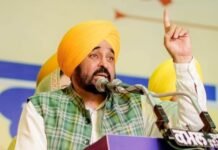
A party without a clearly identifiable state-level face may find it harder to present a simple political alternative to an incumbent government. The AAP has Bhagwant Mann, while the BJP is attempting to build a stronger state-level identity. The Shiromani Akali Dal also has a recognisable leadership structure.
Congress leaders, however, can argue that collective leadership gives the party flexibility and allows the electorate to vote on its policies and overall performance rather than on an internal leadership contest.
The timing of the decision is important. The early-election speculation that emerged in Punjab has now weakened considerably following the Centre’s announcement that Census enumeration in the state will take place from December 1, 2026 to January 4, 2027. With the Assembly’s term ending on March 15, 2027, parties now have additional time to prepare.
For Congress, that additional time could prove valuable.
Pilot will need to build a campaign structure capable of accommodating competing regional leaders while preventing factionalism from paralysing decision-making. The party’s performance in the 2022 Assembly election was dramatically below its previous strength. Congress won only 18 seats, while AAP secured 92.
The Congress subsequently regained some political space in the 2024 Lok Sabha election, but converting parliamentary support into a successful Assembly campaign will require a different strategy.
Punjab’s political landscape is also becoming more fragmented. Alongside AAP and Congress, BJP, SAD and emerging
Panthic formations are preparing for the election. That means Congress cannot rely solely on anti-incumbency against the AAP.
The party will need to establish a credible narrative on employment, agriculture, law and order, drugs, fiscal management and governance.
Pilot’s emphasis on collective leadership could help the party achieve that if internal discipline improves. His recent criticism of the Mann government’s handling of Punjab’s sensitive border-state responsibilities also indicates that the Congress intends to combine governance issues with questions of security and administrative performance.
Ultimately, the success of the strategy will depend on whether Congress leaders accept the principle that the CM question should be settled after the election rather than before it.
For now, Pilot has made the party’s position clear: Congress wants voters to choose the party first and its Chief Minister later.