

The CBI searches at Punjab Chief Minister Bhagwant Mann’s camp office and premises linked to his Officer on Special Duty Rajbir Singh Ghuman have triggered a fierce political offensive by the Aam Aadmi Party, with party leaders accusing the BJP-led Centre of using central investigative agencies as a political weapon ahead of the Punjab Assembly elections.
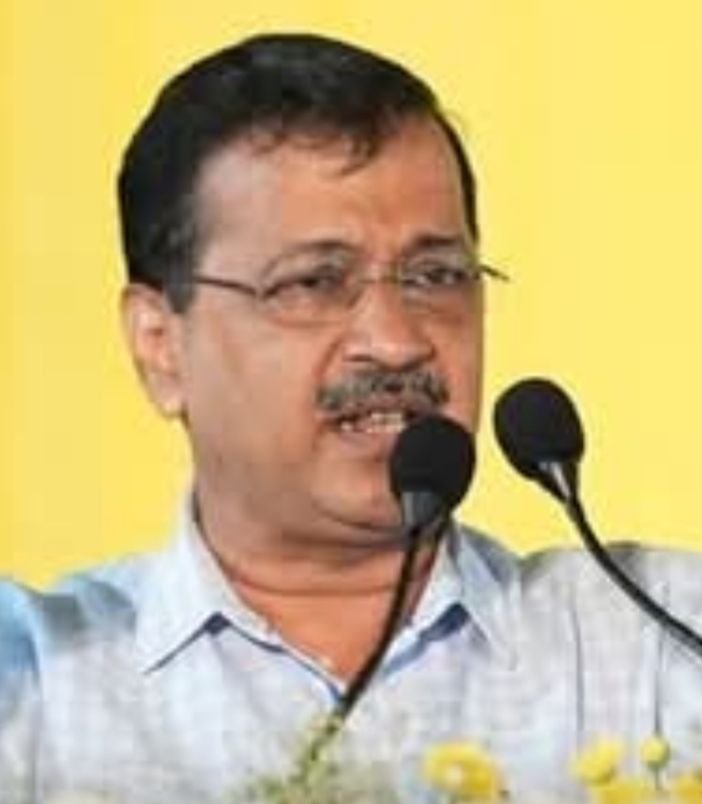
AAP national convenor Arvind Kejriwal launched the sharpest attack, alleging that the CBI action, coming roughly two months before the state goes to the polls, reflects the BJP’s “panic” rather than an ordinary investigative exercise. Kejriwal accused the BJP of being unable to challenge AAP politically in Punjab and therefore attempting to fight the electoral battle through the Enforcement Directorate and CBI.
Kejriwal also linked the latest confrontation to a wider history of Centre-Punjab tensions under the BJP-led government, citing the farmers’ agitation, Punjab’s river-water issues and the dispute surrounding Panjab University. He argued that the latest action had now extended to Punjab’s elected Chief Minister and government.
The AAP leader went further, claiming that Punjab voters would answer the BJP through the ballot box. He predicted a sweeping return for Bhagwant Mann and said the party’s supporters would respond to what he described as the misuse of central agencies.
The charge was echoed by Punjab AAP leaders.
AAP media in-charge Baltej Singh Pannu accused the BJP of trying to “defame” Mann before the election because, according to him, the BJP could not take on the Punjab Chief Minister politically. Pannu described the CBI-ED action as part of what he called a broader pattern of central agencies being used against elected governments before elections.
Punjab AAP president and Cabinet minister Aman Arora adopted a somewhat different but equally critical line. While saying that the state government respected the High Court’s order for a CBI investigation, Arora questioned whether Punjab could expect an impartial investigation from central agencies. He also maintained that the state government would neither engage in nor tolerate illegal activity.
Chief Minister Bhagwant Mann himself accused the BJP of beginning its preparations for the Punjab election and alleged that the CBI and ED would be used to target and discredit his government. Mann said the action was politically motivated and linked it to what he described as growing public support for AAP.
The political confrontation has come against the backdrop of a judicially ordered investigation. The Punjab and Haryana High Court had directed the CBI to register a case and investigate allegations concerning government transfers and postings, policy-related decisions, tenders and alleged influence over official functioning. The order followed material submitted to the court in connection with communications from the Enforcement Directorate.
The CBI subsequently registered an FIR involving Ghuman and others and carried out searches at multiple locations, including the Chief Minister’s camp office in Sector 2, Chandigarh, Ghuman’s residence in Gharachon village in Sangrur and another location in Mohali. The agency is examining allegations that officials and private individuals allegedly influenced administrative decisions in return for illegal benefits. The allegations remain subject to investigation and have not been established as facts.
For AAP, however, the timing has transformed the investigation into a political confrontation with the BJP.
Punjab is heading towards another Assembly election, and the Mann government is increasingly making the Chief Minister the central face of its campaign. AAP’s political messaging has already been built heavily around Mann’s public image, welfare measures and direct outreach to voters. The CBI action therefore gives the party an opportunity to frame the election as a contest not only between political parties but also between Punjab’s elected government and the Centre.
That is precisely the political narrative AAP leaders are now attempting to establish.
Their argument is that if the BJP wants to defeat AAP in Punjab, it should do so through voters rather than investigative agencies. Kejriwal’s statement goes even further, accusing the BJP of wanting to use the CBI and ED as substitutes for electoral competition.
The BJP, however, has rejected the political-vendetta charge and pointed out that the CBI investigation followed a Punjab and Haryana High Court order. BJP leaders have argued that the central agency is investigating allegations placed before the court and that the legal process should be allowed to proceed.
The Punjab government has meanwhile challenged the High Court’s CBI order in the Supreme Court, taking the dispute beyond the political arena and into the country’s highest court. The Supreme Court challenge adds another layer to the confrontation, with the legal validity of the CBI probe itself now under scrutiny.
For AAP, the coming weeks will therefore be politically significant. The party is seeking to turn the CBI action into a larger Centre-versus-Punjab narrative, while the BJP is likely to focus on the allegations that prompted the investigation.
The political battle is already underway.
AAP’s message is blunt: the BJP cannot defeat the Mann government through political competition and is therefore, according to the party, attempting to use central agencies to create pressure before the election. The BJP’s counter-position is equally clear: the CBI is acting pursuant to a judicial direction and the allegations require investigation.
The final word, however, will not come from either party. It will come from the courts and, ultimately, from the evidence that emerges from the investigation.