

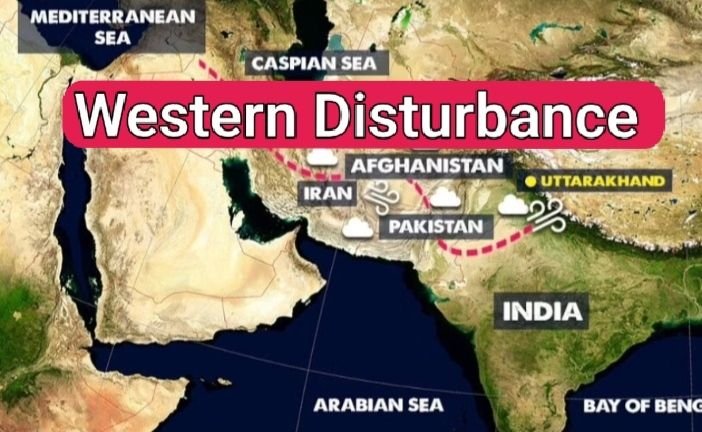
The southwest monsoon may be retreating, but the transition to a predominantly dry post-monsoon pattern is taking longer than expected in several parts of India. A combination of active weather systems, including a western disturbance affecting northern India, is bringing rain, thunderstorms, lightning and gusty winds across several states.
The India Meteorological Department (IMD) has warned of unsettled weather across parts of north, central, eastern and southern India. The latest forecasts indicate that rainfall activity will continue in several regions even as the monsoon withdrawal progresses.
Delhi-NCR, Uttar Pradesh to see thunderstorms
Delhi-NCR is among the areas where weather conditions are expected to remain changeable. The IMD’s October 8 warning lists thunderstorm and lightning activity for Haryana, Chandigarh and Delhi. Similar conditions are forecast over parts of western Uttar Pradesh, while rainfall activity is also expected in the region.
For Uttar Pradesh, the weather pattern is particularly notable because the southwest monsoon has already withdrawn from the state. Despite this, western Uttar Pradesh has a thunderstorm and lightning warning for October 8, showing that post-monsoon weather systems can continue to produce rain and storms after the formal withdrawal of the monsoon.
Himachal, Uttarakhand and J&K face unsettled weather
The western Himalayan region is likely to experience a sharper change. Himachal Pradesh has a thunderstorm and lightning warning for October 8 and 9, while Uttarakhand has been placed under warnings for heavy rain, thunderstorms and lightning on both days. Jammu and Kashmir and Ladakh are also expected to experience unsettled conditions.
In the higher reaches of the mountains, precipitation could occur in the form of snow as temperatures fall. The combination of rain and snowfall is expected to bring an early feel of winter to some higher-altitude areas.
The weather change is also significant for travellers and residents in the hill states, where thunderstorms, strong winds and sudden rainfall can affect road conditions, visibility and local movement.
Punjab also under weather warning
Punjab is not being spared by the changing weather pattern. The IMD has issued thunderstorm and lightning warnings for October 8, 9 and 10. This comes as the region moves deeper into the post-monsoon period.
The weather could therefore remain unsettled over parts of Punjab during the next few days rather than immediately turning completely dry. Farmers and people involved in outdoor activities may need to remain alert to sudden showers and gusty winds.
Rain continues in eastern and southern India
The weather disturbance is not confined to northern India. The IMD’s latest forecast also points to rainfall activity over parts of eastern and southern India. Isolated heavy rainfall has been forecast in areas including Kerala, Tamil Nadu, Uttarakhand, West Bengal and Sikkim.
Jharkhand, West Bengal and Sikkim are also among the regions where wet conditions are expected, while parts of the southern peninsula could continue to receive rain under different prevailing weather systems.
Why is the weather changing after monsoon withdrawal?
The withdrawal of the southwest monsoon does not mean that rain stops immediately across the country. Different atmospheric systems can continue to generate rainfall during the transition period.
A western disturbance moving across the north can interact with available moisture and existing weather conditions, producing clouds, thunderstorms, rain and strong winds. At the same time, other systems over central, eastern or southern parts of the country can generate separate spells of rainfall.
This explains why some areas can experience rain even after the monsoon has officially withdrawn.
Weather transition likely to continue
The current situation represents a transition from the southwest monsoon season to the post-monsoon period rather than an abrupt end to rainfall. The IMD’s extended outlook indicates that rainfall activity will continue over parts of north India in the coming days, including Himachal Pradesh, Uttarakhand, Punjab, Haryana, Chandigarh and Delhi.
For the public, the immediate concern is the possibility of sudden thunderstorms, lightning and gusty winds. People in affected areas are advised to follow local weather warnings, avoid exposed locations during thunderstorms and take precautions while travelling.
The changing weather also signals the gradual arrival of cooler conditions in northern India, particularly after rainfall and snowfall in the Himalayan region. While daytime temperatures may remain relatively warm in the plains, nights and mornings are expected to become progressively cooler as the post-monsoon season advances.