


— Punjab has published the final electoral rolls for all 117 Assembly constituencies following the completion of the Special Intensive Revision (SIR), with 7,97,263 new voters added during the exercise. The updated list records a total of 2,01,00,727 electors, according to the office of the Chief Electoral Officer, Punjab.
The publication of the final rolls marks an important stage in preparations for the next Punjab Assembly elections. The exercise involved verification of existing voter records, the addition of eligible electors and the examination of discrepancies identified during the revision process.
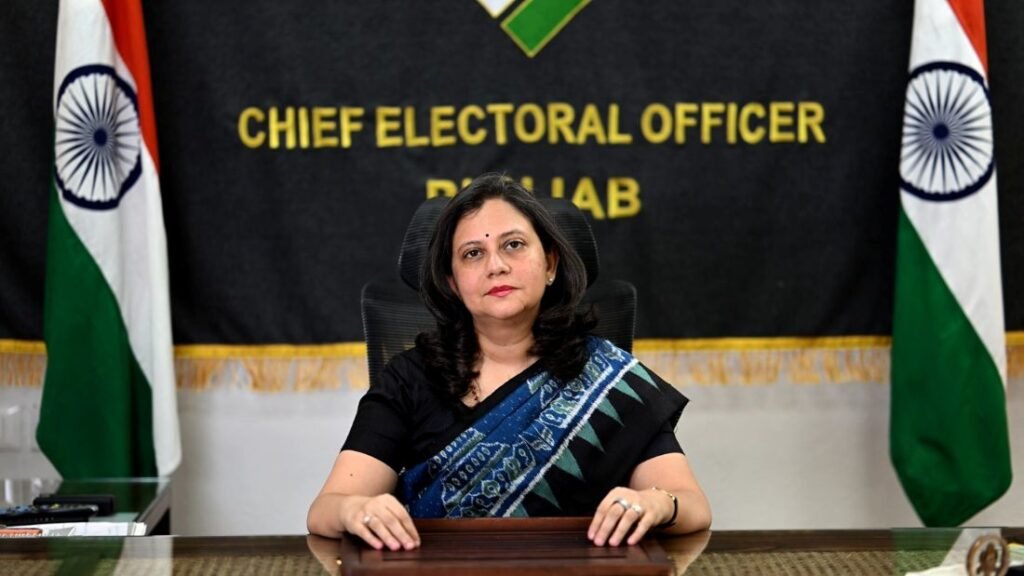
Chief Electoral Officer Anindita Mitra said the final electoral rolls had been published on October 12 and that copies had been provided to representatives of recognised political parties. The lists are also available through election officials and the relevant official portals.
More Than 7.97 Lakh New Voters Added
The final electoral roll comprises 1,03,76,026 male voters, 97,24,195 female voters and 506 electors registered under the third-gender category.
The revision process began on June 25, 2026, with a house-to-house enumeration exercise. The draft electoral rolls, published on August 13, contained 1,93,94,435 electors. Following the claims, objections and verification stages, the electorate recorded in the final list increased by 3.64% compared with the draft list.
The addition of nearly eight lakh electors includes young people registering to vote for the first time and other eligible citizens whose names were incorporated during the revision.
However, the final total remains below the 2,14,61,043 electors recorded before the exercise began. The difference reflects the combined effect of additions and deletions made during the revision process.
Verification Exercise Involved Notices and Hearings
Election officials said the exercise included scrutiny of voter records, particularly cases involving discrepancies or records that could not be matched with the earlier electoral rolls.
During the process, notices were issued to voters whose records required clarification. Officials examined documents and reports submitted by Booth Level Officers before deciding individual cases.
According to the reported figures, 86,038 electors were found ineligible following the verification process. The Election Commission’s stated objective was to improve the accuracy of the rolls while ensuring that eligible citizens were not excluded.
The revision also included a period during which voters could check their details and submit claims or objections. Recognised political parties participated through their Booth Level Agents, who assisted in checking voter records and raising concerns about discrepancies.
Polling Stations Increased Across Punjab
Alongside the voter-list revision, election officials reorganised polling stations to improve access for voters. Their number has increased from 24,453 to 25,332 across the state.
The final electoral rolls have been made available through the offices of District Election Officers, Electoral Registration Officers and Booth Level Officers. Voters can also consult the official Chief Electoral Officer, Punjab, website or the Election Commission’s citizen service portal.
Officials have advised eligible citizens whose names may still be missing to apply for inclusion using Form 6, either online or through their local Booth Level Officer.
Political Parties’ Response and the Road Ahead
The publication of the final list brings the formal revision exercise to this stage, although the accuracy of individual entries remains important for the credibility of the electoral process.
The source report states that the Congress, the Aam Aadmi Party and the Shiromani Akali Dal did not raise objections to the final list and congratulated Chief Electoral Officer Anindita Mitra. This should be understood as the reported response to the published rolls, rather than proof that every political party or voter has endorsed every individual entry.
For Punjab, where the next Assembly election is expected to be a major political contest, the final electoral roll will be a crucial reference for parties, candidates and voters. Its credibility will depend on whether eligible electors can exercise their franchise and whether errors or omissions are addressed through the prescribed procedures.
The completion of the SIR therefore marks both an administrative milestone and the beginning of a continuing responsibility: ensuring that the final list remains accurate, accessible and inclusive of every eligible voter.