

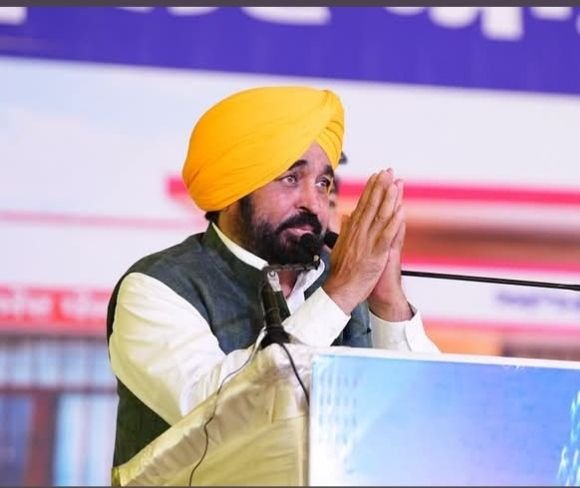
CHANDIGARH, November 6: Pakistan has indicated that it is willing to consider granting a visa to Punjab Chief Minister Bhagwant Singh Mann if he wishes to attend the World Punjabi Conference scheduled to take place in Lahore from November 27 to 29, opening the possibility of a rare cultural engagement across the India-Pakistan border amid strained bilateral relations. The clarification came on Friday from Pakistan Foreign Office spokesperson Sajjad Haider Khan during his weekly media briefing in Islamabad, where he responded to a question about Mann’s proposed visit. The spokesperson said the Pakistani government would consider issuing a visa if the Indian Punjab Chief Minister wished to travel to the country, while making it clear that permission from the Indian government was an entirely separate matter. The development follows Mann’s announcement in the Punjab Legislative Assembly on October 23 that he had received an invitation from the organisers of the international Punjabi conference in Lahore. The event, organised around the promotion of Punjabi language, literature and culture, is scheduled to bring together writers, poets, scholars and cultural representatives from different parts of the world. Mann had expressed interest in attending, observing that people on both sides of the border share linguistic and cultural roots. He had also questioned whether the Centre would permit him to visit Pakistan, referring to the difficulties he had faced in securing approval for some of his earlier foreign visits. The invitation was subsequently reinforced by Pakistan Punjab Minister for Minority Affairs and chairman of the Pakistan Sikh Gurdwara Parbandhak Committee, Ramesh Singh Arora, who invited Mann, Punjab Assembly Speaker Kultar Singh Sandhwan and other legislators to visit Pakistan. The latest statement from Pakistan’s Foreign Office, however, should not be interpreted as confirmation of a visa or approval of the visit. Mann would still require the necessary clearances from the Government of India, besides completing the applicable travel and visa formalities. The proposed visit has also brought renewed attention to the broader question of people-to-people and cultural exchanges between the two Punjabs. During the same briefing, the Pakistani spokesperson reiterated Islamabad’s stated commitment to facilitating religious visits by people of different faiths. He said Pakistan had issued more than 9,000 visas to Indian religious pilgrims, including Sikhs and Hindus, during 2025, while over 4,000 additional visas had been issued to Sikh pilgrims in the first six months of 2026. He also referred to the 1974 India-Pakistan Protocol on Visits to Religious Shrines as the framework for facilitating such pilgrimages. The spokesperson said Pakistan was prepared to welcome Sikh devotees once restrictions on movement through the Kartarpur Corridor were lifted. The corridor, connecting Dera Baba Nanak in Indian Punjab with Gurdwara Darbar Sahib in Kartarpur, has remained closed to pilgrim movement from the Indian side since May 7, 2025. Mann had earlier expressed the wish that, if the corridor reopened, members of the Punjab Assembly could visit Kartarpur Sahib together. The Lahore conference invitation has consequently assumed significance beyond the participation of one political leader, bringing Punjabi cultural ties and cross-border engagement back into public discussion. Whether Mann ultimately attends, however, will depend on the decisions and clearances of the Indian authorities and the completion of the required formalities.